


EmailTooltester is supported by readers like yourself. We may earn a commission when you purchase through our links. Of course, this won't increase the cost for you.
For years, SEO and affiliate revenue carried the business at EmailToolTester.
These monetization strategies worked really well… until Google updates, changing search behavior, and the rise of AI tools forced us to rethink a simple question:
If this revenue stream disappeared tomorrow, would the business survive?
That question led us to experiment more seriously with content monetization beyond the obvious paths.
Some of those experiments worked faster than expected. Others took much longer than we’d like to admit.
This article is not just a standard list of content monetization strategies (although there are plenty of practical ideas to get you started). Instead, it’ll show you how you can use these strategies so your content can earn in multiple ways.
If you’re already creating content, you’re closer to monetization than you think. You just need to connect the dots.
Why creators need multiple revenue streams
For a long time, it was possible to build a content business on one primary channel.
For us, that channel was Google.
SEO-driven content and affiliate revenue worked remarkably well for years. It was predictable, scalable, and for a while felt stable enough to build a company around.
But stability on the internet is usually temporary.
Google didn’t “break” overnight and traffic didn’t disappear. However, the rules started to change around how content is ranked, how answers are displayed, and how much visibility independent publishers like us actually get.
This isn’t a complaint by any means, it’s just the reality of building on platforms you don’t control.
And Google isn’t the exception here. Every major platform behaves the same way.
Social network algorithms change all the time email tools regularly update their pricing and deliverability rules, video platforms adjust their monetization thresholds… especially during a seismic shift like the rise of AI.
These changes tend to happen faster than most creators can adapt, especially if all of their income depends on one lever.
8 content monetization strategies you can bake into your “system”
There’s no shortage of ways to monetize your content.
Newsletters, courses, sponsorships, consulting, communities, digital products, affiliates, etc. The list itself isn’t the hard part. You’re probably already aware of the options.
What’s harder is understanding how these options work together, and which ones make sense at different stages.
You don’t have to pick the “best” channel and commit to it forever. Instead, consider layering revenue streams over time, based on how your audience engages and what they actually value.
We’ll break down the most common monetization paths as building blocks you can combine to create something more resilient.
1. Newsletters and paid subscriptions
A newsletter is, first and foremost, a distribution engine.
Your free newsletter is where you earn attention repeatedly. Over time, it becomes the place where people learn how you think, what you prioritize, and whether your perspective is relevant to them.
This is why it’s important to let the free layer do its job first.
Once that foundation is there, you can monetize newsletters in a few ways, but the most common are:
- Paid newsletters
- Newsletter sponsorships
Paid newsletters
The biggest mistake I see creators make with paid newsletters is positioning.
“Exclusive insights” or “premium thoughts” sound nice, but they’re very, very vague. People will only subscribe to something if it’s of value to them, like it’ll help them do something better or solve a problem they’ve been spiralling about for a while.
Strong paid newsletters usually focus on:
- Saving time (curated analysis)
- Reducing uncertainty (clear opinions and breaking down complex claims)
- Improving decisions (frameworks, benchmarks, real examples)
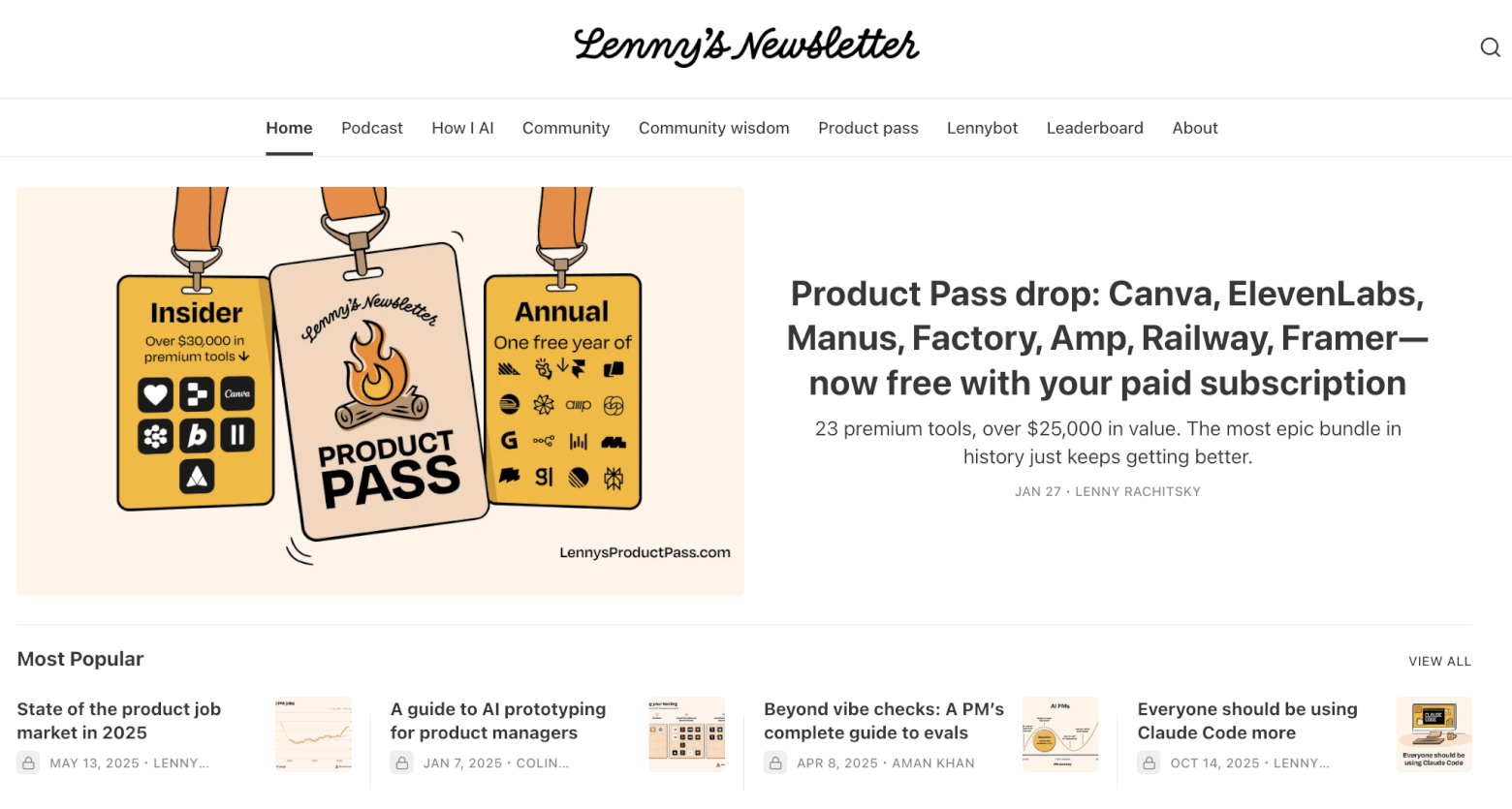
Lenny Rachitsky’s newsletter on Substack is a good example of this.
Newcomers can read a handful of free editions to get a feel for Lenny’s knowledge and style, but those newsletters funnel people to pay for the premium version.
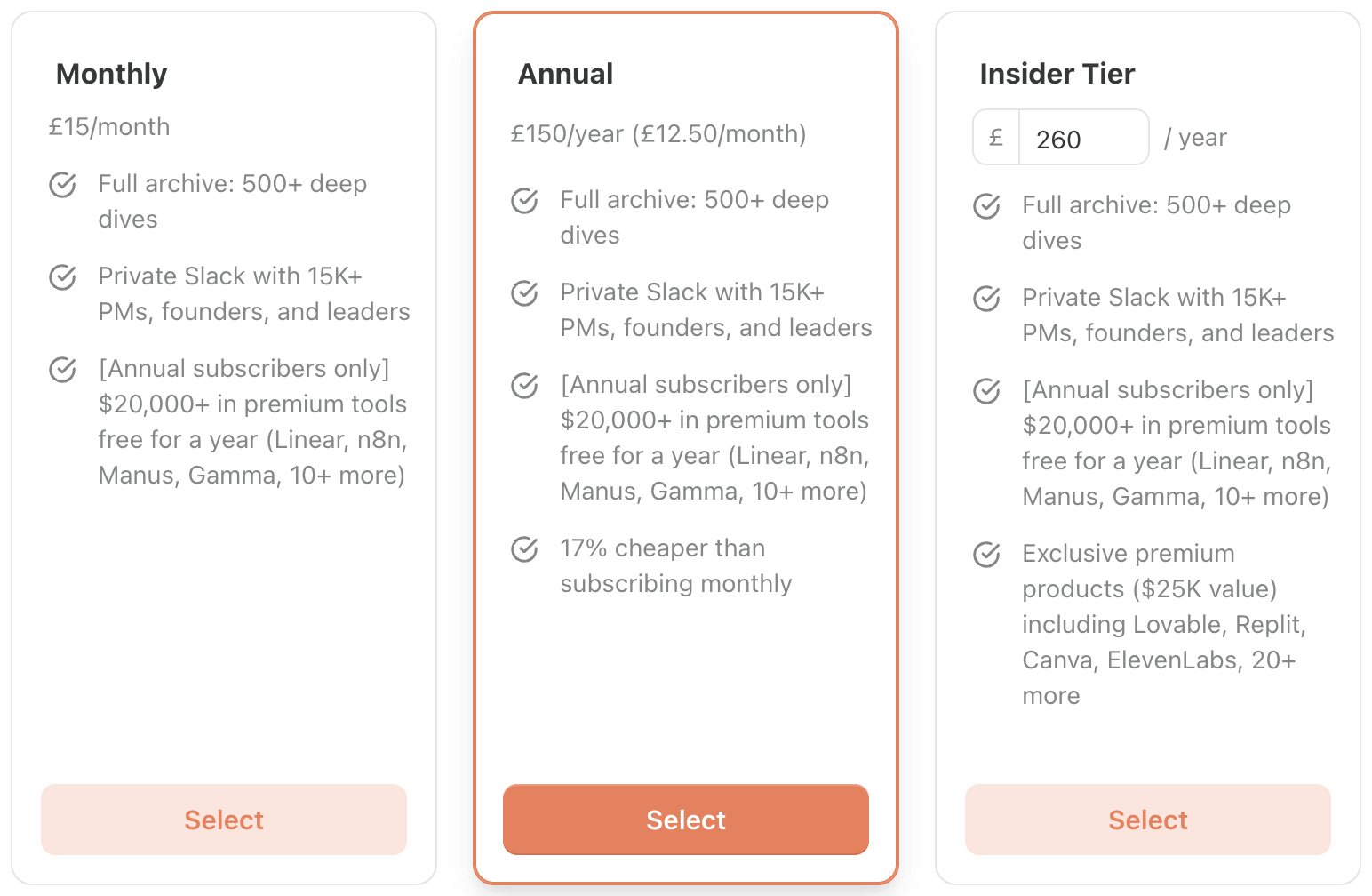
Across the three pricing tiers, subscribers can get a mix of case studies, playbooks, a Slack community, and even exclusive products.
Newsletter sponsorships
At EmailToolTester, newsletter sponsorships became one of the earliest ways we could monetize our audience without changing the content itself.
The key was fit: sponsoring products had to be genuinely relevant, and the placement had to stay unobtrusive.
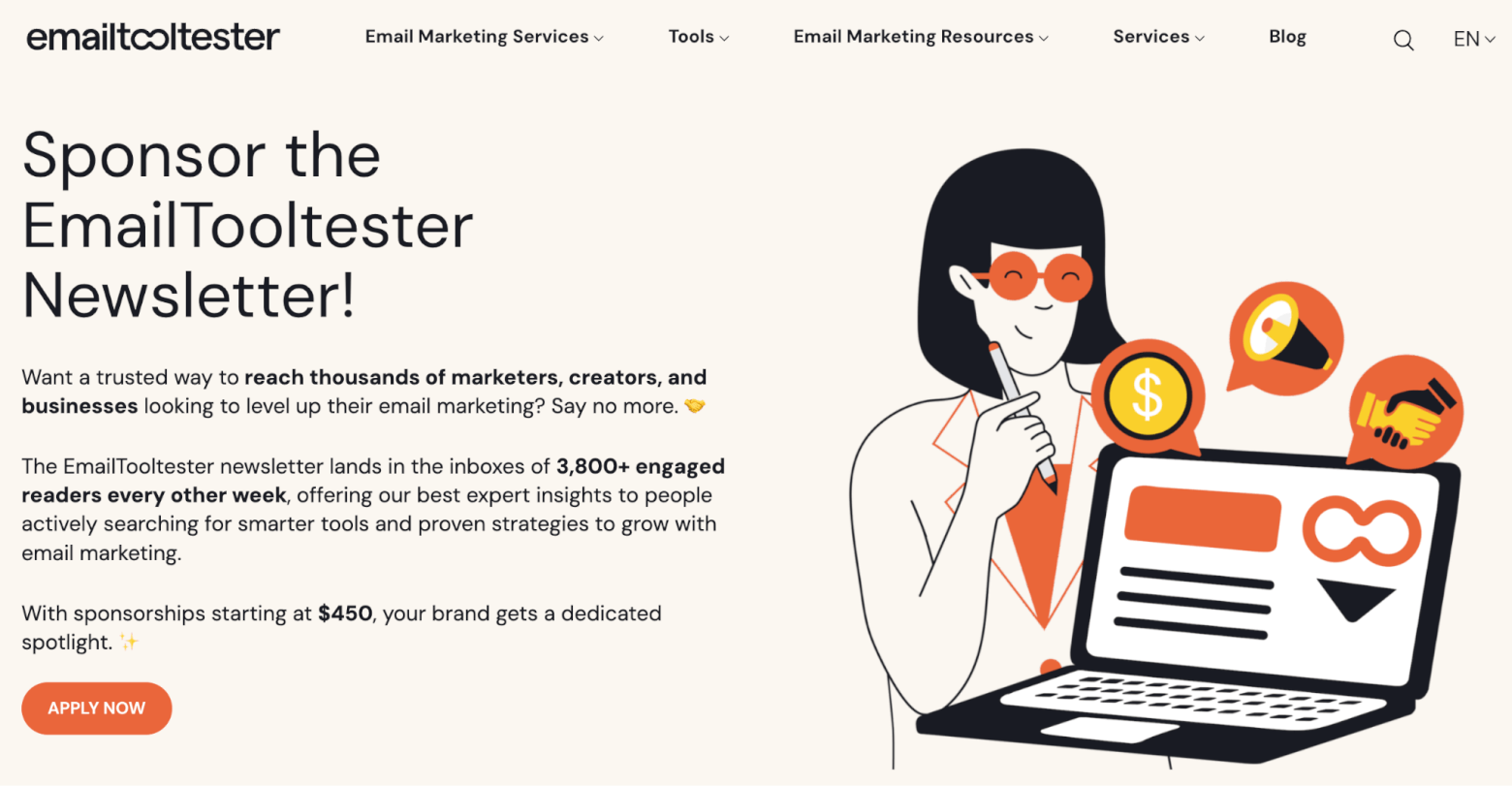
Brands can now grab a slot in our newsletter that goes out to 4,000+ people for $450+.
When done well, sponsorships:
- Don’t require paywalls
- Don’t change your editorial direction
- Give you revenue before launching your own products
Just FYI, the EmailToolTester newsletter is free to read, but it’s definitely not free to produce.
The newsletter goes every other week with our best email marketing tips. (You can read more and sign up here!)
Right now, each issue costs around $700 to produce, including:
- Editorial time
- Research and testing
- Tools like Kit
- Our video setup
With four issues per month, that puts production costs at roughly $1,400 per month. We predict we’ll need around 6,000 subscribers to break even, just to give you an idea of what it takes to actually make money from a newsletter.
2. Courses and workshops
Courses are often positioned as the ultimate scalable product: create it once, sell it forever.
That framing misses why courses actually work.
A course forces you to make decisions you don’t have to make in blog posts or newsletters. You have to choose what to include, what to leave out, and in what order things actually need to happen for someone to get a result.
That’s where the real value is.
When we launched the Brevo email marketing course, the hardest part of all was taking years of hands-on testing, tutorials, and tool comparisons and turning them into a clear learning path:
- What should someone do first?
- What mistakes will they make?
- What features actually matter at different stages?
Yes, the course was scalable, but it worked so well because it solved a very specific problem: helping people get real value out of Brevo without spending weeks piecing things together themselves.
What we didn’t anticipate, though, was how hard it would be to find the right audience. Positioning the course clearly, figuring out who it was really for, and testing the right marketing approach took far longer than expected. Even now, we’re still refining how we talk about it and how we sell it.
It’s been a valuable experience. But if we were doing it again, we’d focus much more on validating demand and making a few sales before building the full thing. Proving that people are willing to pay before you create everything changes the way you design, position, and price the course from day one.
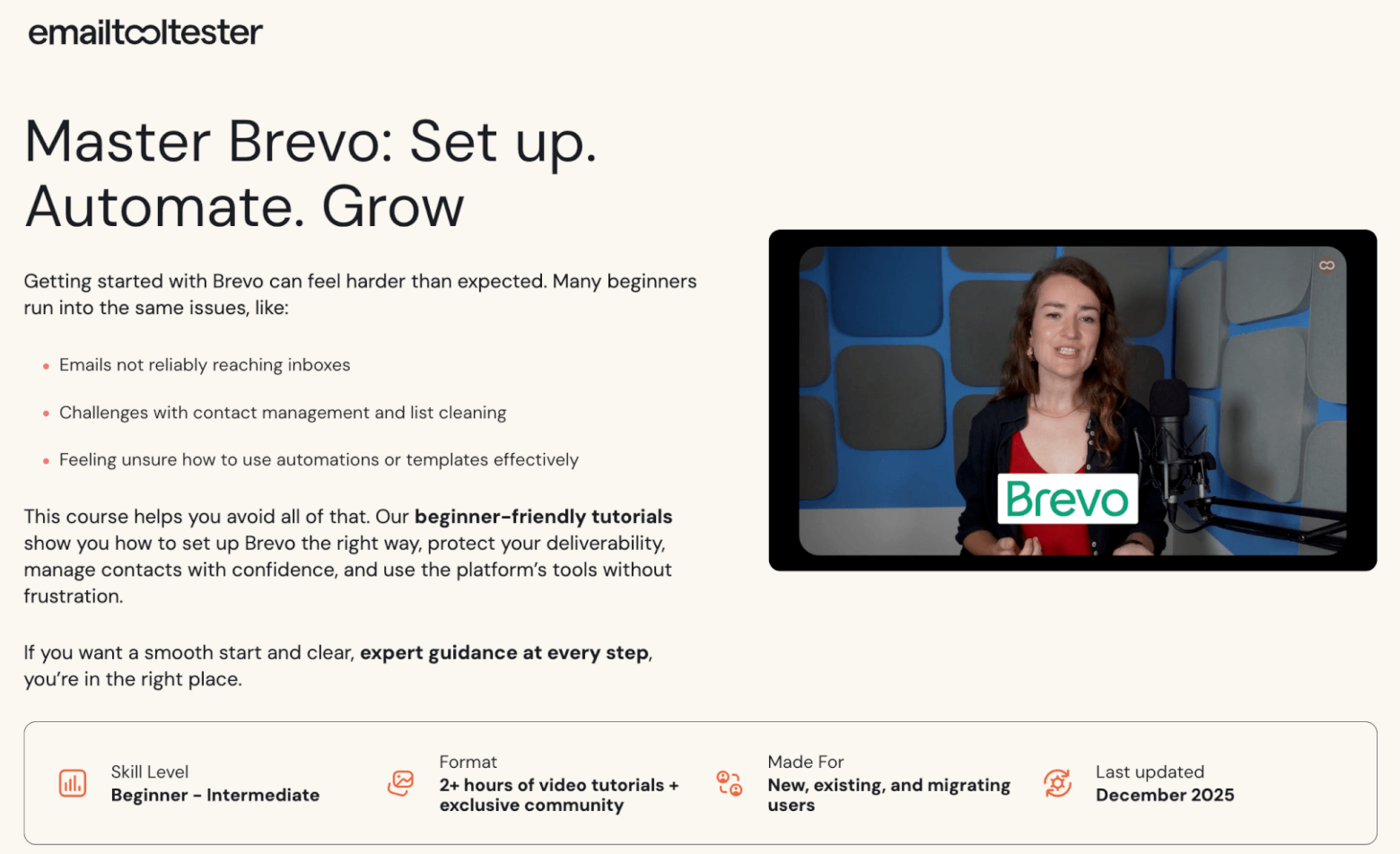
We sell the course for $109.
Sure, there’s a fair bit of upfront effort in making a course, but once it’s made, we can continue to sell it over and over again.
To get people interested, we launched a free Brevo mini course. This helped us qualify the audience and gave those interested in the full course a sneak peek into what to expect.
If someone completed the mini-course, they had already demonstrated:
- Interest in the topic
- Willingness to invest time
- Alignment with the way we teach
Many creators make courses too early, before they understand what their audience actually wants to learn. Workshops and smaller courses are often a better starting point, because you can get feedback quicker and the commitment level is lower.
3. Videos and YouTube
It’s tempting to see YouTube as a monetization channel first, what with AdSense, sponsorships, quick growth, etc.
But in practice, YouTube rewards something much less exciting: consistency over time.
At EmailToolTester, it took years before the channel reached monetization status. Our content was great (obviously), but YouTube compounds slowly. When you play, you’re playing the long game.
Note: To monetize YouTube, you have to be a part of the Partner Program, which means you need:
- 1,000 subscribers, and
- Either 4,000 public watch hours in the past 12 months, or 10 million Shorts views in 90 days
Once accepted into YPP, creators can earn revenue through:
- Ad revenue (AdSense) from ads shown before, during, or alongside videos
- YouTube Premium revenue, which is a share of subscription fees from Premium users who watch your content
- Channel memberships, a.k.a. paid monthly subscriptions for exclusive perks
- Super Thanks / Super Chats / Super Stickers, which are all different kinds of fan payments during or after videos
- Shopping features, such as tagging and selling products directly from videos (where available)
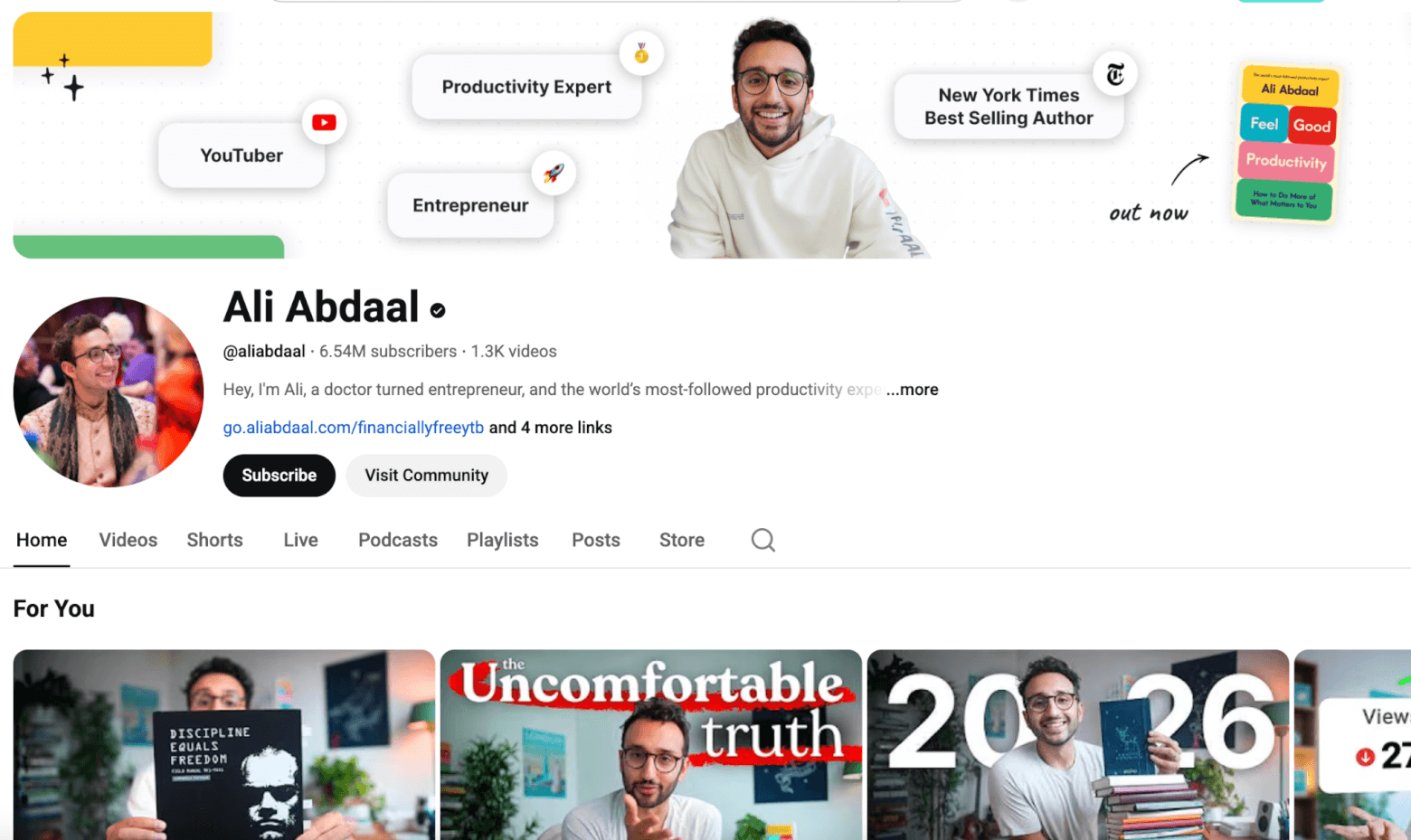
Doctor turned entrepreneur Ali Abdaal uses a mix of paid sponsorships and AdSense on his YouTube channel, but he also uses it as a way to funnel people to his paid products outside of the platform.
4. Consulting and services
Consulting is often the first thing creators offer that converts.
It’s less “lift” than a full-blown course or spending months (or years!) consistently creating content for YouTube in the hopes for a few bucks back from AdSense.
But it’s a great bridge or starting point for identifying what your audience wants.
Consulting and advisory work is a big part of EmailToolTester, not least because it consistently reveals which topics resonate most with our audience.
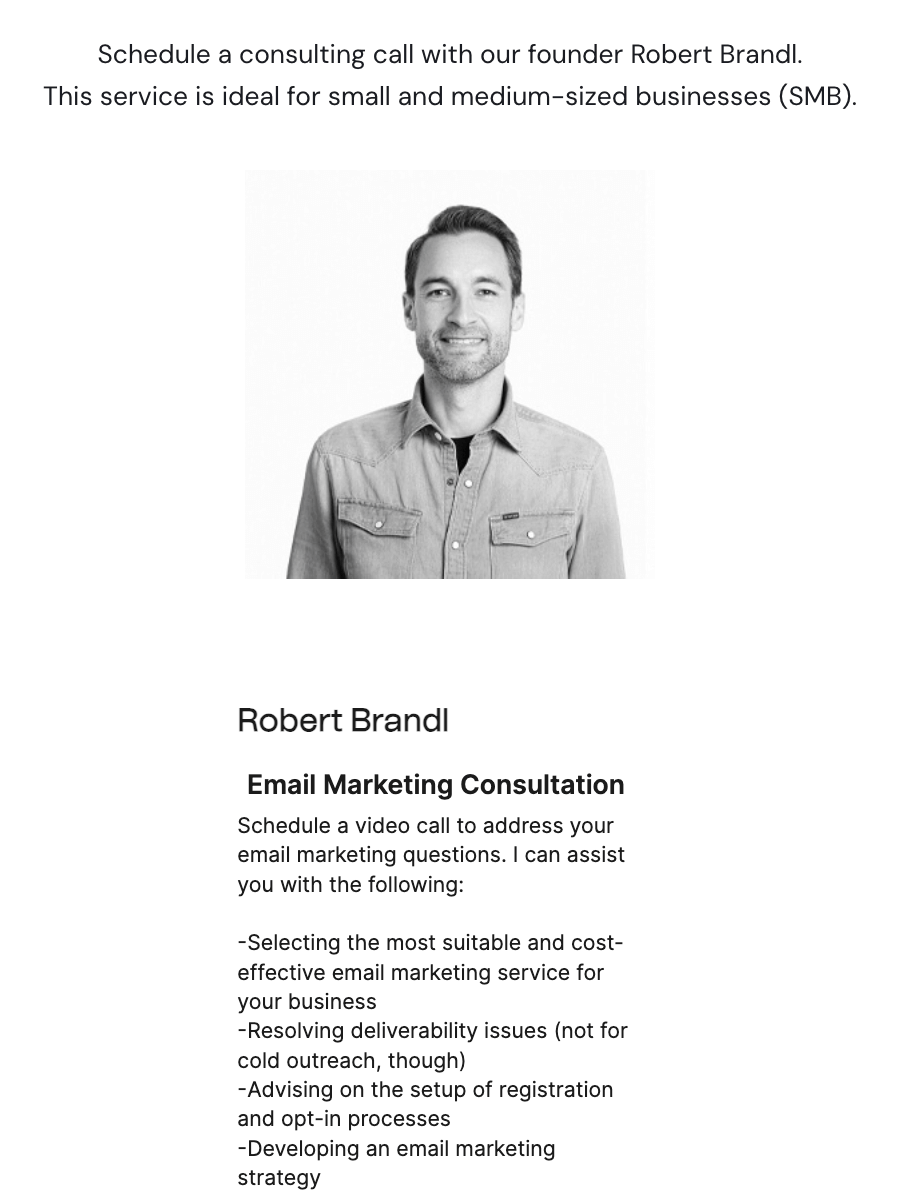
> Click here if you want to book a consulting call with me!
The questions people ask on calls are often more valuable than any analytics dashboard. They show us where content is unclear, where tools cause friction, and where a product or course can actually help.
This is why consulting is such a strong validation layer.
Before you invest months into a course, a community, or a SaaS product, paid one-to-one work answers the question: Will someone pay for this knowledge in its rawest form?
Big name tech and SEO creators Glen Allsopp and Ben Thompson both used consulting and advisory work early on to refine their thinking before turning insights into scalable products.
Consider these practical ways to monetize consulting:
- 1:1 advisory calls with a clear scope (e.g. 60-minute audits)
- Limited monthly retainers for ongoing strategic input
- Workshops for teams, built from repeated consulting patterns
5. Communities and memberships
Communities are often positioned as passive income.
They’re not.
I see a paid community as something closer to running a small media company than launching a product. Engagement doesn’t happen automatically, and churn is something you have to juggle all the time.
That doesn’t mean communities don’t work… it just means they only work when the value is clear and ongoing.
Memberships can also be a great addition to courses, workshops, and newsletters as an extra layer of social proof and value.
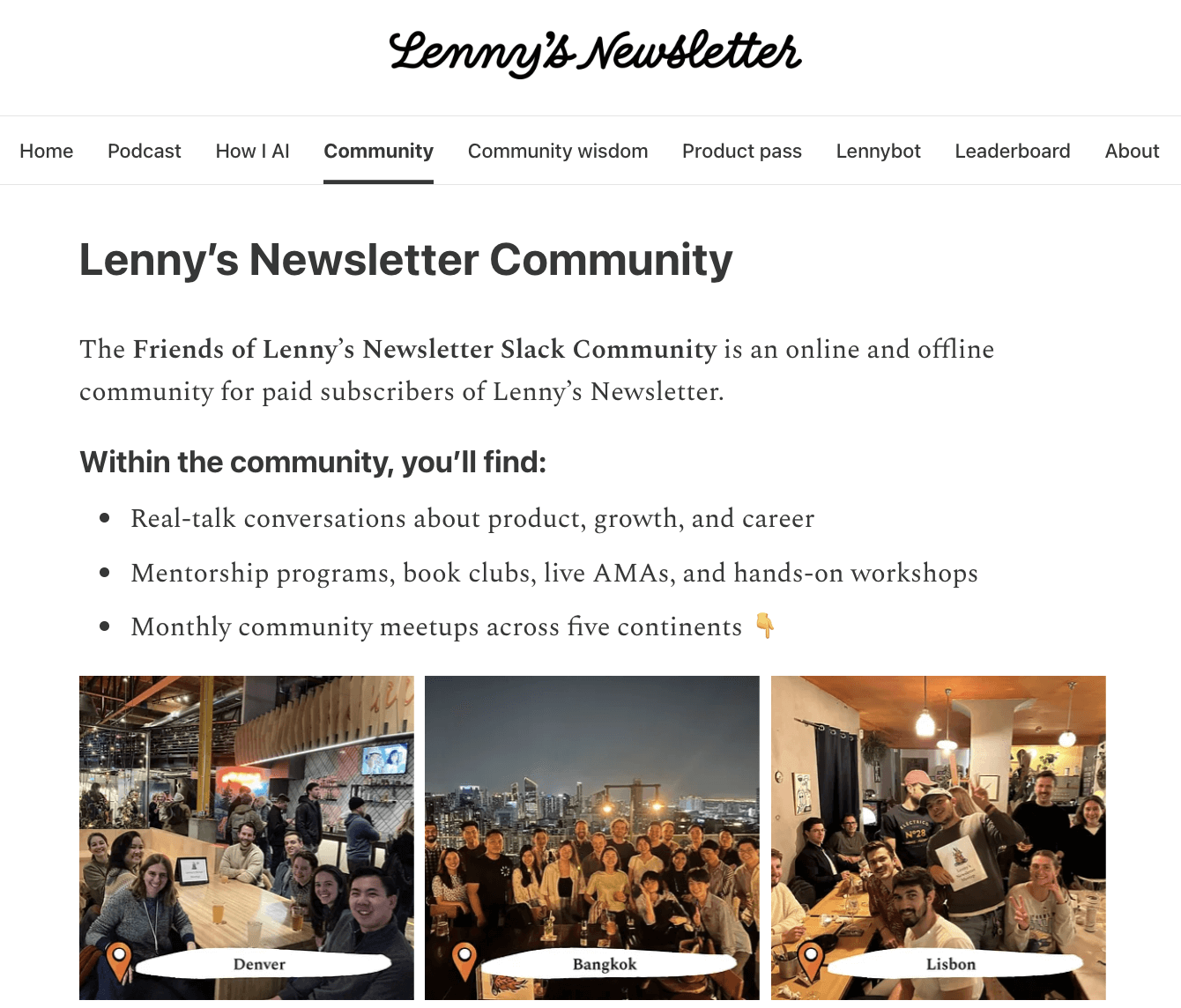
Lenny’s newsletter has a community element to it, where paid subscribers can access mentoring, AMAs, book clubs, and in-person meetups around the US.
Here are some ideas to get your creative juices flowing:
- A monthly SEO teardown group or tool-stack review circle for small teams that you monetize through monthly or quarterly subscriptions.
- Access communities with one live session per week and one focused topic at a time that you bundle with a paid newsletter (like Lenny’s example above).
- Peer-led communities for freelancers or fellow creators with prompts and discussion topics with a low monthly fee.
- Hybrid communities tied to a product, like a course with a built-in member space or a resource library with peer support that members get access to when they buy the product.
6. Digital products
Digital products tend to work best as secondary layers, not as the starting point of a creator business.
The best digital products turn existing advice into something easier to use.
If you’re already explaining the same concepts repeatedly (e.g. in articles, videos, newsletters, or calls) you already have product ideas.
For example:
- Templates (email sequences, content outlines, review frameworks)
- Checklists (launch prep, audits, migrations, setup steps)
- Playbooks (repeatable workflows with examples)
- Decision guides (tool comparisons, setup recommendations by use case)
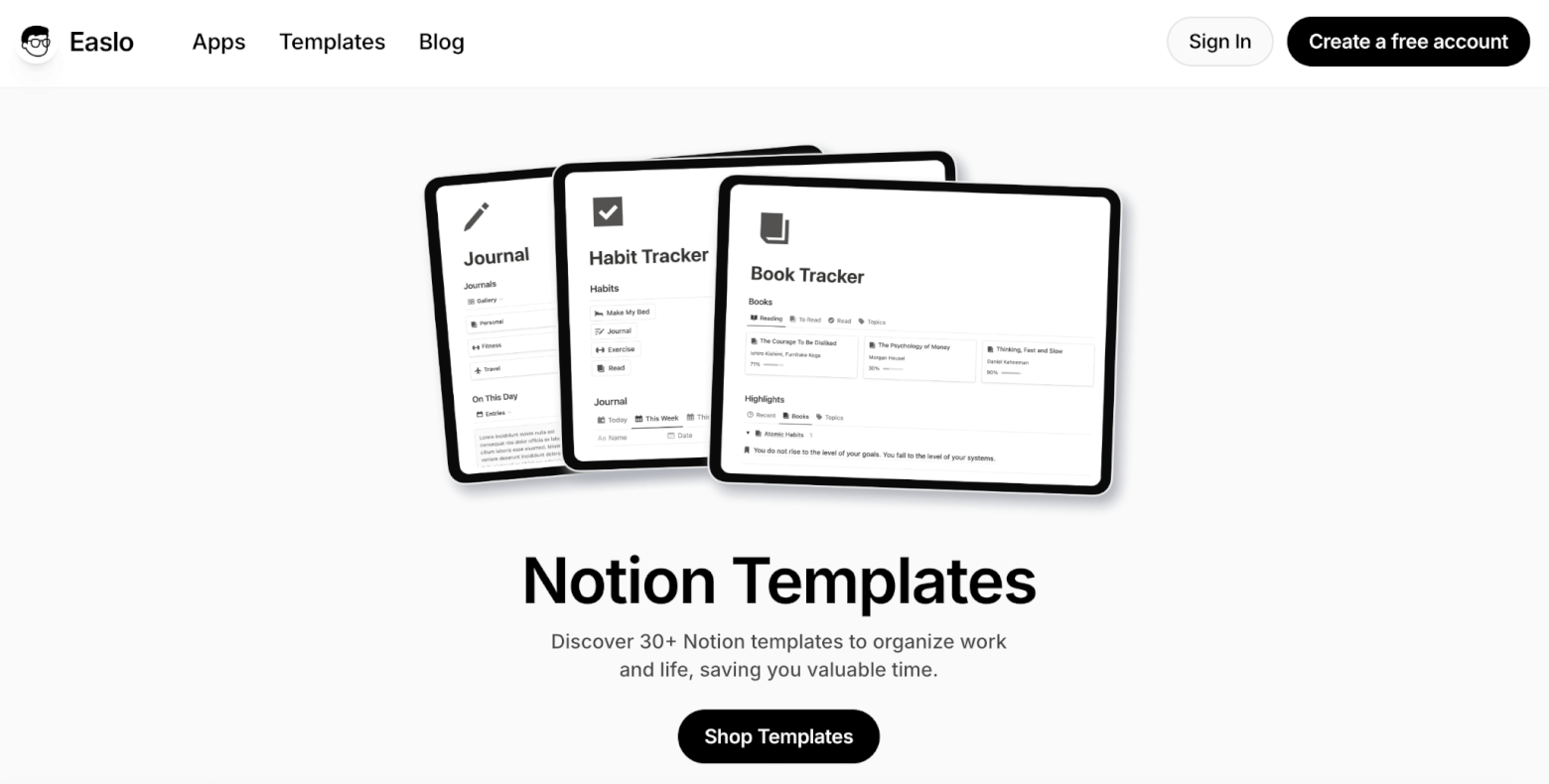
Notion creator Easlo has a ton of free and paid Notion templates available, covering a broad range of use cases from travel planning to finance tracking.
7. Affiliate marketing
Affiliate marketing is often treated as the easiest way to monetize content.
Add a few links and collect commissions. Bam, done!
From my long-term experience, it really only works when the creator has already done the hard part: earning the right to recommend.
Affiliates work best in content where people are already trying to decide something:
- Tool reviews and comparisons
- Tutorials that need software
- “How we do X” breakdowns
- Setup guides and workflows
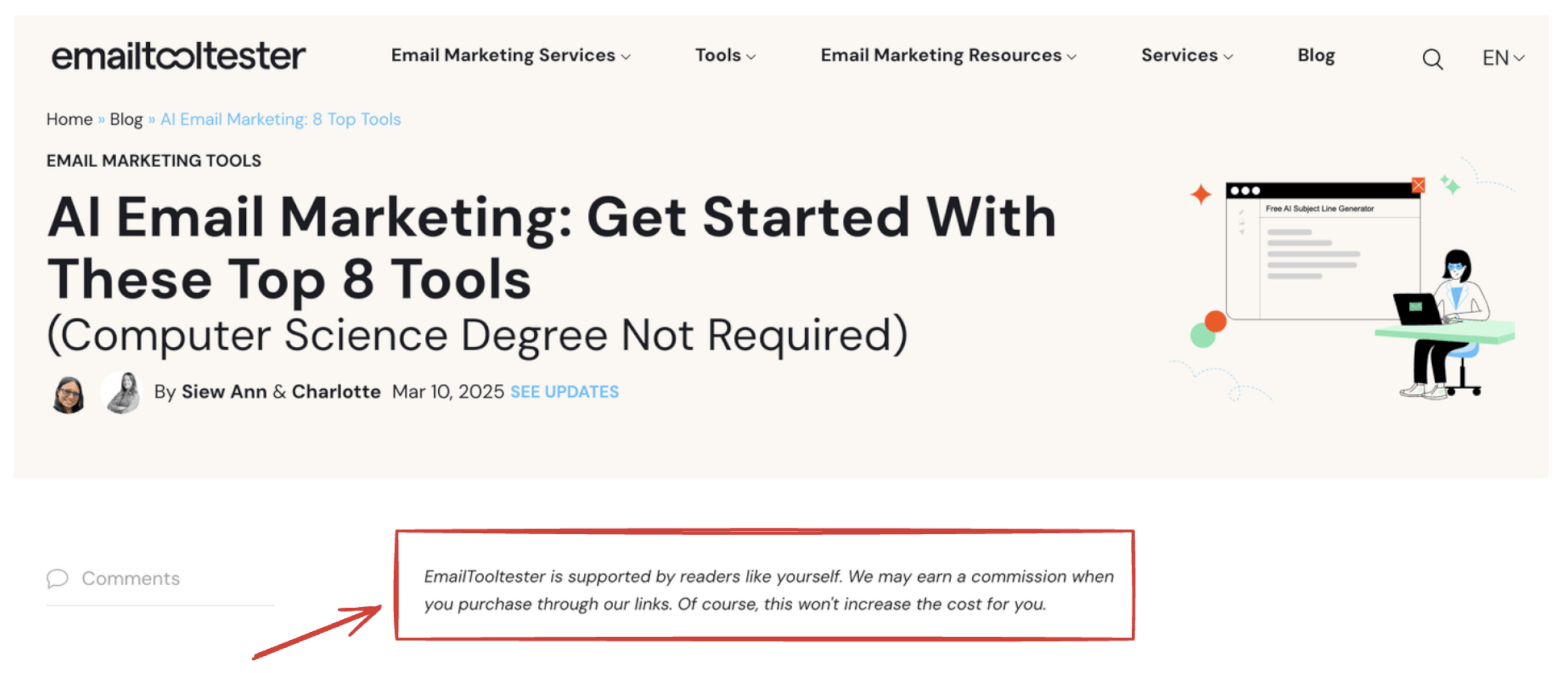
Affiliate revenue works really well for EmailToolTester because readers come to us after they’ve decided they need a tool. We’re not necessarily here to convince them to buy, but our content helps them make the right choice (and we get a cut of the money if they do buy).
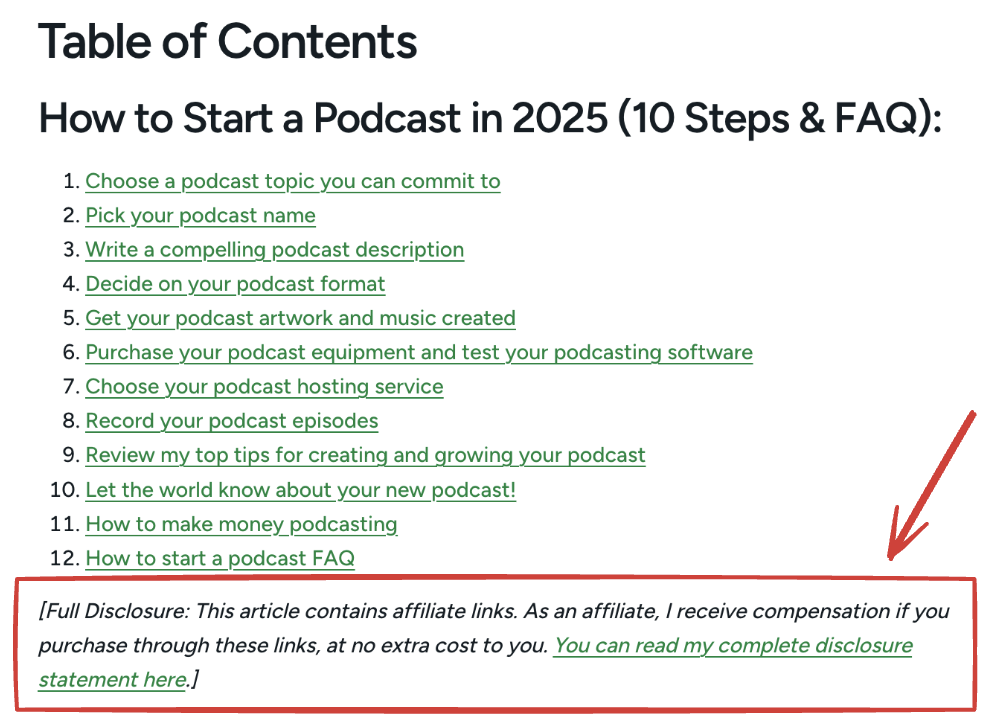
Creators like Pat Flynn built long-term affiliate revenue by documenting real use cases, sharing results, and being transparent about what worked and what didn’t. That transparency is the reason people trust the links.
Each of his blog posts on the Smart Passive Income blog feature a disclaimer about affiliate links, and I’m pretty sure he’s probably still earning affiliate commission from pieces that are years old.
8. Podcasts
Podcasts are one of the hardest formats to monetize directly, but they’re also one of the most effective when used correctly.
If someone listens to you for 30–45 minutes a week, that relationship compounds quickly.
The mistake many creators make is treating a podcast like a standalone product. In reality, podcasts work best as a trust-building channel that supports other revenue streams.
Most successful creator podcasts use a combination of these models:
- Sponsorships. Many B2B and niche podcasts monetize with a few thousand downloads per episode. To make this work well, it’s a good idea to read the ads yourself and limit the number of slots in each episode.
- Sell owned products. Podcasts can feed listeners to your paid newsletter, courses, consulting work, and memberships. In this model, the podcast is the top of the funnel.
- Paid podcast feeds and memberships. I see this model most in the finance, tech, and business niches, but you need to deliver so much value to get people to pay.
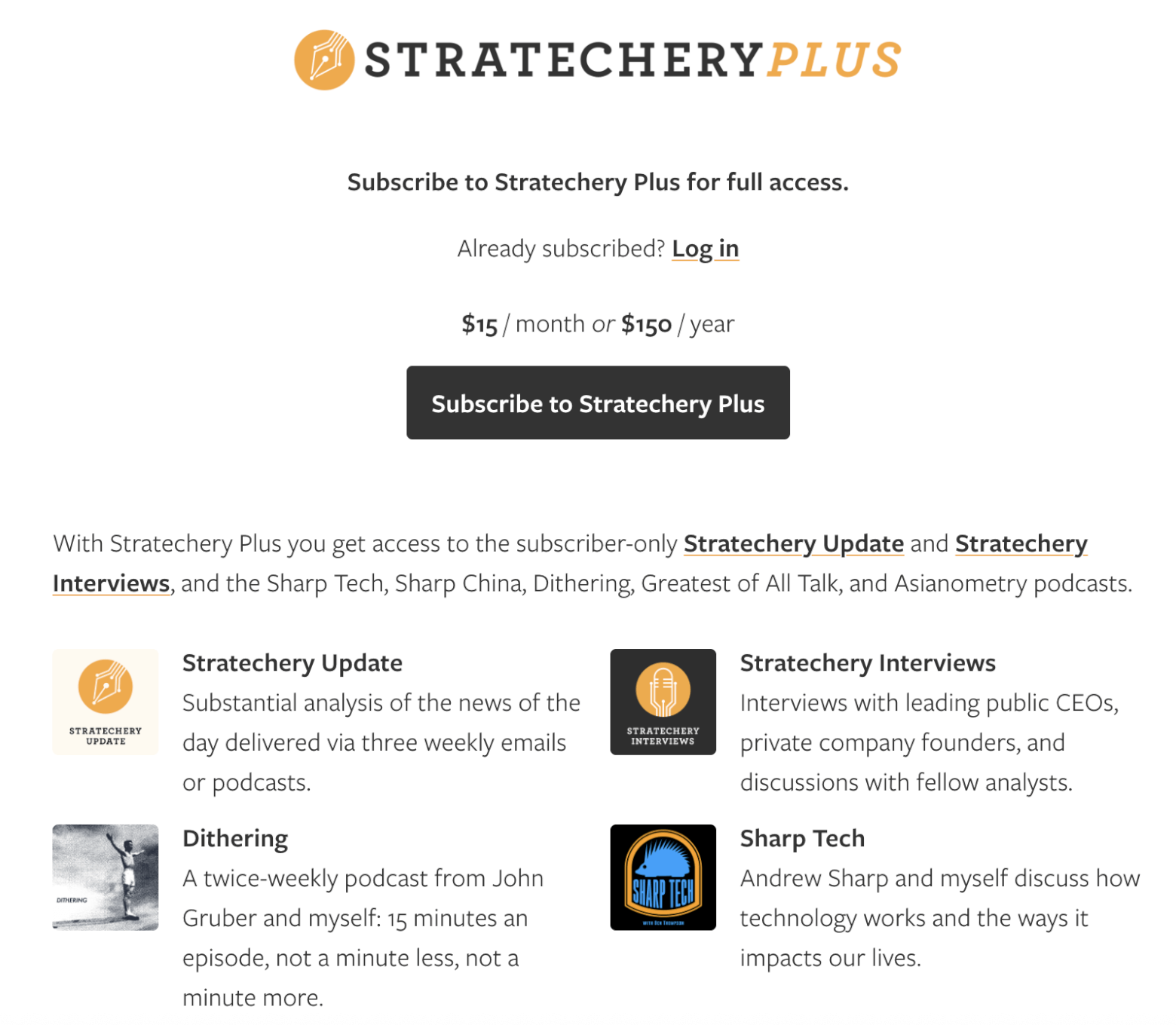
Ben Thompson has a paid “plus” option for subscribers of Stratechery which gets them interviews and podcast content tucked behind a paywall.
Key things to keep in mind before monetizing
Monetizing can feel like a huge uphill struggle.
The methods are there. They’re accessible to everyone, but actually convincing someone to hand over their hard earned cash involves so much more than setting up a newsletter or recording a video.
Most of the time successfully monetizing your content comes down to two things:
- Timing. You have to make the offer when your audience is actively feeling the problem, not months before they care, and not long after they’ve already solved it another way.
- Positioning. It’s not just what you’re selling, but how clearly people understand who it’s for and why it’s different. If someone can’t immediately see themselves in the problem and the outcome, they won’t buy no matter how good the content is.
Before adding any revenue layers, a few fundamentals matter more than the format.
- Don’t monetize disengaged audiences. Audience size is a misleading metric. An engaged list of 5,000 people who open, reply, and click on your links is far more valuable than 50,000 passive subscribers. If engagement is low, narrow your focus or work on posting consistently for a while.
- Introduce paid offers as a natural extension of what you already teach. Make your paid offers a no-brainer for people who know and love what you do. If sales are slow, try and build more context around what you’re offering and why it’s important.
- Balance free with paid content. Your free content isn’t necessarily a teaser of your paid offers. Instead, it’s more like proof that the paid stuff is worth buying. You’ll notice that most successful creators give away their best ideas, their thinking process, their frameworks, etc, but will charge for applying those ideas, diving deeper, and ongoing support.
- Value your work. The pricing conversation is always tricky because we’re all offering different things to different people. The important thing to remember is to set expectations that your time has value and the outcomes are important (and ultimately worth the investment).
How content monetization methods actually work together
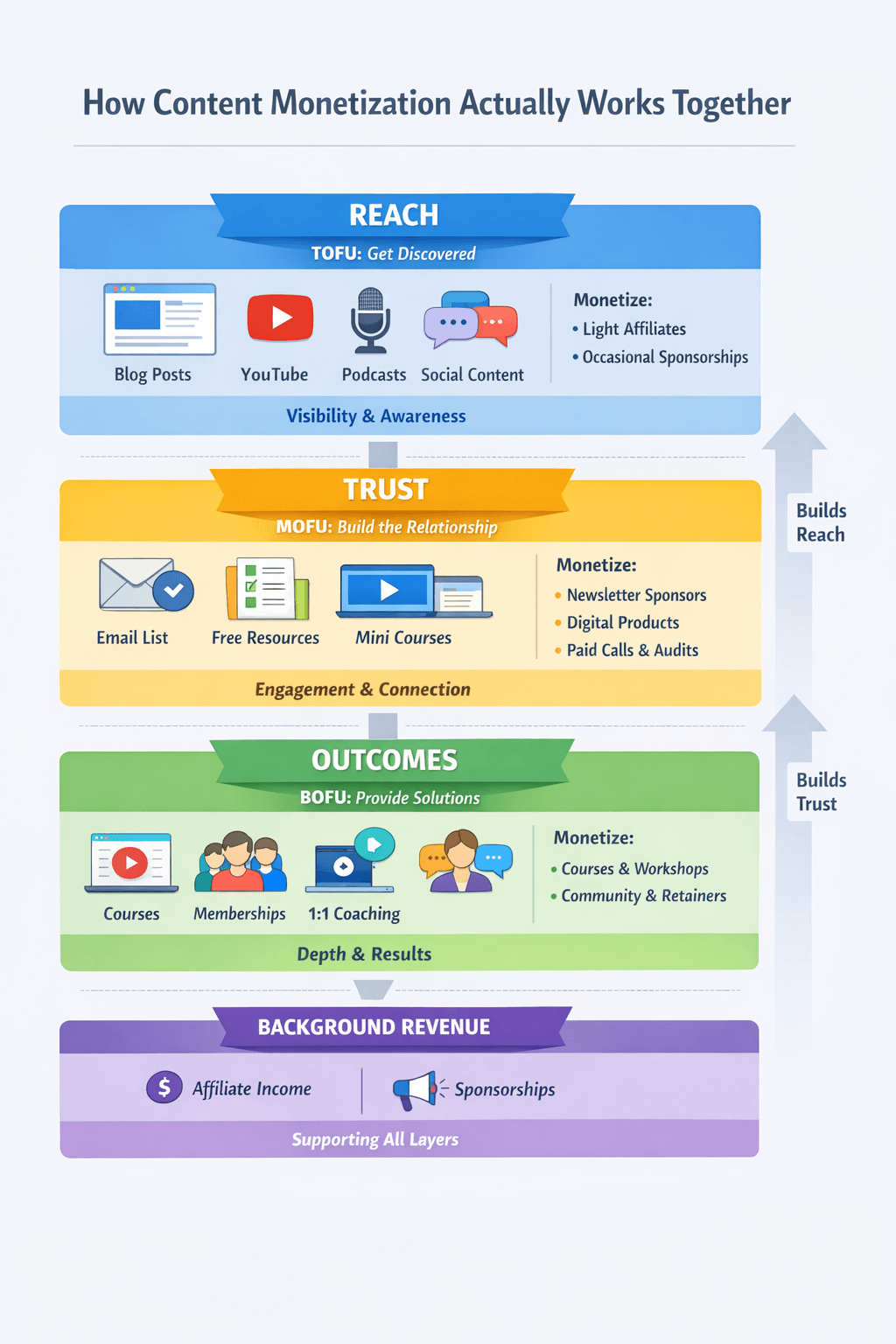
Look, most sustainable creator businesses don’t rely on a single monetization method.
They’re built as systems, where each layer does a specific job.
Thinking in TOFU / MOFU / BOFU terms helps this make more sense.
Top of the funnel (TOFU) for reach
Goal: Be discoverable and useful to the right people.
This is where:
- Blog content
- YouTube videos
- Podcasts
- Social content
do their work.
TOFU content isn’t meant to convert directly. It’s meant to answer questions, educate, show your expertise, and build that important base layer of trust.
Monetization at this stage is indirect at best (e.g. light affiliates, occasional sponsorships) but its main job is reach.
Creators who try to sell aggressively at TOFU usually struggle because the relationship isn’t there yet.
Middle of the funnel (MOFU) for trust
Goal: Turn attention into a relationship.
This is where email really is non-negotiable.
Newsletters, free resources, and mini-courses move people from casual consumption to consistent engagement. This is also where creators explain how they think, not just what they know.
And email is a core part of this layer because it’s one of the only channels you actively own that lets you reach out to your audience directly.
MOFU is where early monetization often works best:
- Newsletter sponsorships
- Entry-level digital products
- Affiliate recommendations with context
This is also where consulting works pretty well. Paid calls or audits don’t scale, but they validate demand quickly and surface patterns you can later productize.
Bottom of the funnel (BOFU) for outcomes
Goal: Help people get results.
BOFU monetization works when there’s a clear outcome, so that usually works best in:
- Courses
- Workshops
- Communities
- Ongoing consulting or retainers
These offers work well because the groundwork is already done. The audience understands the problem, trusts the creator, and wants a deeper solution.
Trying to launch BOFU products without TOFU and MOFU support often won’t get you the results you want because you’re missing such an important step in the system.
Note: not every creator needs every layer.
Consulting might not fit with your business model, or you might want to stick to podcast and YouTube content instead of running a membership or community.
But the idea is the same: be intentional with what monetization strategies you weave in and have the ultimate aim of creating a stack of different methods.
Most importantly, don’t put all your eggs in one basket. You should be able to adapt when platforms change to keep income consistent.
Best content monetization tools
Here are some useful tool-related resources to support your monetization strategy:
- Newsletter monetization and advertising: check out our list of best ad platforms for monetizing your newsletter with ads.
- Email marketing for courses: read our guide to using email before, during, and after launching an online course, as well as useful tools.
- Best membership platforms: see our roundup of platforms to host and manage paid communities or memberships.
- Where to sell digital products: check out our comparison of places to host and sell templates, guides, and other digital assets.
- Best newsletter platforms: our current guide to choosing the right newsletter tool for your needs and scale.
Building revenue that lasts
There’s no single “best” way to monetize content.
What works is building a system that fits your audience and the kind of business you actually want to run.
The most resilient creators aren’t out there relying on one channel or one product.
They combine formats (e.g. free content, email, consulting, products, sponsorships) and let each one support the others.
The key is to test deliberately:
- Start with one primary channel
- Only start monetizing when the trust is already there
- Pay attention to what people actually pay for, not just what they say they want
If one channel slows down, another can carry the load. This kind of diversification is what keeps creator businesses sustainable and lets you keep doing the work you care about.
The authors
Learn more about us

Our Methodology
This article has been written and researched following our EmailTooltester methodology.
Our Methodology