

Let’s face it, negotiating newsletter sponsorships one by one is a pain.
That is why I started looking into newsletter advertising marketplaces.
And soon I came across platforms like Paved and Passionfroot.
At first, I actually preferred Passionfroot. It looks slicker, more modern, and features plenty of interesting publishers and influencers. But that changed when they updated their business model and introduced a $199 per month fee on their cheapest advertiser plan.
Paved, on the other hand, may look a little more dated, but it is completely free for advertisers. And that difference matters more than you might think.
What Paved is and how it works for advertisers
Paved is a marketplace that connects advertisers with newsletter publishers. Instead of reaching out to individual creators, you get access to a large catalog of newsletters that actively sell sponsorships.
From an advertiser’s perspective, Paved acts as the middleman. You browse newsletters, evaluate sponsorship opportunities, book placements, and handle payments all inside the platform. The main promise is convenience and speed.
Plus, it provides a convenient overview of all your bookings, so it’s very easy for you to manage everything.
Browsing newsletters inside the Paved marketplace
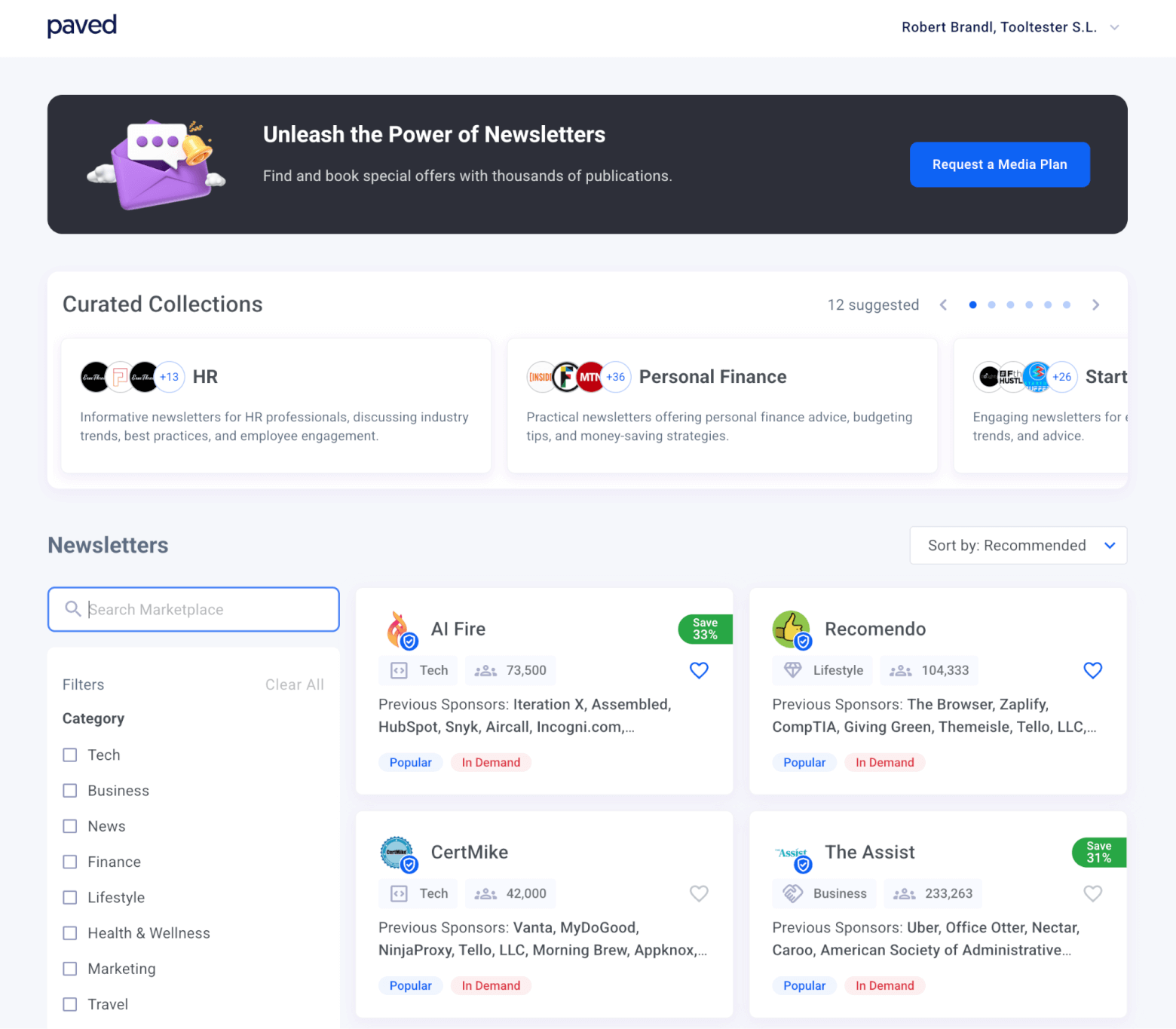
When you log in, you land directly in the marketplace. This is where Paved does a lot of the work for you.
You can browse newsletters by category, niche, and audience size, and you immediately see how broad the inventory is. Tech, business, finance, and lifestyle newsletters are all well represented.
Now compare this to manual outreach, where you often spend days just identifying who even offers sponsorships.
Another helpful detail is that Paved shows previous sponsors for each newsletter. By seeing whether brands in similar niches advertised, it makes it easier to judge whether your own product is a realistic fit for that newsletter's audience.
Advertiser reviews and social proof
Paved highlights verified advertiser reviews from brands that have actually run sponsorships through the platform.
These reviews usually mention engagement quality, lead volume, and whether the advertiser would sponsor again:
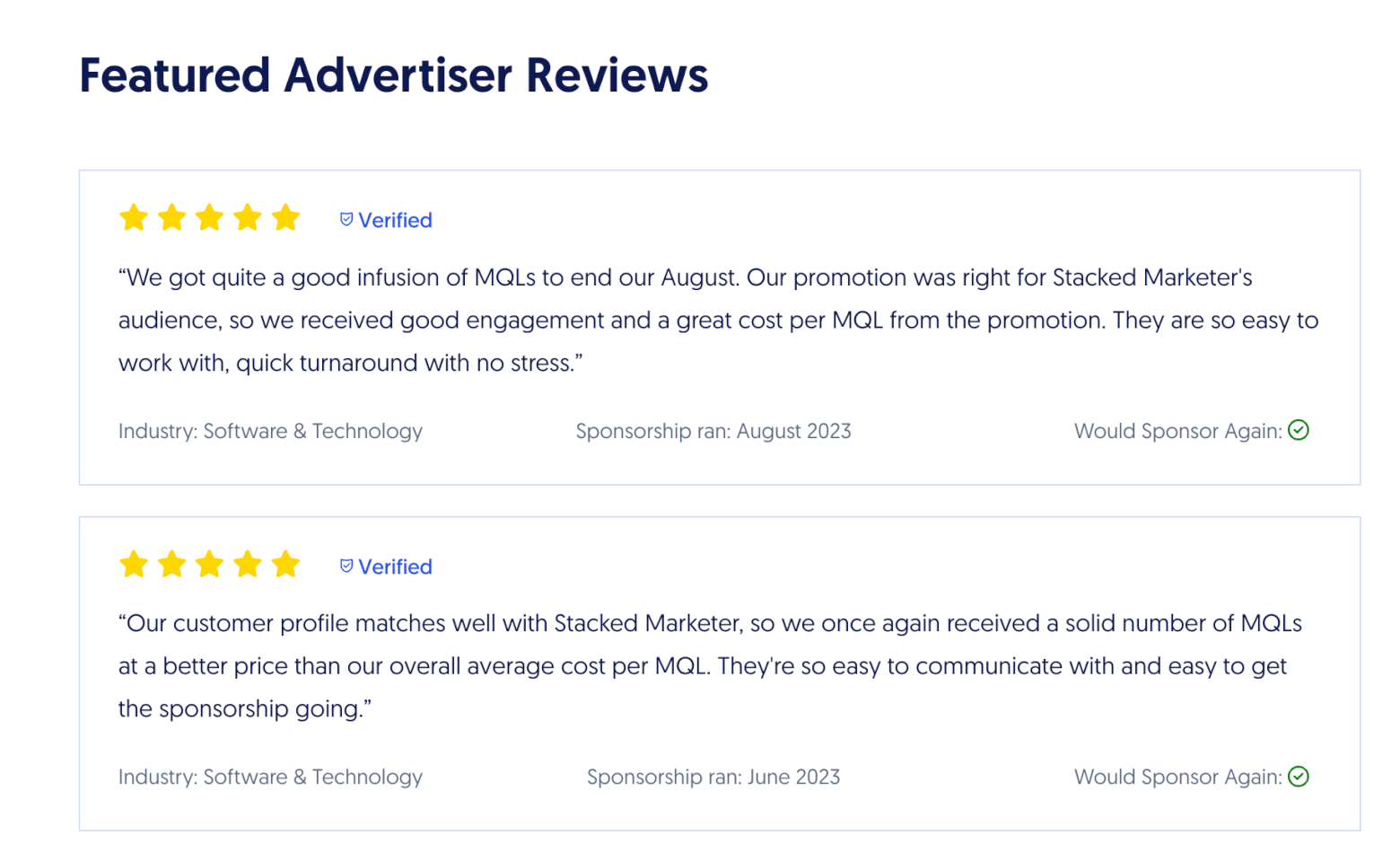
As an advertiser, this adds an extra layer of confidence. It does not guarantee results, but it helps filter out newsletters that may look good on paper but underperform in practice.
Sponsorship pricing and performance estimates
Every listing on Paved gives you a detailed breakdown of the most important metrics.
You typically see subscriber reach, average open rate, estimated clicks (which is a very useful metric), an estimated CPC range, and the total sponsorship cost. 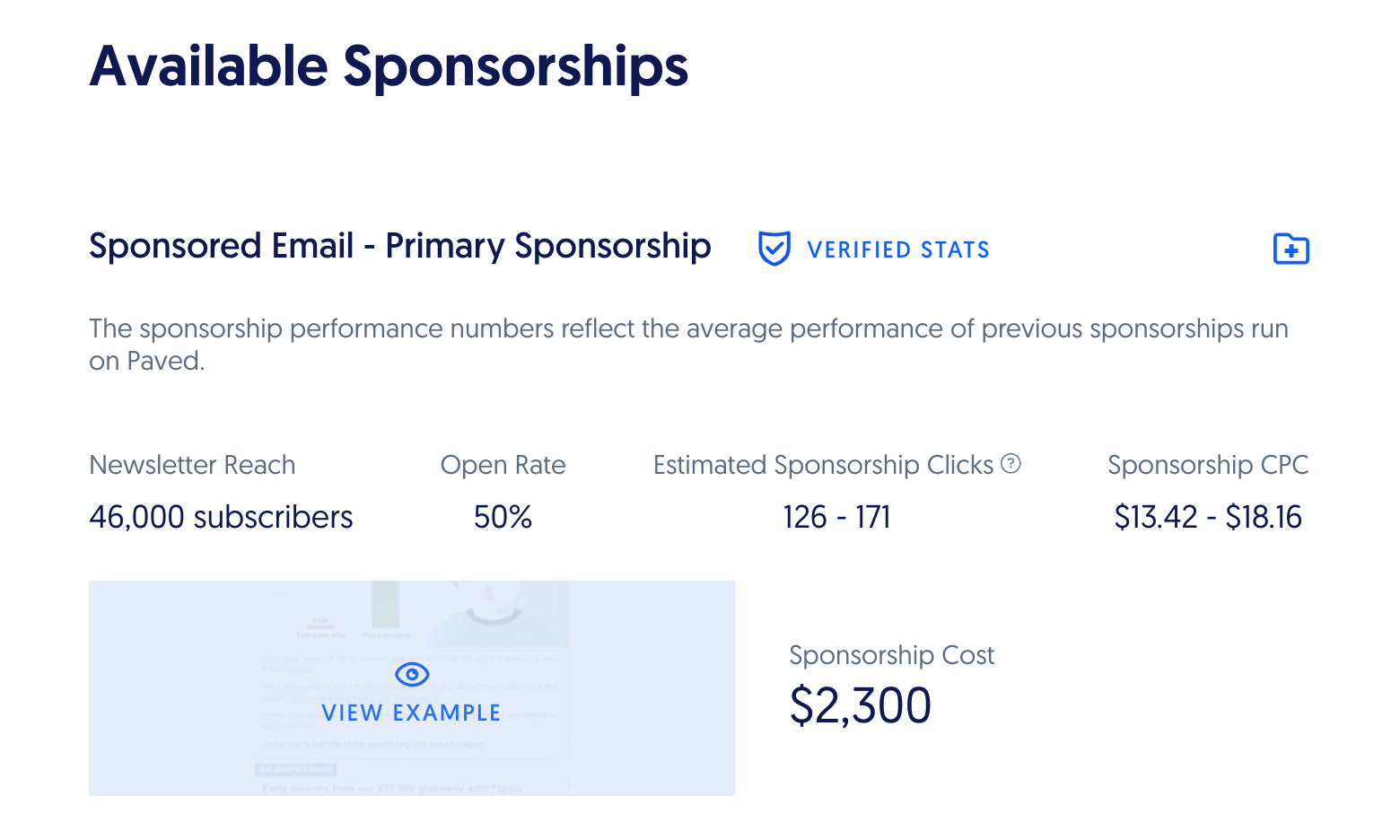
This level of transparency is very useful.
Newsletter sponsorships can be hard to benchmark, and while estimates are never perfect, having them upfront makes it much easier to compare opportunities.
Paved fee structure
One of Paved’s biggest selling points is that advertisers do not pay a platform fee. There is no subscription, no marketplace access fee, and no minimum spend. You simply pay the sponsorship price set by the publisher.
Compared to platforms like Passionfroot, this is a clear advantage for advertisers, especially if you want to test newsletter ads without committing to a paid plan.
However… there is an important caveat.
Paved charges publishers a 30% commission on sponsorships booked through the marketplace. Publishers factor this fee into their pricing, which means advertisers still pay for the platform indirectly through higher sponsorship rates.
This is not unusual for marketplaces, but it is easy to overlook. In short: if you compare a Paved booking to a direct deal with the same newsletter, the Paved price will probably be higher.
My experience using Paved as an advertiser
Overall, Paved delivered what I expected. It gave me fast access to relevant newsletters, clear pricing, and a straightforward way to launch sponsorships without long email threads.
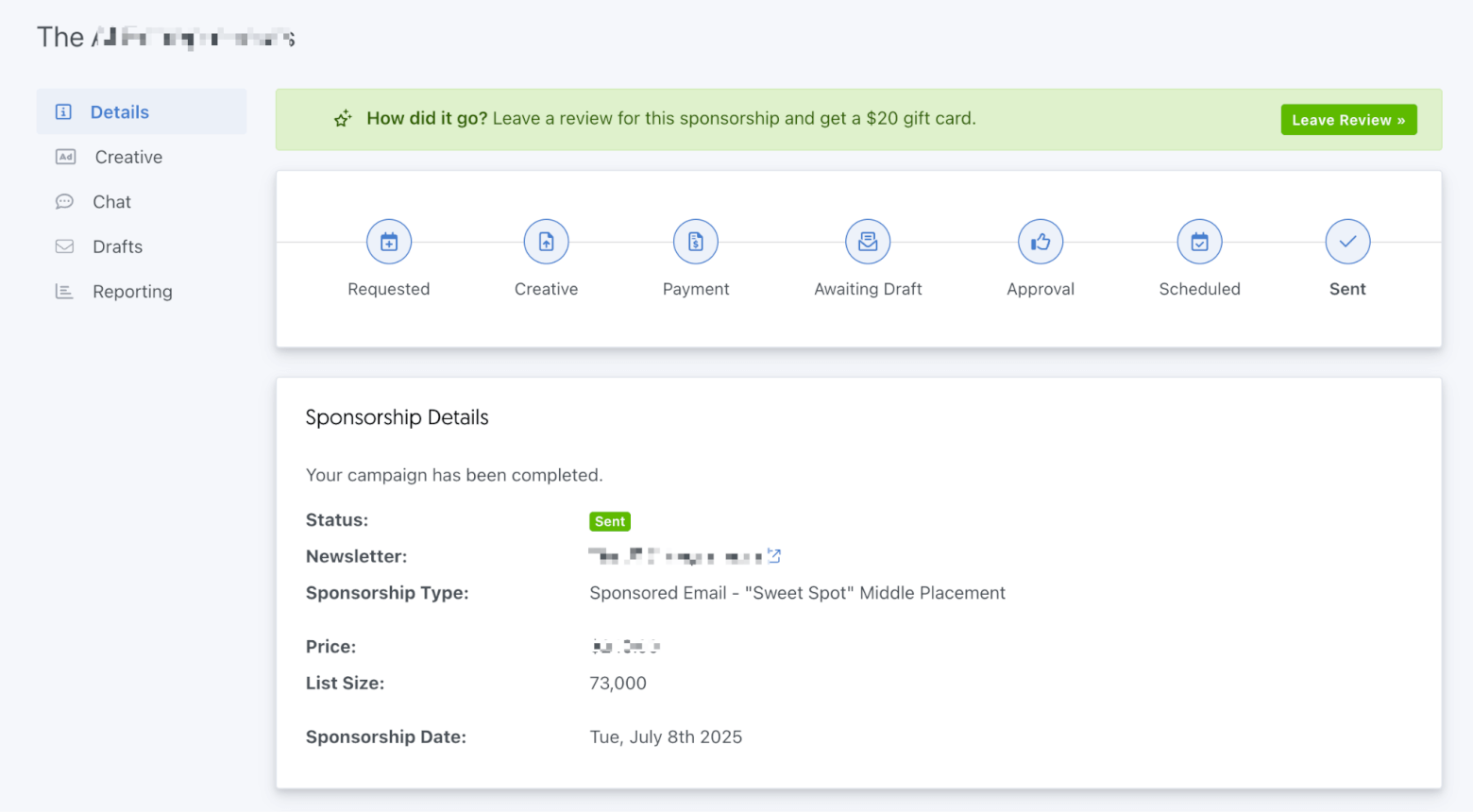
The biggest benefit was speed. I could shortlist placements, compare options, and book sponsorships quickly. That alone made Paved worthwhile for campaign planning and testing.
That said, performance still varied by newsletter. Even with similar stats, results were not identical. To be fully honest, my expectations were not fully met, but we had a very specific lead target in mind. Those targets are often hard to hit when you run one-off newsletter ads.
Next time I run newsletter ads, I would book at least three placements and approach them more as a brand-building channel, with signups as a welcome side effect rather than the sole goal.
Pros and cons of Paved
Pros
- Free for advertisers, no subscription or platform fee
- Large and diverse selection of newsletters
- Clear sponsorship listings with reach and performance estimates
- Verified advertiser reviews add credibility
- Much faster than negotiating sponsorships manually
Cons
- Publishers pay a commission, which is typically passed on to advertisers
- Some sponsorships can be expensive compared to direct deals
- Performance estimates are averages, not guarantees
- Less room for negotiation than one-to-one publisher outreach
And finally: is Paved worth using?
If you value speed, structure, and access to a large pool of newsletters, Paved is a strong option. The fact that it is free for advertisers lowers the barrier to entry and makes testing newsletter sponsorships much easier.
That said, the publisher fee model means advertisers ultimately absorb the platform cost. If your main goal is the lowest possible CPC, direct deals may sometimes be cheaper. Of course, there is also the possibility to run the first ad through Paved and then move off-platform (which is certainly not encouraged by Paved.).
Have you used any newsletter marketplaces like Paved? Let me know in the comments!
P.S. You can also sponsor one of our newsletters: EmailTooltester and Tooltester.
The authors
Learn more about us

Our Methodology
This article has been written and researched following our EmailTooltester methodology.
Our Methodology