


If your newsletter keeps landing in Gmail’s Promotions tab, you might be wondering whether a different email platform would help.
Our latest Email Detective data gives you a good reason to ask: newsletter platforms like Beehiiv, Kit and Substack show considerably higher Primary inbox placement rates than most other marketing platforms.
And we see a similar pattern when we compare our own newsletters, which we send through both Kit and Brevo:
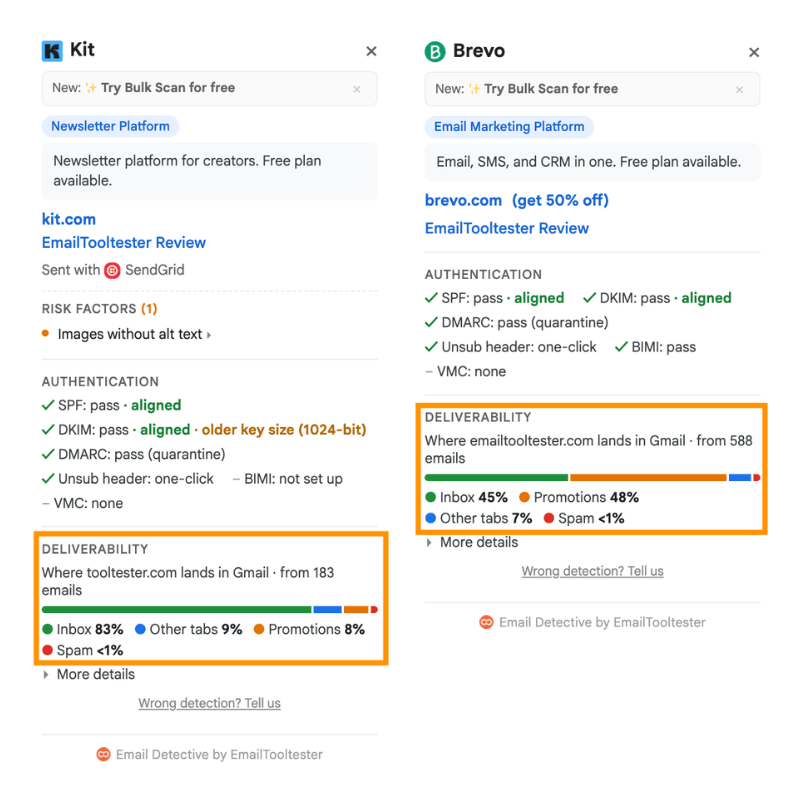
Our Email Detective Chrome extension lets you see the deliverability rates of a newsletter’s sender. Here, we can see the inbox placement for our Kit-sent newsletter vs our Brevo-sent newsletter
So, should you switch ESPs to avoid the Gmail Promotions tab, and get closer to your subscribers’ main inbox?
Before going through the trouble of moving your list, it’s worth understanding what these figures tell us (and how much your content and audience could explain the difference). I’ll walk you through what we found, what I’d check first, and when a platform change might make sense.
Newsletter platforms stand out in our Gmail data
Email Detective collects observations from real emails in real users’ inboxes. This lets us see which platforms brands use and where their messages actually land.
Here are the top-performing marketing platforms that Email Detective has identified, looking specifically at Gmail inboxes:
| Platform | Primary inbox | Other inbox tabs | Spam |
|---|---|---|---|
| Beehiiv | 82.7% | 16.5% | 0.8% |
| Substack | 69.8% | 29.6% | 0.6% |
| Kit | 68.8% | 31.0% | 0.1% |
| ActiveCampaign | 53.2% | 46.3% | 0.5% |
| Mailchimp | 36.7% | 58.7% | 4.6% |
| Brevo | 34.7% | 65.2% | 0.1% |
| Klaviyo | 28.2% | 71.2% | 0.6% |
Source: Email Detective, snapshot taken October 29, 2026. Figures are rounded and will change as more observations are collected.
By “marketing” platforms, we mean ESPs that primarily focus on sending marketing emails (e.g. as opposed to transactional). Beehiiv, Substack and Kit currently occupy the top three positions, and have consistently done so for a while.
What do they have in common? A strong focus on newsletters, publishers and creators.
That suggests there could be something about the newsletter model that helps these emails reach Primary more often.
But first, one thing I should clarify: an email arriving in Gmail’s Promotions tab is not the same as an email that’s been filtered into spam. It has still successfully reached the inbox. Gmail has simply put it in a category alongside other promotional messages.
Take Substack and Klaviyo. Both show a low spam placement rate of 0.6%. Their Primary placement rates, on the other hand, are 69.8% and 28.2% respectively.
So the biggest difference is where their successfully delivered emails are categorized. If subscribers tend to spend more time in Primary, you’ll understandably want your newsletter to appear there.
Therefore, the question I’d like to explore is: why does mail from newsletter platforms like Beehiiv, Substack and Kit reach Primary more often?
The email itself may be part of the explanation
Think about the difference between subscribing to a writer’s newsletter and signing up for a retailer’s discount code.
With the newsletter, receiving the email is often the whole point. You want the writer’s analysis, recommendations or weekly update.
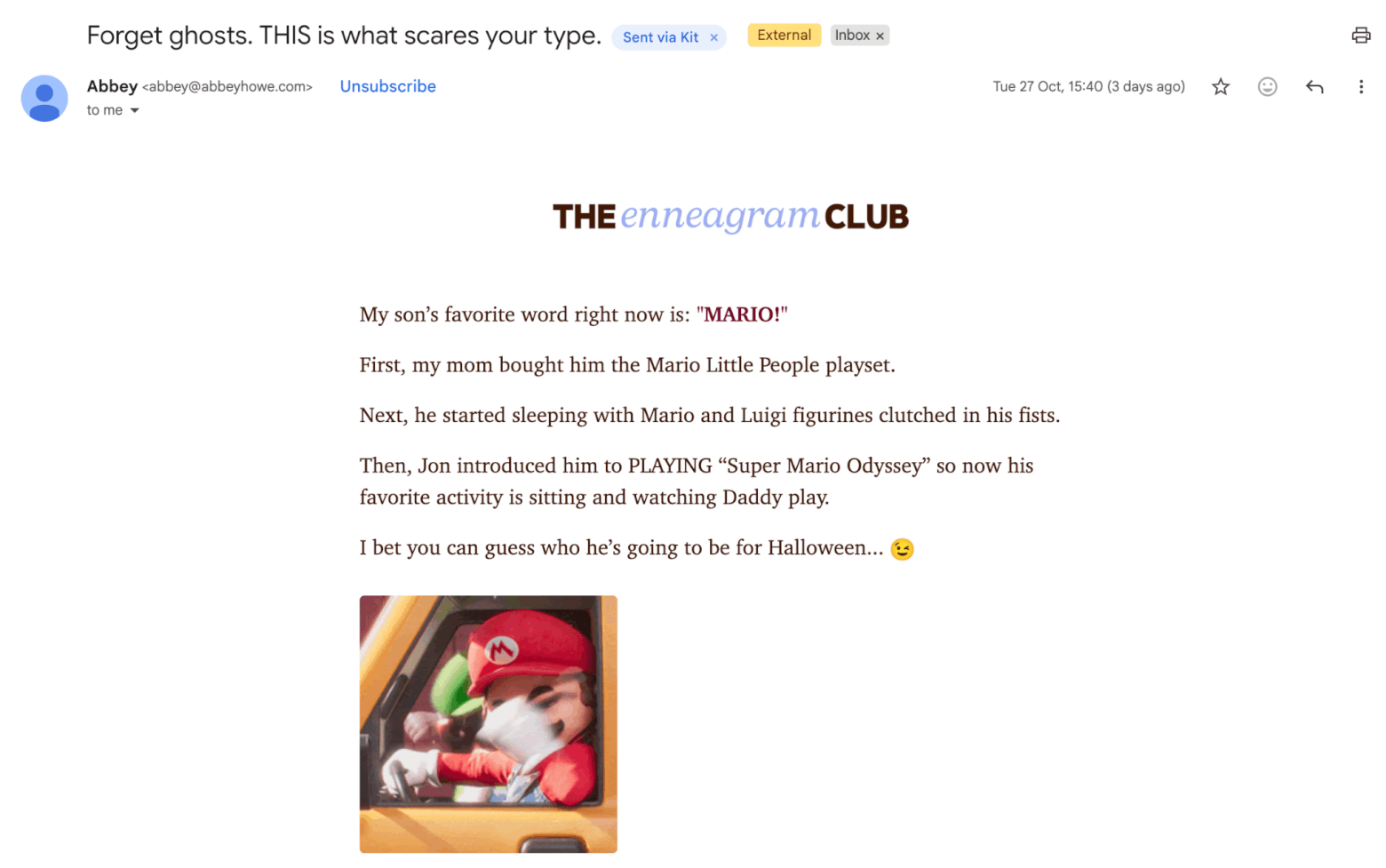
Creator newsletters like Abbey Howe’s Enneagram Club are often personal, and packed with insights the subscriber has specifically signed up to receive
With the retailer, you might be interested in a product, a sale, or – let’s be honest – just a discount code. The email supports that relationship, but it isn’t necessarily what you signed up to read every week.
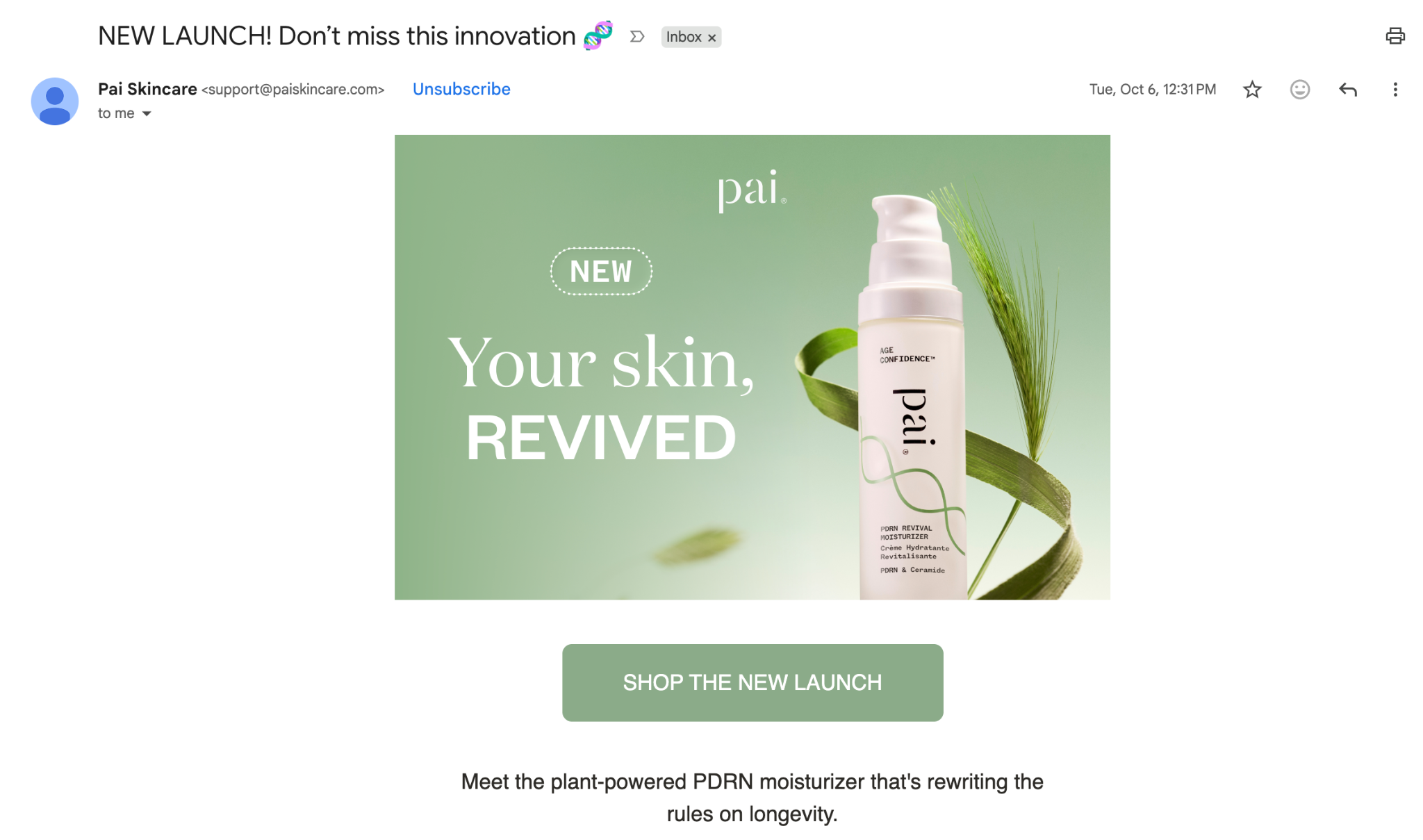
Marketing emails from retailers, like this one from Pai Skincare, tend to be more promotional
So both are perfectly legitimate uses of email marketing. They just serve different purposes.
This may help explain some of the patterns we’re seeing. Newsletter platforms (like Substack, Beehiiv and Kit) attract senders whose emails are closer to publications or personal updates, while broader marketing platforms (like Brevo and Mailchimp) handle a much wider range of campaigns.
Because subscribers tend to more actively sign up to the former rather than the latter, Gmail may give these kinds of emails more visibility in the Primary inbox. (After all, Gmail categorizes emails based on your preferences, and how you’ve previously interacted with different types of emails.)
Of course, newsletters often contain sponsorships and sales pitches. Retailers also publish useful editorial content. And a personal-looking email can be entirely promotional. So the lines aren’t always clear.
Plus, there are other differences between the platforms to keep in mind.
Klaviyo is closely associated with ecommerce. Substack attracts writers and publishers. Kit focuses on creators. A platform like Brevo serves businesses with many different email needs.
Each has different groups of senders. Those senders may have different subscription processes, audience expectations, sending frequencies and approaches to list maintenance. Their subscribers may also behave differently when the messages arrive.
The platform’s infrastructure and policies could also account for the differences in inbox placement rates. In our experience, we’ve observed that some platforms do indeed do more to improve customers’ deliverability than others.
The really interesting question is: if you moved the same newsletter, with the same audience and content, from one ESP to another, would its Primary placement change?
We don’t have the answer to that right now. But we do have an interesting example within our own business that could be useful here.
What happens with our own newsletters?
Our Tooltester newsletter goes out through Kit, while our EmailTooltester newsletter uses Brevo. Looking at each brand’s platform-specific Gmail placement gives us this comparison:
| Metric | Tooltester via Kit | EmailTooltester via Brevo |
|---|---|---|
| Primary inbox | 74.8% | 42.3% |
| Other inbox tabs | 24.9% | 57.6% |
| Spam | 0.3% | 0.1% |
| Emails counted | 318 | 1,447 |
Source: Email Detective, October 29, 2026. These are platform-specific observations, excluding mail attributed to our other ESPs.
Our Kit-sent mail has a Primary placement rate 32.5 percentage points higher than our Brevo-sent mail. Both show very little spam placement.
Our internal newsletter reports also show a difference. Over the last 90 days, Tooltester recorded a 60.14% open rate and a 5.57% click rate. EmailTooltester recorded 40.08% opens and 1.14% clicks. So the newsletter with higher observed Primary placement also has higher reported engagement.
It’s tempting to draw a straight line between those results. But that would go further than the evidence allows.
These are two publications with different audiences and content. Email Detective observes a sample of recipients, while our campaign reports cover a wider population. Plus, other emails (such as welcome emails and other automated messages) are counted in this data too.
However, it is interesting that our own stats seem to be consistent with the Email Detective data – and the hypothesis that emails sent via newsletter platforms tend to land in the Primary inbox more.
So, should you switch newsletter platforms?
If you want to avoid Gmail’s Promotions tab, I think there are other (less drastic!) avenues to explore first. If your emails rarely reach Primary, first look at what you send, and whether that matches what subscribers expected when they joined.
Did they subscribe because they wanted your newsletter? Did they sign up for a download and then find themselves receiving something different? Are you consistently delivering something they want to read?
Then look at your results. Primary placement is one part of the picture, alongside spam placement, clicks, conversions and unsubscribes. A campaign can reach Promotions and still do its job very well.
If you’re considering a platform change anyway, these figures can help you ask better questions. Look at the sample sizes, investigate comparable senders, and check your own brand’s results where data is available.
But keep the distinction between a platform average and your likely outcome in mind. Beehiiv’s 82.7% Primary rate doesn’t mean moving your list there will produce the same result.
For me, the most interesting finding is that newsletter-focused platforms stand out so clearly. The next question is how much of that comes from the technology, compared to how much comes from sending an email people specifically signed up to read. That’s what I want Email Detective’s new data section to help us explore.
Have you noticed a difference in placement after changing platforms, or the way you write your newsletter? Let me know in the comments.
A quick note on how we measure this
There are a few methodological details that help put these figures in context.
Email Detective’s observations come from participating users’ inboxes. We don’t send identical campaigns through every platform, and our users aren’t a random sample of everyone using Gmail.
For the platform comparison, a brand must meet minimum observation requirements. A platform needs at least three qualifying brands and 1,000 tracked emails to appear.
The figures are weighted by observed email volume. That means a brand whose emails we see frequently contributes more than one we rarely encounter.
Primary-versus-tabs placement is measured among readers who use Gmail’s inbox tabs (which is estimated to be around 34% overall). Readers with tabs switched off can’t tell us whether a message would have appeared in Primary or Promotions. However, spam placement uses observations from all readers.
This is useful in helping us identify patterns, but the resulting averages aren’t guarantees for an individual sender.
The authors
Learn more about us

Our Methodology
This article has been written and researched following our EmailTooltester methodology.
Our Methodology