


When I launched my newsletter in 2020, I’d originally planned to start a blog. But with only a couple of hours in the evenings, that wasn’t realistic. So I chose a simpler route: a weekly email with my favorite weekend recommendations. Like all beginners, I learned by doing, experimenting, making mistakes and refining things along the way.
Over time, I found people who connected with what I had to say, and realized just how powerful a newsletter is in building a direct line to your audience. Six years later, my newsletter has evolved into a paid community that still helps me pay some bills.
A newsletter allows you to build a relationship with your readers over time. Instead of competing with algorithms, you are communicating directly with people who have chosen to hear from you. Because that user intent is built in, newsletters consistently hit 30 to 50% open rates, easily outperforming social media in both reach and conversion.
It’s true, though, that things have changed since 2020.
Newsletters have exploded in popularity, everyone seems to be on Substack, and competition is stronger. But that doesn’t mean they are any less powerful.
I’ll walk you through everything you need to know to start a newsletter business from scratch – even if you’re not entirely sure where it’s heading yet. Let’s take a closer look.
What you (really) need to start a newsletter
You definitely don’t need a fancy strategy or a pricey tool to start writing a newsletter. Back when I started, I kept things intentionally simple. Instead of overthinking it, I focused on a few fundamentals that would make my project actually move forward.
First, I defined what I wanted to write about. In my case, that was mostly recommending books, movies and homemade recipes for the weekend.
Then, I organized all of it into a ready-to-use format for my emails, where I could just tweak each section for each issue.
And lastly, I chose a publishing schedule I could realistically maintain and kept it well.
- Decide on your content main topics: figure out the main theme/idea, and what it is you want to write about long-term.
- Think of a simple structure you can reuse for all your emails. Rather than starting from scratch every time, organize content into repeatable sections. This makes writing faster and gives the newsletter a consistent feel.
- Choose a sending frequency you can stick to (and really stick to it!)
The main key is consistency. It’s far better to show up regularly with something solid than to start strong and disappear after a few weeks.
In my case, I’ve always sent my newsletters weekly, every Friday morning. This timing worked well for my routine and matched the type of content I was sharing, which often included book recommendations and ideas for the weekend. Over time, readers began to expect emails at that time. It became part of their day.
And that’s exactly what you could aim for: creating something people look forward to and know when to expect it.
If you’re still figuring out your direction, start exploring what’s already out there! Platforms like Substack are a great place to see how others position their newsletters and structure their content. You can also check out our curated examples to get a sense of what works across different niches.
And if you want a more detailed breakdown and tips on how to write a newsletter, we’ve put together a guide that walks you through the process.
Choosing the right newsletter tool
Once you have a clear structure in place, the next step is choosing the platform to publish and manage your newsletter.
When I first started, I signed up for Mailchimp, and I quickly learned it was definitely not the best fit for a creator-focused newsletter. I eventually changed to Flodesk, which to be honest is also not the most comprehensive choice for creators (but I had a very generous referral discount from a friend, and the tool was enough for me and my specific goals).
It’s a different internet in 2026, and so many tools have emerged or risen in popularity! There are a lot of great newsletter platforms for creators to choose from that are specifically designed for writers, and even some that offer built-in AI features to help speed up the newsletter creation process.
Let’s start with Substack.
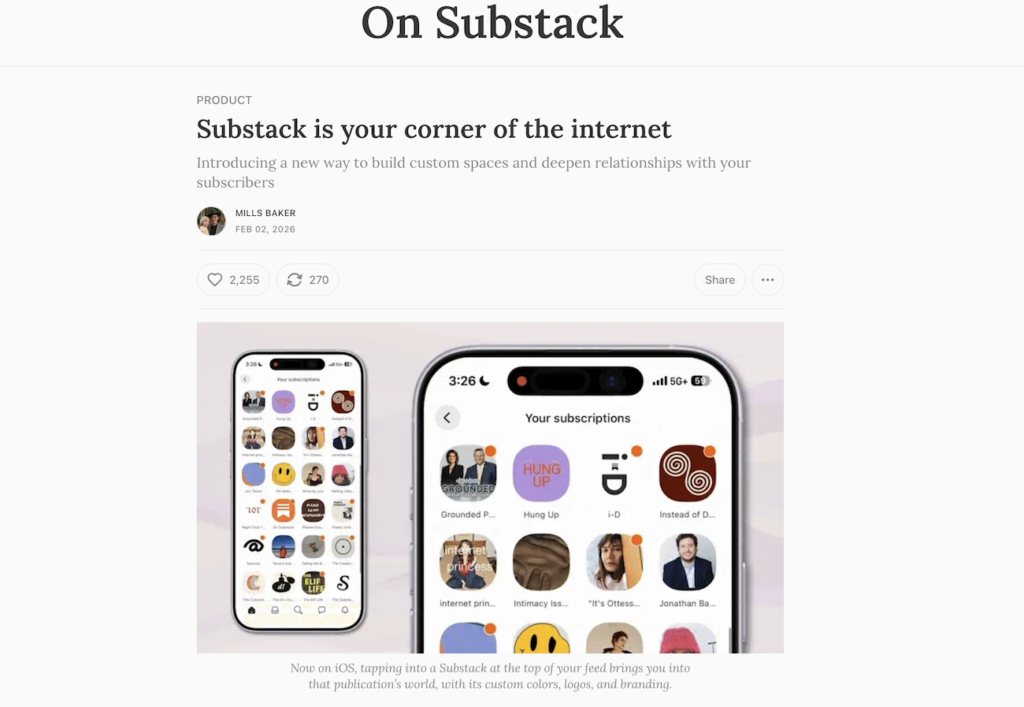
Substack has seen a huge rise in the last couple of years and it is often the easiest option for beginners that want to start a newsletter. It costs nothing to sign up, and it allows you to start writing, publishing and collecting subscribers right away. Plus, it includes a strong built-in community and features for monetization through paid subscriptions.
However, Substack is certainly not a traditional email tool, and they actually describe themselves as a media app, not a newsletter platform. It feels more like social media these days, and you might have a hard time finding email features that may be important for growing your newsletter in the future. Substack offers direct messages, a Notes feed, podcasts, live videos, and even launched a Substack TV app last year!
Last but not least: Substack takes a really big cut of your earnings once you start monetizing – 10% of earnings, plus fees.
Although it is probably the most popular newsletter tool at the moment, we highly recommend you look into Substack alternatives and see why other tools might work best for you. That being said, it obviously works for many creators.
You can see more about its pros and cons in our video below.
> See how Substack compares to Kit
> See how Subsbtack compares to Beehiiv
Now, let’s take a look at Beehiiv.
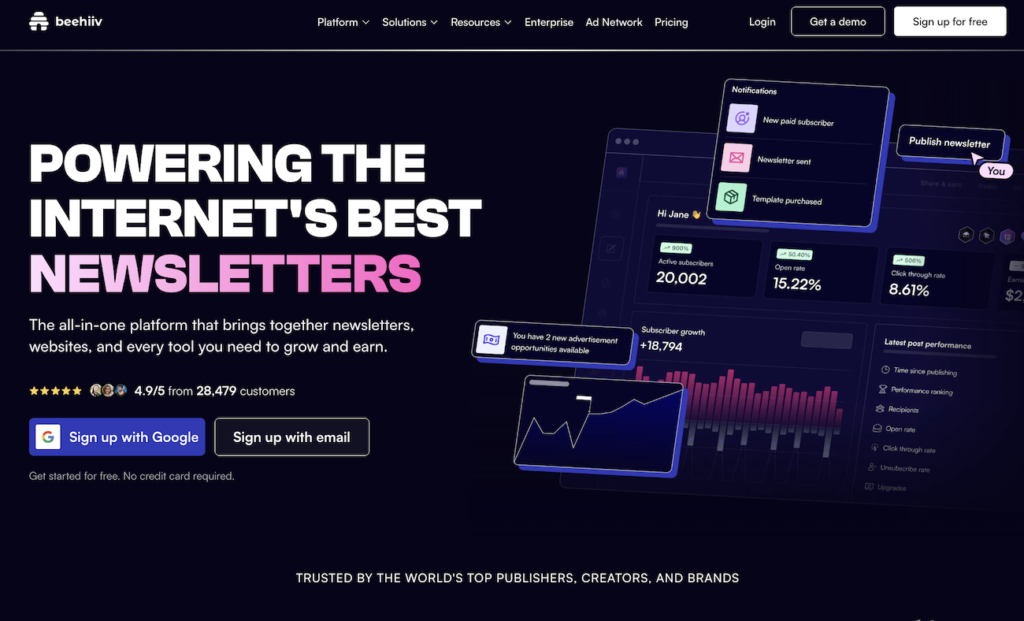
Beehiiv is more and more becoming a very popular choice for creators, particularly for those who want to grow a newsletter as a business, and navigate through all the monetization routes they can.
Beehiiv is very much focused on helping creators make money. Aside from newsletters, you can also build a website, landing pages, and even podcasts, with migration support to move your newsletter archive over to your Beehiiv website in just a few minutes. There are even AI-powered features like a writing assistant and image generator to help you create newsletters quicker.
What's great is that Beehiiv doesn’t take any cut of your earnings. All you will ever pay for is the monthly fee of your paid plan. This is a huge plus once you start growing!
To get started, Beehiiv offers a free plan for up to 2,500 subscribers. Just note: while it sounds like a good starting point, the free plan is quite limited. All their main features (including monetization tools such like subscriptions and advertising) are only available on paid plans, and the price jump to upgrade might be a bit steep if you’re just getting started.
However, with a huge focus on helping creators grow a newsletter business, they’re constantly listening to users' feedback, and roll out product updates all the time.
> Read our detailed Beehiiv review
> Try Beehiiv for free now (and get 20% off for 3 months with discount code ETT)
Finally, let’s take a closer look at Kit.
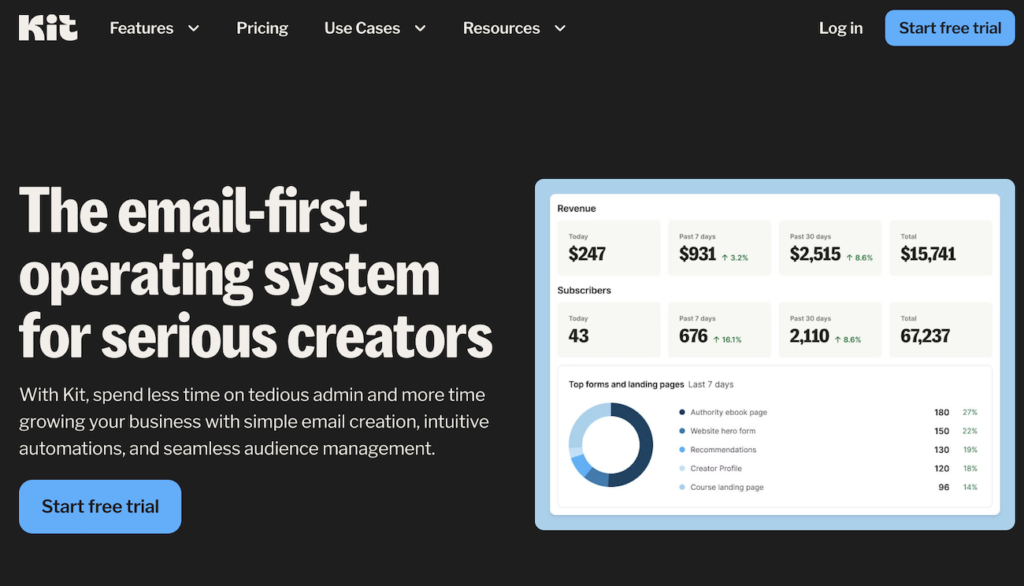
We really like Kit (previously known as ConvertKit), which we actually use for our Tooltester newsletter. First, they have always focused on creators. But they take a slightly different approach than other tools, by combining powerful email marketing functionality with creator-focused features.
One of its main advantages is that it allows monetization even on its free plan, with options like selling digital products and managing sponsorships. The free plan is also extremely generous, allowing up to 10,000 subscribers!
It also stands out when it comes to automation and monetization options and offers more advanced options for creating sequences, segmenting your audience, and setting up sales funnels.
With Kit, you can sell digital products like paid newsletters, courses, or downloads, all built directly in the platform with landing pages and checkout included. There’s also a tip jar option for collecting donations from your audience.
While pricing can increase as your audience grows and your requirements change, Kit still remains a flexible and well-rounded option considering everything they offer.
They also don’t take much from your earnings – it’s a fair cut of 3.5% (which includes credit card processing fees).
Of course, choosing the right tool ultimately depends on your goals, but the most important thing is to pick one and begin. You can always change your mind as you grow, with most platforms offering full support for migration.
> Read our detailed Kit review
Setting up a sign-up page that converts
Once you’ve found the best tool for your project, the next step is setting up a way for people to subscribe.
If you don’t have a website yet, that’s not a problem. Most newsletter tools come with built-in landing pages or even websites you can use right away to promote it.
These sign-up pages are often the first impression readers will have, so they matter more than you might think.
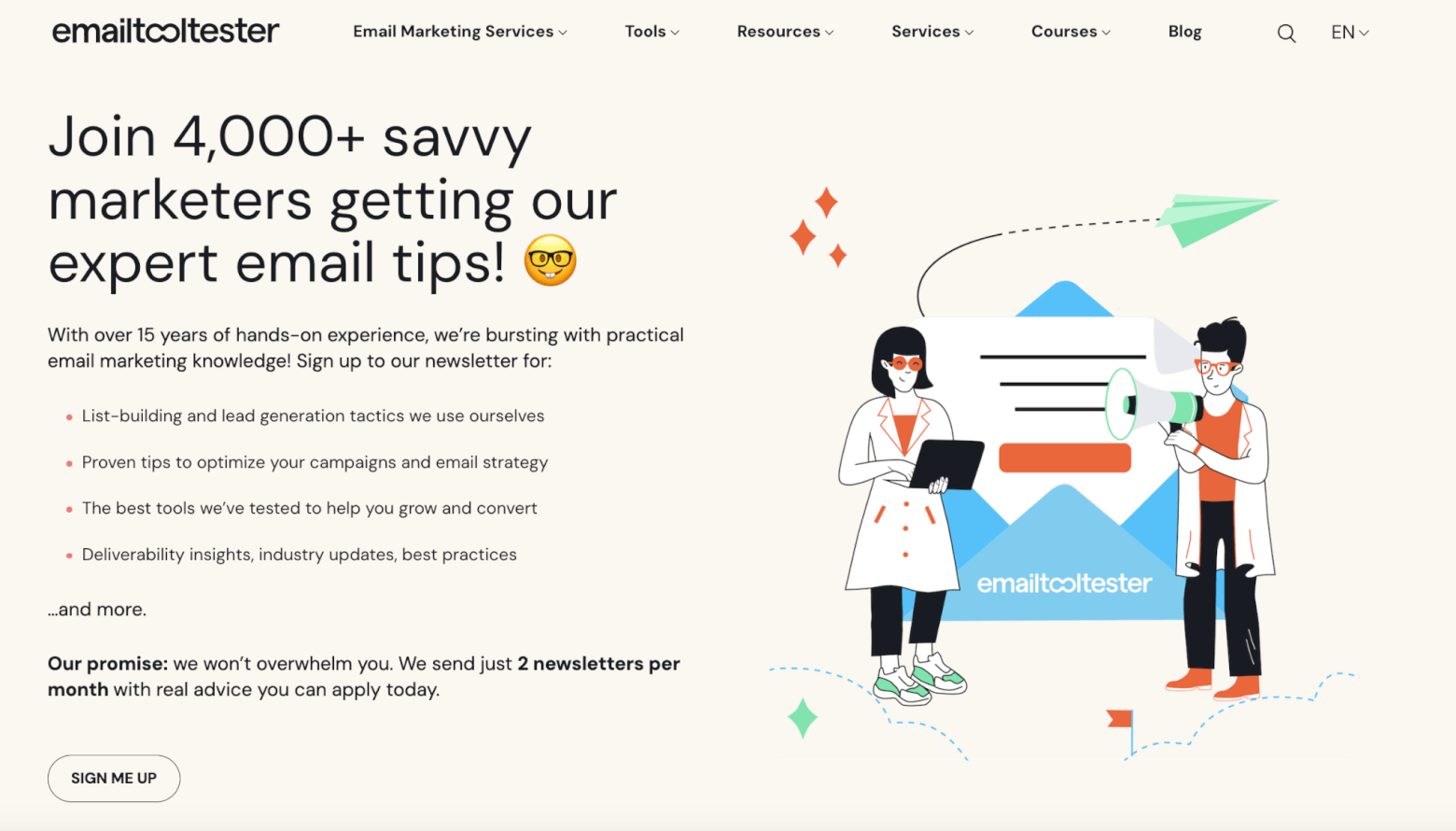
While they don’t need to be complex, they do need to convert. To make sure that happens, you need to clearly communicate:
- what readers will receive
- why it’s worth subscribing
- how often you’ll be in their inbox
A simple statement describing the type of content and the delivery schedule can make a significant difference.
Take our own sign-up page for reference:
You can also share a few of your favorite past issues or include a quick preview so visitors know exactly what to expect. This helps set expectations and ensures you’re attracting readers who genuinely want to receive your unique content.
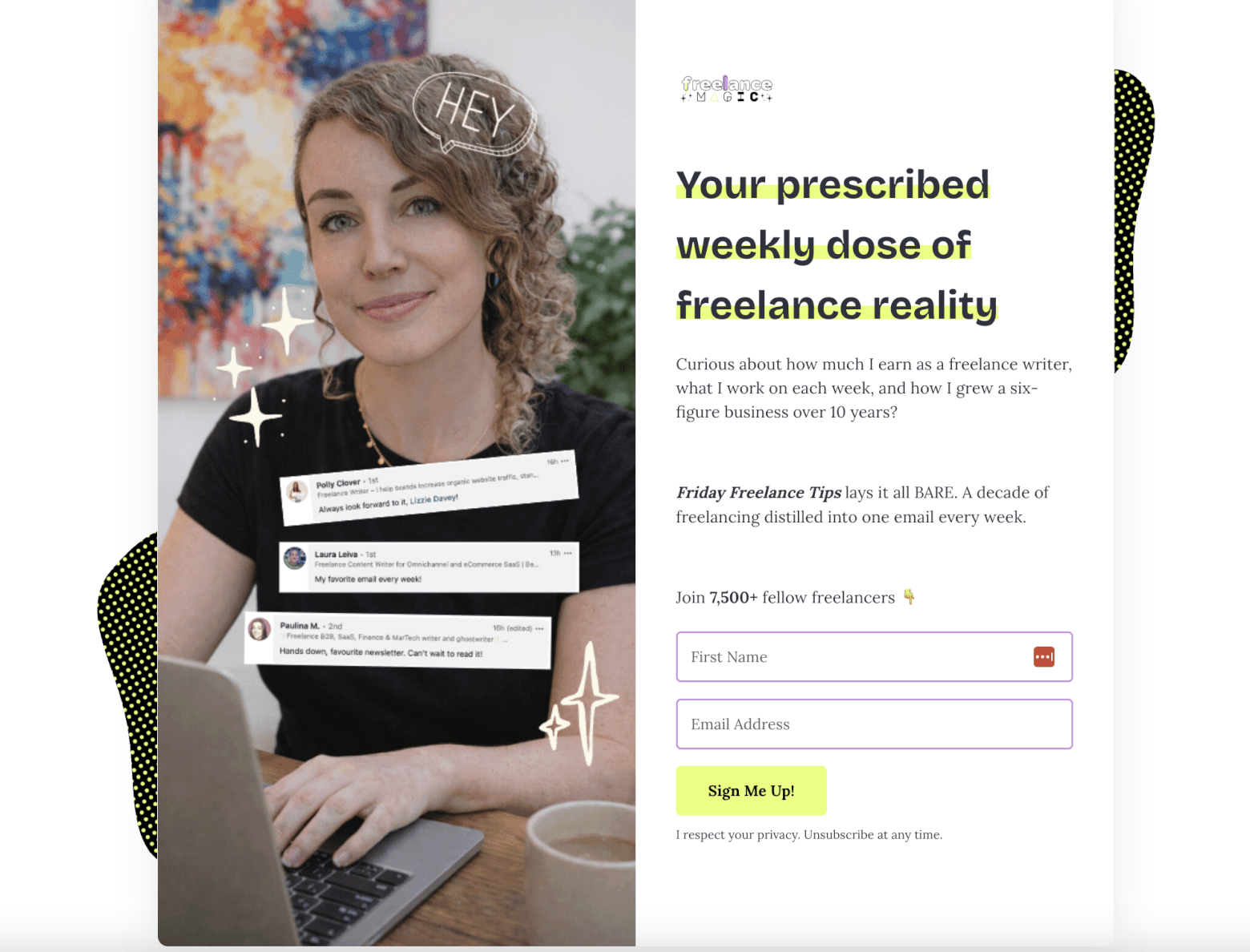
As your newsletter grows, adding social proof — such as the number of subscribers and readers’ testimonials — will help build trust and encourage more signups.
Here’s another great example from Friday Freelance Tips, by Lizzie Davey:
Once that’s done, we recommend you make sure your welcome email is optimized too, keeping new readers interested from the start and looking forward to your next email.
Promoting your newsletter and growing your audience
Once your sign-up page is live, the next step is promoting it and building a list!
A simple place to start is your existing channels. Share your newsletter across your social media profiles and personal network, and make it easy to find. Tell everyone about it! Add the link to your bio, pin a post, or highlight it wherever you’re most active. The goal is visibility, especially in the early days.
To give people an extra reason to subscribe, consider offering a lead magnet. Think of a checklist, a short ebook, or an exclusive resource or video. It doesn’t need to be complex, just something that delivers practical value and makes people curious.
- Add your sign-up link to your social media bios and pin it where possible
- Share your newsletter on platforms and groups where you’re active
- Offer a lead magnet in your sign-up page to increase conversions
- Engage with creators in your niche by commenting, collaborating, or contributing (don’t be afraid to reach out to people you don’t know!)
- Join relevant communities and conversations where your audience already hangs out
- Mention your newsletter in real-life situations, such as events or networking opportunities
From there, growth usually comes down to showing up consistently.
These efforts may seem small individually, but they certainly add up over time and contribute to steady, organic growth!
Sending your first issue
Sending your first newsletter is often a challenging step, not because of the technical side, but because of the uncertainty that comes with it. Especially when we’re just getting started, it’s easy to overthink and not trust our value.
Before you hit send, it’s a great idea to get a bit of outside perspective, so make sure you share your draft and sign-up page with a few people you trust! Ask for honest feedback and see where you can tweak things.
I remember when I did this, the insights I got were super helpful and gave me a lot more confidence going into that first send. I also would constantly ask for readers’ feedback and received some emails on this, which helped me too.
Always do a test run before you go live:
- Send yourself a test email and review everything carefully
- Check how it looks on both desktop and mobile
- Click through your links to make sure everything works
Remember, your first newsletter does not need to be perfect. What matters most is the process of showing up consistently and learning along the way!
I promise you it gets a little bit easier with every next issue. You figure out what people click on, what they enjoy, what you can improve and what you’re best at.
Keep showing up and focus on progress rather than perfection.
How to make money with your newsletter
As your audience grows, you may start thinking about monetization. While this is not something to rush into, once your list starts growing and things feel a bit more established, it’s worth exploring your options.
So let’s quickly talk about different ways to monetize your newsletter!
- One of the most popular routes is paid subscriptions.
Tools like Kit, Beehiiv, and especially Substack make this really easy to set up. You simply offer exclusive content to paying subscribers, while still keeping some content free so new readers can still get to know your work.
- Sponsorships and ads are another great option, especially as your audience grows.
Having direct access to your readers’ inboxes is incredibly valuable for brands and selling ads in your newsletter might be an easy and profitable route. Some newsletter tools – like Beehiiv – even offer an integrated network to work from and book sponsors easily.
That said, it’s really important to be picky about these. You should keep promotions relevant to your audience, and be careful to not overdo it.
If your emails start to feel too promotional and the content too sales-driven, it can quickly turn readers off and lead to unsubscribes.
- Affiliate marketing can also work well.
And this is something we use ourselves at EmailTooltester – and not only in the newsletter.
When you recommend tools, products, or resources you genuinely want to promote, you can include an affiliate link and earn a commission whenever someone makes a purchase. Just make sure you are transparent about it. We always make it clear across our channels that we may earn commissions from our links, and readers are usually happy to support our work.
If you want to get creative, the options are endless!
You can create your own products, such as ebooks, courses, or even offer consulting. The advantage here is you can offer this when you know your audience already knows and trusts you, making it much easier to convert. Over time, you can also include testimonials to strengthen your offerings.
And then there are paid communities or memberships, which we’re big fans of!
Building an exclusive community can be a really special way to bring your most engaged readers together in a more interactive space, whether that’s a private group for general discussions, or something more focused, like a virtual book club, or even real life events and meet-ups.
Regardless of the routes you choose, the main focus remains the same: delivering value first, so you can create the foundation for sustainable monetization over time.
Final thoughts
Starting a newsletter business from scratch may feel like a lot at first, but it becomes a lot more manageable when broken down into clear steps.
By focusing on structure, consistency, and meaningful content, it is possible to build something that grows over time and provides real value to both you and your audience. If you choose something you’re passionate about, you can become a trusted reference on it.
As always, the most important step is simply to start. Sending that first newsletter is what gets everything moving. From there, be consistent and you’ll learn as you go — figuring out what works, and improving with every issue you send.
Thanks for reading, and if there’s anything we didn’t cover, let us know in the comments!
The authors
Learn more about us

We keep our content up to date
22 May 2026: Updated Beehiiv AI features
Our Methodology
This article has been written and researched following our EmailTooltester methodology.
Our Methodology