Let’s be honest: most inboxes are crowded, and attention is limited.
I came across this old Reddit post a while back, and while five emails a day is overkill, I’d argue that there’s still no reason for promotional emails to fall out of your email marketing strategy.

These emails provide a direct way to reach your audience with your offer. However, there’s definitely a right way and a wrong way to do them.
Let’s focus on the right way, shall we? In this blog post, I’ll walk you through practical tips on how to write promotional emails that perform, along with real examples to see what works in action.
What are promotional emails?
Promotional emails are the marketing emails you send when you want to draw your audience’s attention to certain products or services, whether they’re new or existing offers.
They’re typically designed to support goals like:
- Improving engagement: Promotional emails get your audience to open, click, and interact with your content.
- Increasing revenue: They can turn interest into purchases, sign-ups, or conversions.
- Improving long-term impact: Not every email leads to a quick sale, but when the need arises, your brand is the one they think of.
- Ensuring consistency: Promotional emails are a quick way to stay present in your audience’s inbox without being easy to forget.
But they only work when done right, which is where the following tips come in.
How to write a promotional email: 13+ tips that will get you results
You don’t need flashy gimmicks to create high-performing promotional emails. If that were true, it would be hard to replicate them. You just need to get the following key things right, and do so consistently:
1. Identify what you’re promoting, and make it obvious why it matters.
Be specific about which product, offer, or action you want attention on, and give the reader a reason to care in this moment, not later.
What you choose to promote will inherently guide:
- Your message's angle (is it benefit-driven, urgency-driven, or offer-driven?)
- Your call-to-action (shop, explore, claim, upgrade)
- The level of urgency (limited-time vs always available)
- Supporting details (features, proof points, incentives, etc.)
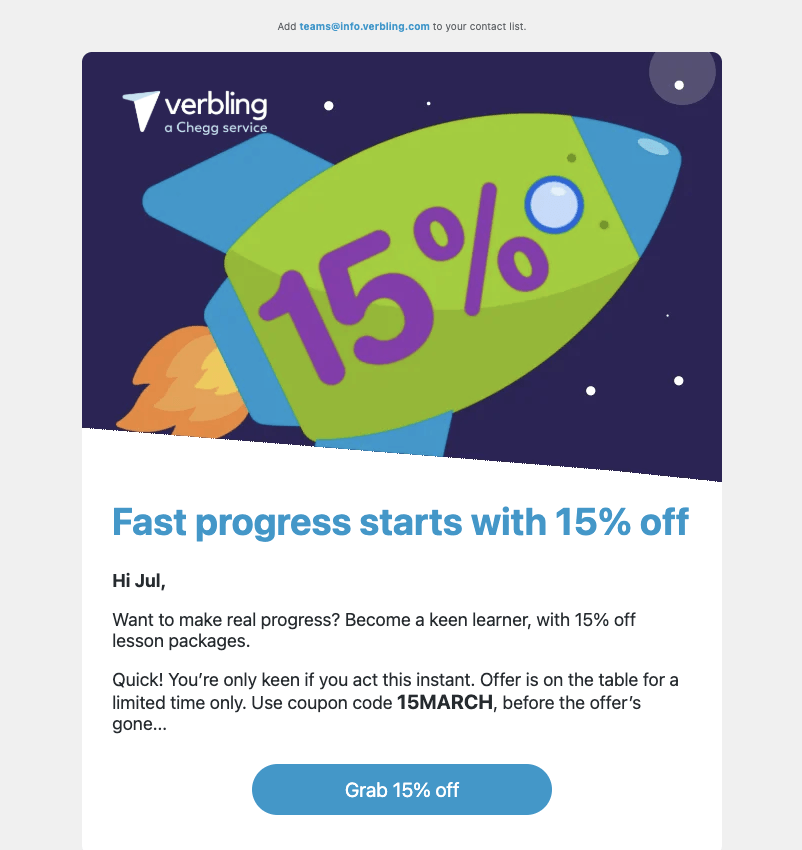
Here, you’ll see how language learning platform Verbling’s promotional email example focuses on giving a discount (15% off) on class packages for March. The offer is clear, and the email is exclusively focused on that – which is precisely what makes it so effective.
2. Match the promotion to the customer journey
Just because you want as many people as possible to see your promotional email, doesn’t mean you should blast the same email to your entire list. That’s why it’s important to use email segmentation when sending your promotional emails.
A new subscriber, a repeat buyer, and an inactive user are all at different stages in their journey with your brand. So, each one will need messaging that reflects where they are.
Start by grouping your audience into simple segments. Most email marketing platforms already give you the basics, like subscriber activity, purchase history, and engagement levels. Use them to create simple segments, then build your messaging around what promotions you think these groups will be eager to know about.
3. Time your promotional emails well
William Shakespeare was right: Timing is everything… even when it comes to sending promotional emails.
When your email lands can influence how it performs just as much as what it says. A good starting point is to look at your own data. Review past send times and see how they correlate with open and click rates.
If that doesn’t work, Twilio has done a deep dive into email campaign timing and found that:
“Promotional emails tend to perform best midweek—particularly on Tuesdays and Wednesdays—typically between 9–11 AM or 1–3 PM, when engagement peaks during work breaks.”
4. Write to one person, not a list
When thinking about how to write a promotional email, remember this: you’re not dropping flyers in a crowd. You’re about to have a one-on-one conversation.
You know who your audience is, what they like, and what they’ve looked at. That’s your leverage. Stay away from mass-produced emails by using the information to make the message feel personalized.
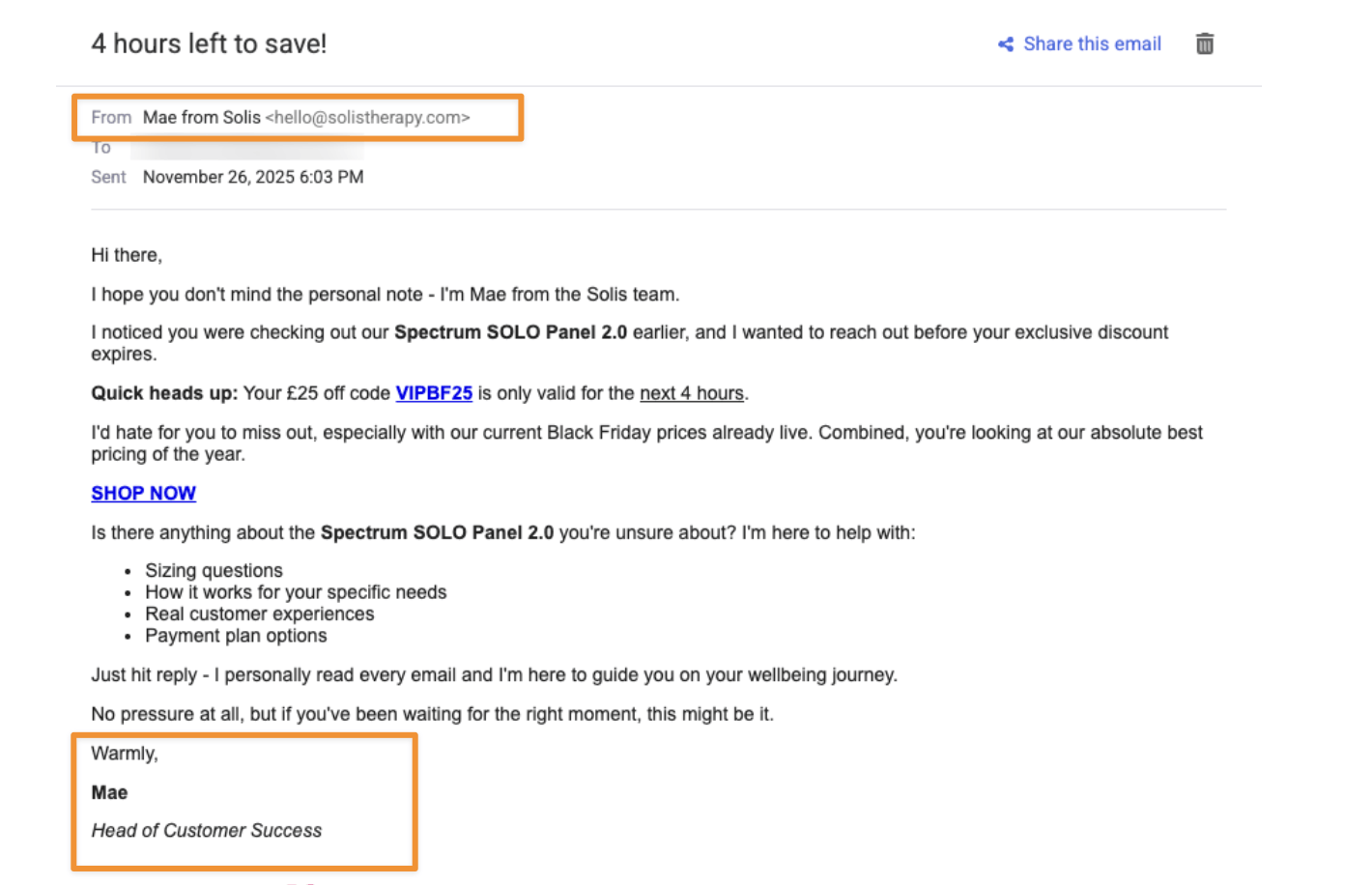
This email from red light therapy brand Solis is a great example. It’s clearly promotional, but it feels personal because it mentions a product I’d been eyeing and pairs it with an offer that I was already familiar with:
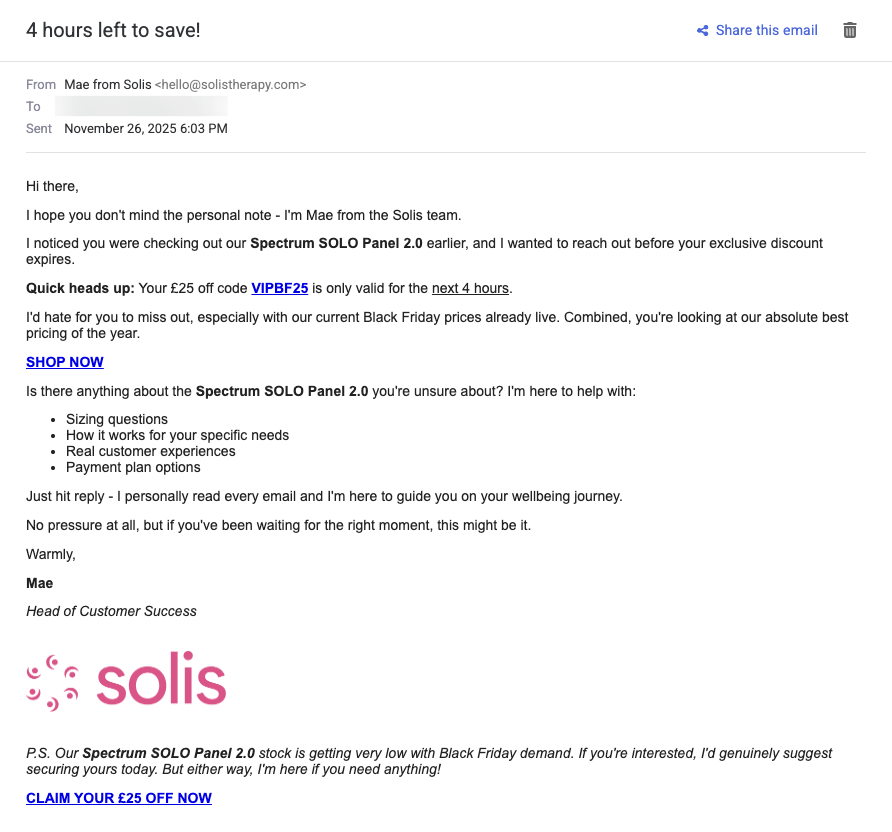
Always take advantage of your email marketing platform’s personalization and segmentation features. For example, Solis’s email could be better. Adding my name, instead of using “Hey there,” could have pushed that personalization further without much extra effort. Dynamic email content can also help here; here’s a guide.
5. Keep subject lines clear, concise, and outcome-focused
Promotional emails need to make the value the reader is getting immediately clear — and that should be expressed in the subject line.
Don’t fall into the trap of embellishing the subject line to get some clicks. Stay true to your offer, and avoid words and symbols that could land your promotional email in the spam folder, like “!!!” or “ACT NOW.”
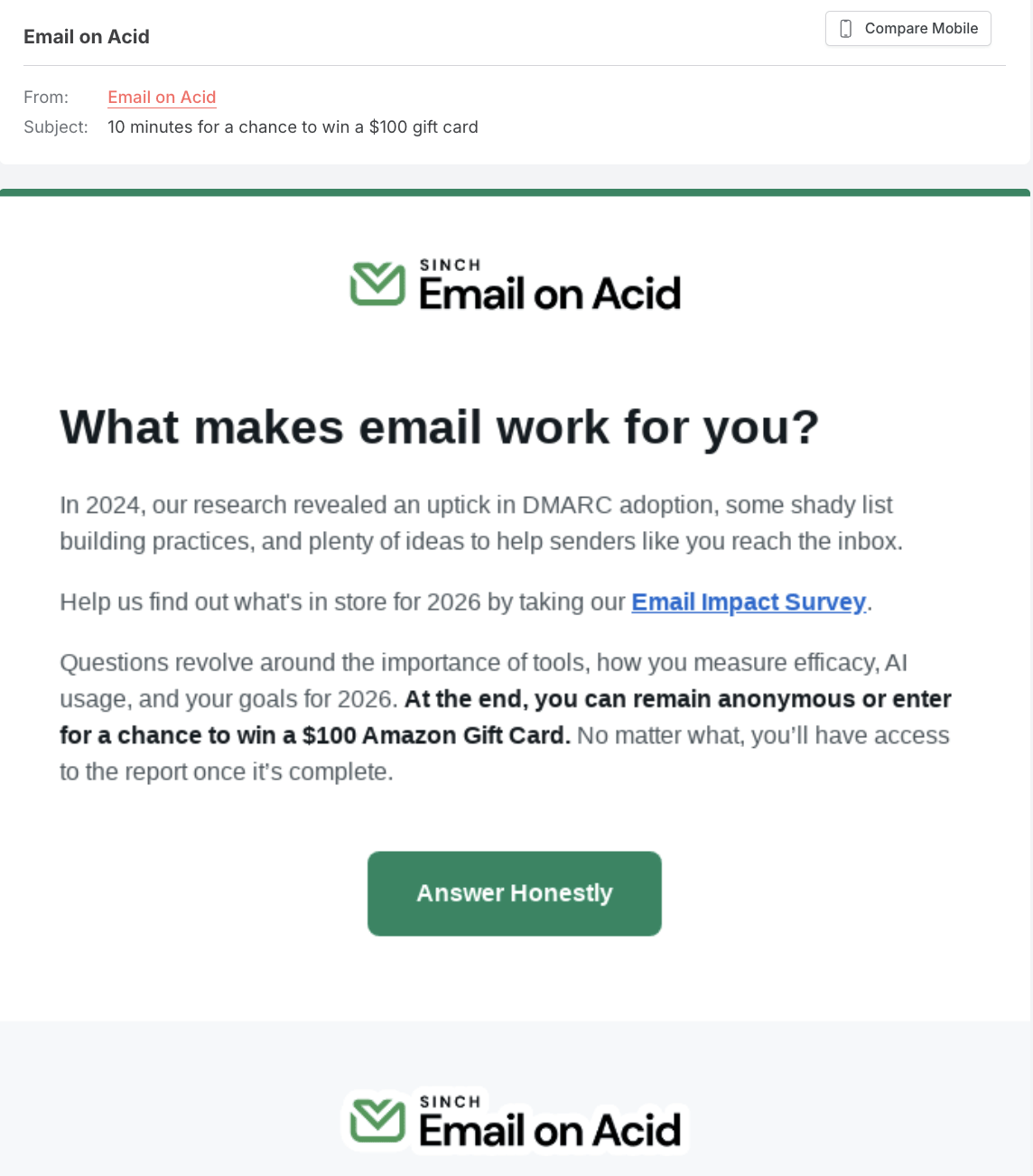
This example from Email on Acid gets it right. It’s quite clear: They need your time, in this case, for their survey. So in exchange, you get a chance to win an Amazon gift card:
Source: Really Good Emails
That said, be careful not to make subject lines too long. The longer they get, the more likely they are to be cut off—especially on mobile and its limited space.
Keep them clear, visible, and effective. Use tools like our Email Subject Line Tester to preview how your subject lines appear across devices and inboxes.
6. Use the preheader as a second hook
Sometimes, the subject line gives you limited space, but you still have more to say. That’s where the preheader comes in handy.
Email marketer Jeanne Jennings ran an A/B test comparing emails with and without a preheader. The version with one delivered a 95.6% increase in revenue per email (RPE). That’s a huge lift from a small change.
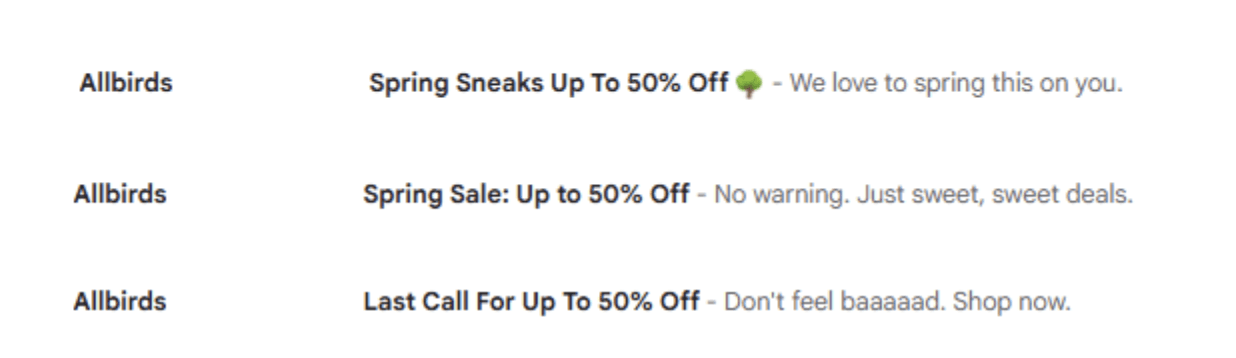
You can use the preheader to add context, tease curiosity, or reinforce the value in your subject line. For example, Allbirds keep it short, sweet, and effective.
These preheader texts in their promotional emails reflect their brand personality well and support the key message:
7. Get to the point quickly.
Promotional emails are all about answering your customer’s “what’s in it for me?” question, so expand on your subject line right away. Don’t make your readers scroll for more information.
Take the last of the Allbirds email sequence above as an example:
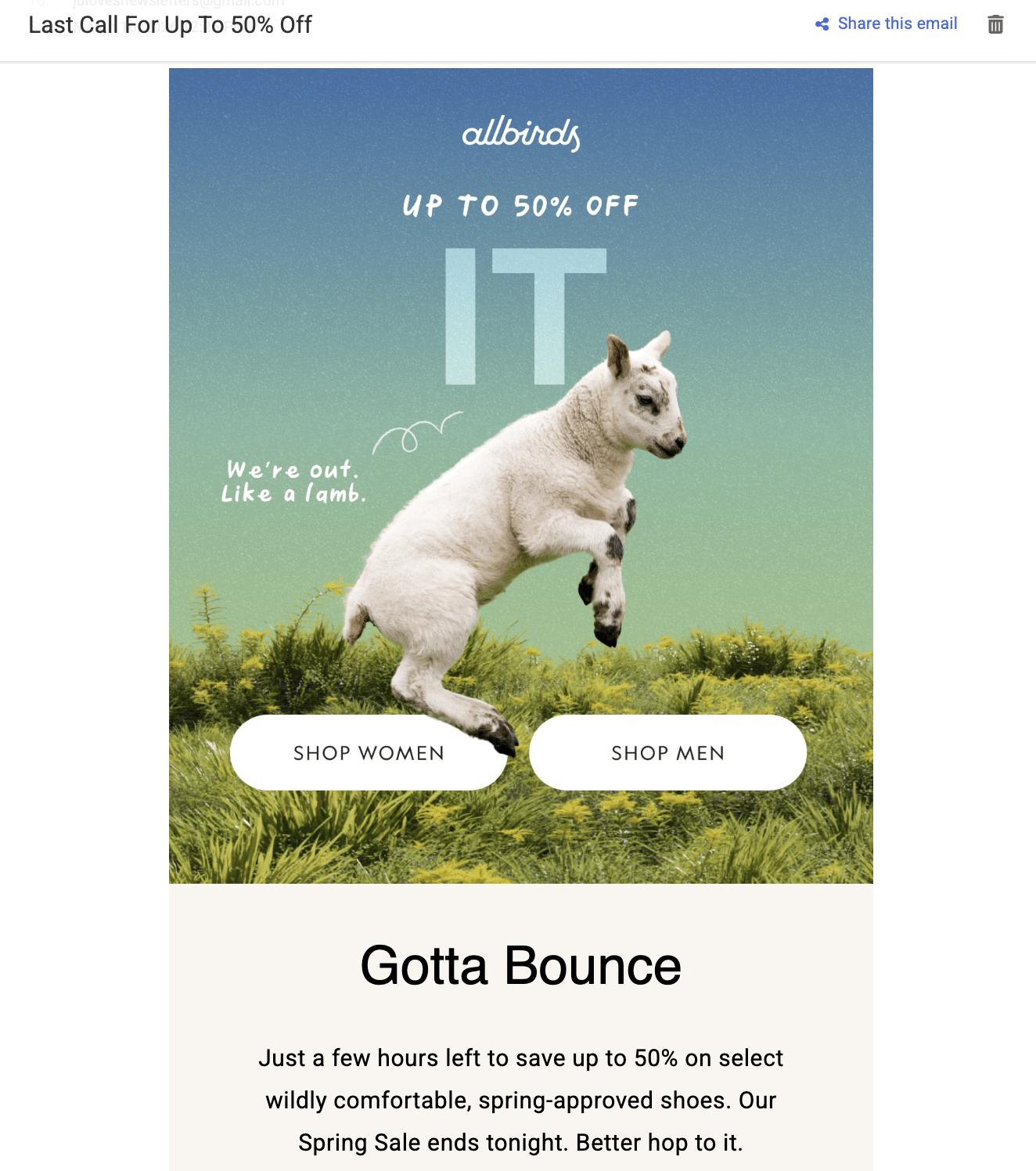
The first fold—the very first section of the email—features a strong, on-brand visual with a subtle GIF element, followed by short, action-driven copy encouraging you to act before the spring sale ends tonight. There are also no-friction “Shop Women” and “Shop Men” buttons right below it.
Immediately, you can see how the promotional email content backs their subject line and makes it easier for readers to take action.
You can pressure-test your email with this one question: if someone reads it quickly, can they immediately tell what the offer is and why they should act now? If not, tighten it.
8. Have a clear format and structure
Promotional emails can take different forms. Some are text-based and read like a personal message. Others are more visually driven and focus on showcasing products. Many sit somewhere in between, blending both.
Whatever format you choose, the structure should be clear and easy to follow. Building on the Allbirds example, after the first fold, the email continues with a small selection of featured products and repeated, consistent CTAs that guide the reader toward exploring the full range for women and men.
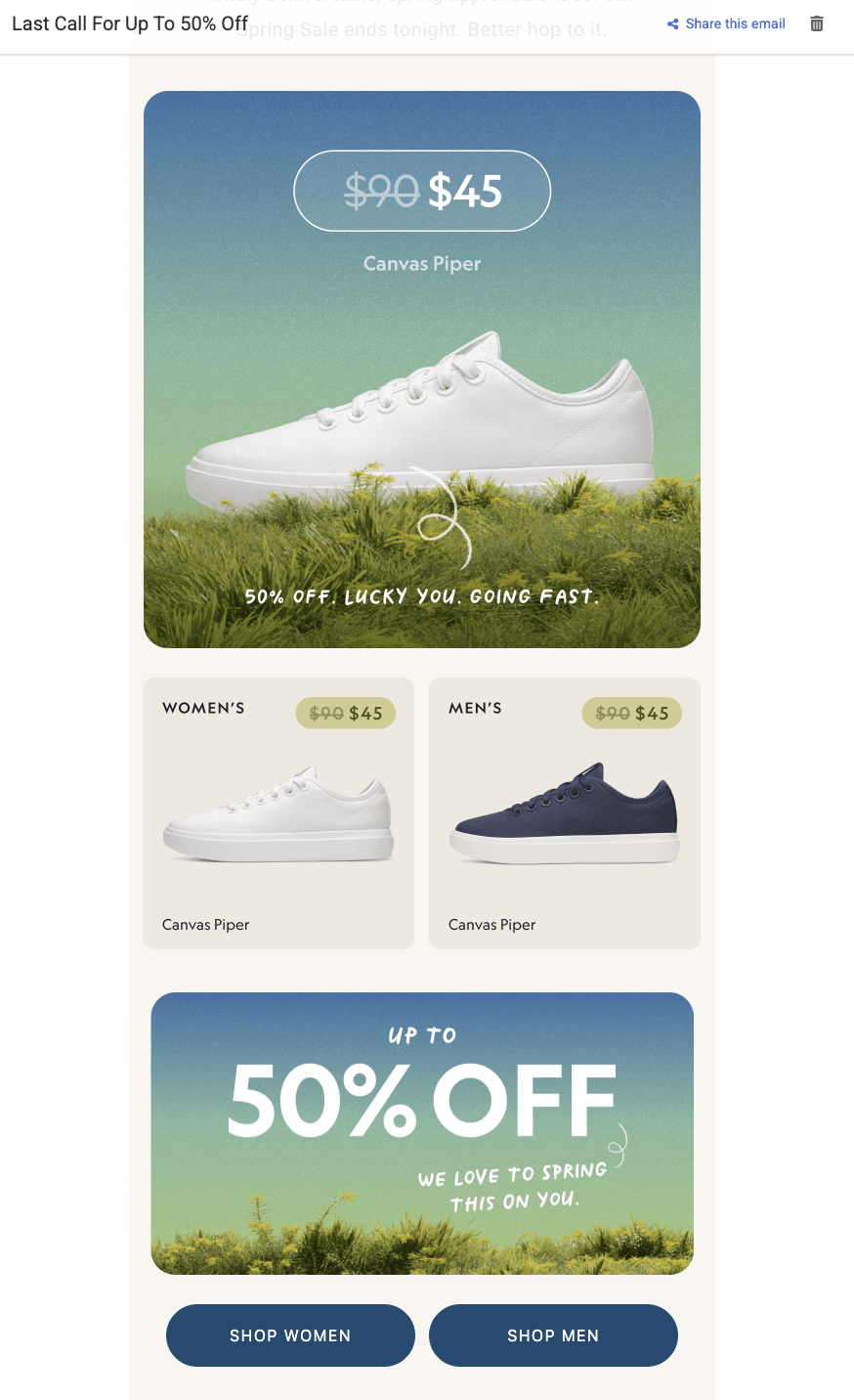
The layout is clean and easy-to-navigate. Sections are clearly separated using visuals, spacing, and subtle design elements.
Keep these promotional email structure and format tips in mind:
- Use headings and a clear content hierarchy so readers can quickly scan and still pick up the key message without reading every word.
- Use visuals with a clear purpose to reinforce your offer and guide attention.
- Keep paragraphs short and use white space to avoid overwhelming the reader and make your email easier to read on any device.
- Use clear, action-driven CTAs so the next step is obvious and frictionless—if possible, use only one.
9. Keep your tone human and conversational
Interestingly, only 13% of emails sent worldwide today are fully written by humans. Automation now does most of the heavy lifting, which is, honestly, a smart move for brands.
But that doesn’t mean your emails should sound automated.
You can make your promotional emails sound more human by adding small touches like natural phrasing, a conversational tone, or simple personalization based on behavior. And if it makes sense for your brand, you could also send from a real name as Solis does:
10. Keep your branding consistent
Your emails, including the promotional ones, should feel instantly recognizable. Focus on using consistent brand elements like your colors, typography, imagery, and tone of voice. Over time, this familiarity builds trust and makes your emails easier to engage with.
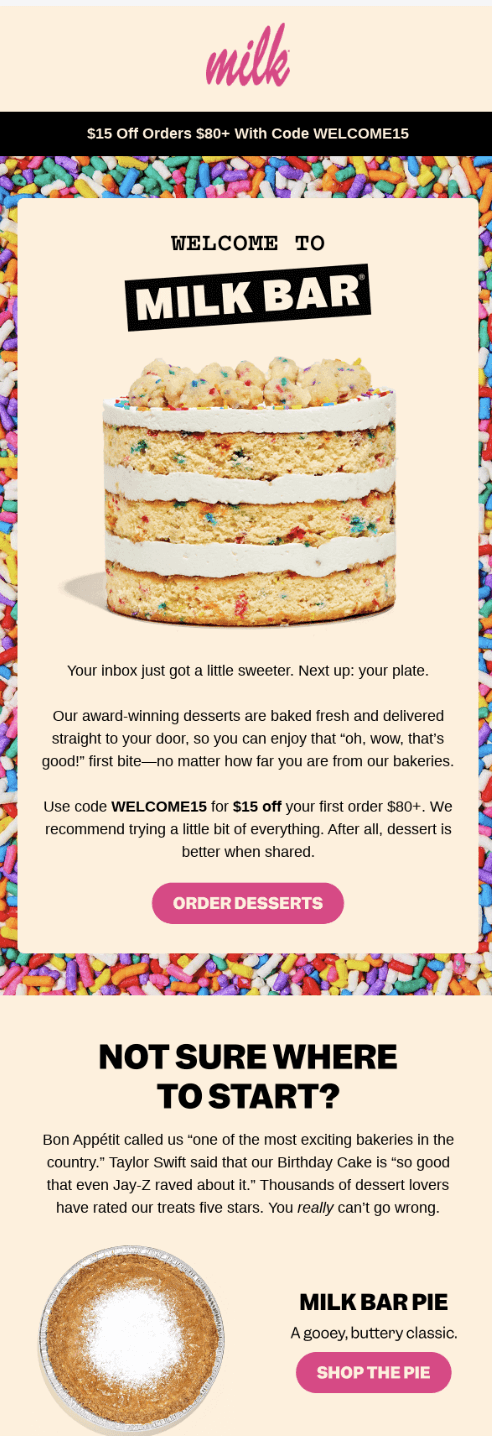
Here’s a strong promotional welcome email from the Milk Bar. It uses their signature playful color palette and pairs it with their actual product visuals and packaging. As for their copy, it’s consistent with their fun, slightly quirky brand voice:
Source: Really Good Emails
11. Optimize for mobile first
If you check out emails on your phone, you’re not the only one. In fact, 54% of people do. So to get your promotional emails read, they need to be optimized for mobile.
Start by making the most of the platform you’re already using. Most email marketing tools offer mobile previews and responsive templates. If you’re exploring alternatives, look into platforms known for strong mobile optimization to future-proof your emails. Check out our list.
12. Test one variable at a time
Testing one variable at a time works because it gives you clear, reliable insights. It will help you know exactly what’s driving the change.
Go back to tip #7 and see how a simple, focused test—comparing emails with and without a preheader—helped Jeanne Jennings identify a clear opportunity to improve email performance.
If you don’t know which element of your promotional email to test first, opt for those closest to impact, like the subject line, CTA, or send time. Run the test on a large enough sample, pick a clear winner based on clicks or conversions, then build from there.
13. Track meaningful metrics
Testing only works if you’re measuring what matters. Track the following to check how well your promotional emails are faring:
- Click-through rate (CTR) shows if your content and CTA are strong enough to drive action
- Conversion rate tells you if your email is turning clicks into actual sales or sign-ups
- Revenue per email (RPE) shows how much value each promotional email is generating
You can also check out other email metrics here to find out others that match your campaigns and goals.
Two bonus tips:
While the tips above apply to all promotional emails, the next two are more situational. They won’t fit every campaign. Used in the right context, they can make certain promotional emails work better:
- Use urgency intentionally. Tie it to real deadlines or limited offers so it feels credible, not forced. Overusing urgency can make your emails feel predictable and chip away at your brand’s trust over time. (If you do decide to use urgency, countdown timers are a great tool to help with this.)
- Build email sequences, not just one-off emails. A single email is like having a foot in the door, but a sequence keeps the conversation going and reinforces the value. This works especially well for campaigns such as product launches, promotions, or re-engagement flows. These campaigns call for timing and repetition.
Now that you’ve got the core tips down, let’s look at the different types of promotional emails where you can see these principles applied.
8 Types of Promotional Emails (with Examples)
Here are 8 of the most common promotional email types, along with real-life examples from brands that know what they’re doing. Feel free to adapt them to your own goals, products/services, and audience.
1. Discount / Offer Emails
First on our list is the one that usually comes to mind when we think of promotional emails: discount or offer emails.
Research has proven that this marketing strategy is highly effective at pulling customers in and encouraging quick action. Plus, it gives businesses an excellent means to move unsold stock.
Here are some strong examples of this type of promotional email, along with the best times to send them:
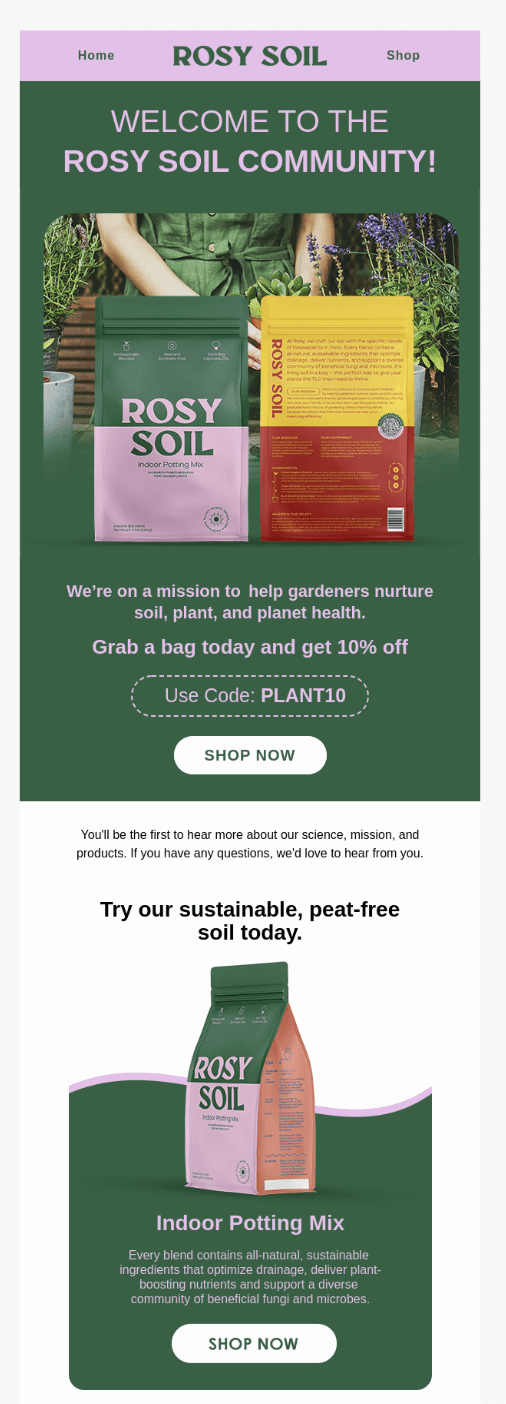
- Upon sign-up: Rosy Soil welcomes new subscribers to their community with a 10% discount code:
Source: Really Good Emails
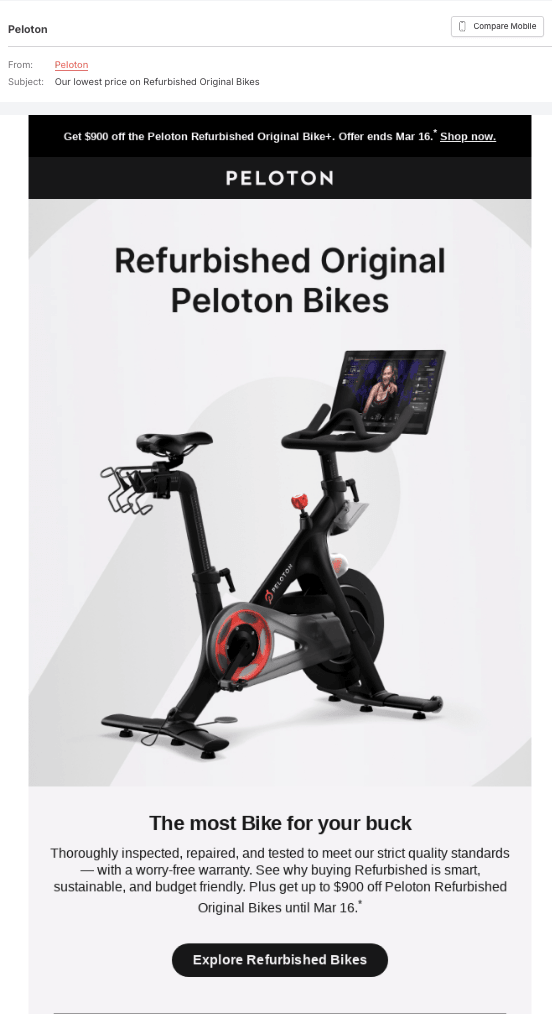
- Before a product refresh: Peloton’s refurbished bikes needed their own spotlight so they could clear out their stock and make space for new ones:
Source: Really Good Emails
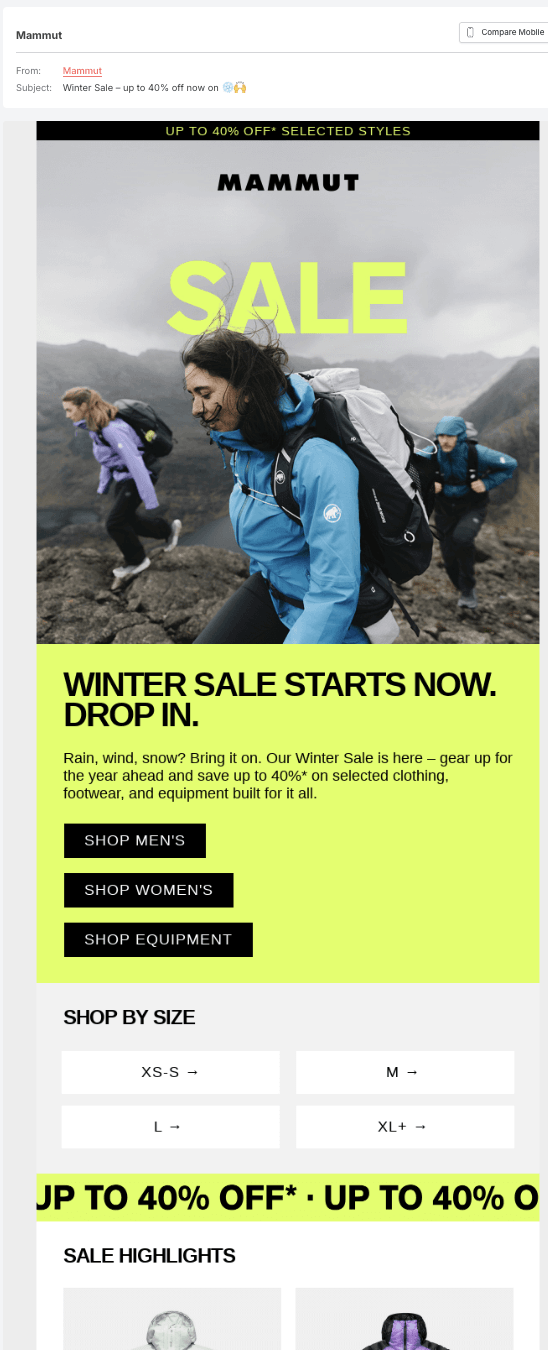
- End of quarter/end of season: Outdoor gear brand Mammut cleverly pushes their winter clothes front and center with a huge discount:
Source: Really Good Emails
2. Product Launch Emails
Product launches need attention to succeed, so it makes sense to use your well-cultivated email list to give subscribers a first look at what your brand has been busy with.
This type of promotional email isn’t a one-off. It’s most effective as an email sequence. According to Andreas Janes of ecommerce email marketing agency AJ Media, a strong approach is to start with a teaser, follow with the main announcement, and then send 2–3 follow-up emails to build momentum and drive conversions.
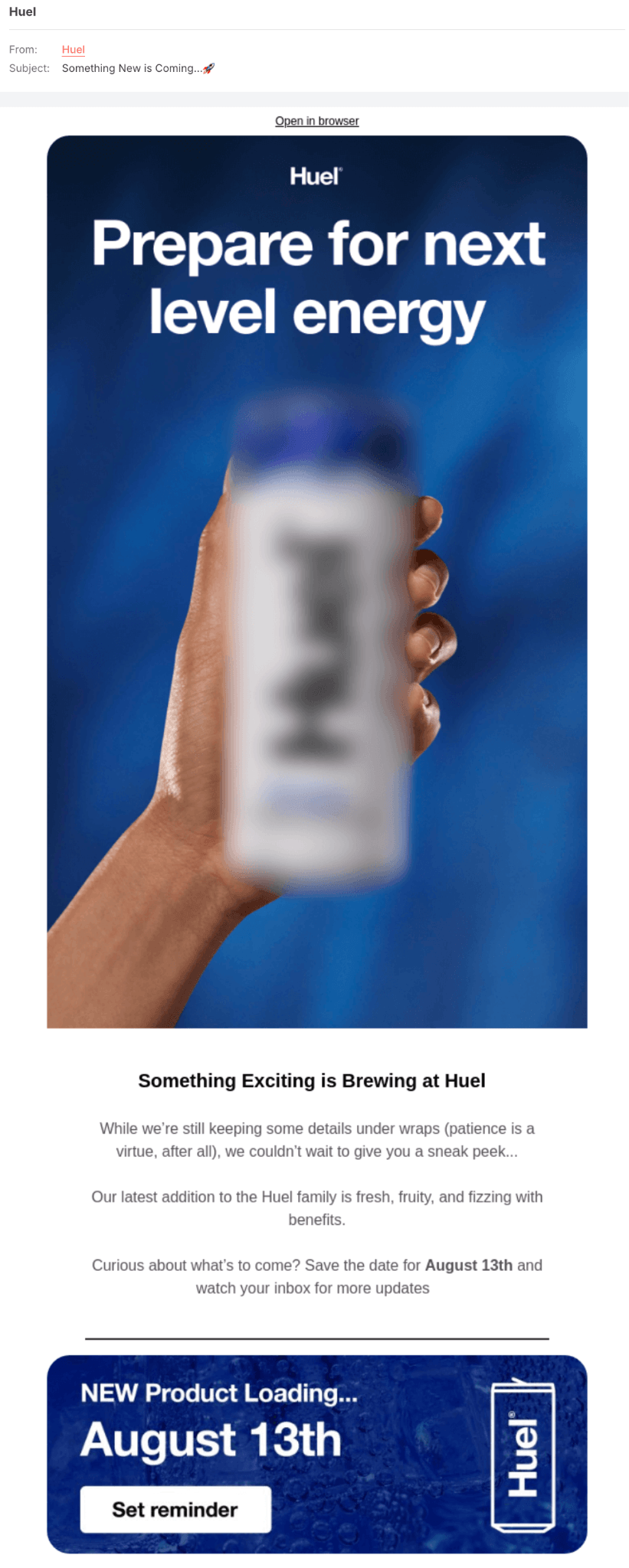
Huel has a strong example of a teaser email, complete with a clear “set reminder” CTA that builds anticipation ahead of the launch:
Source: Really Good Emails
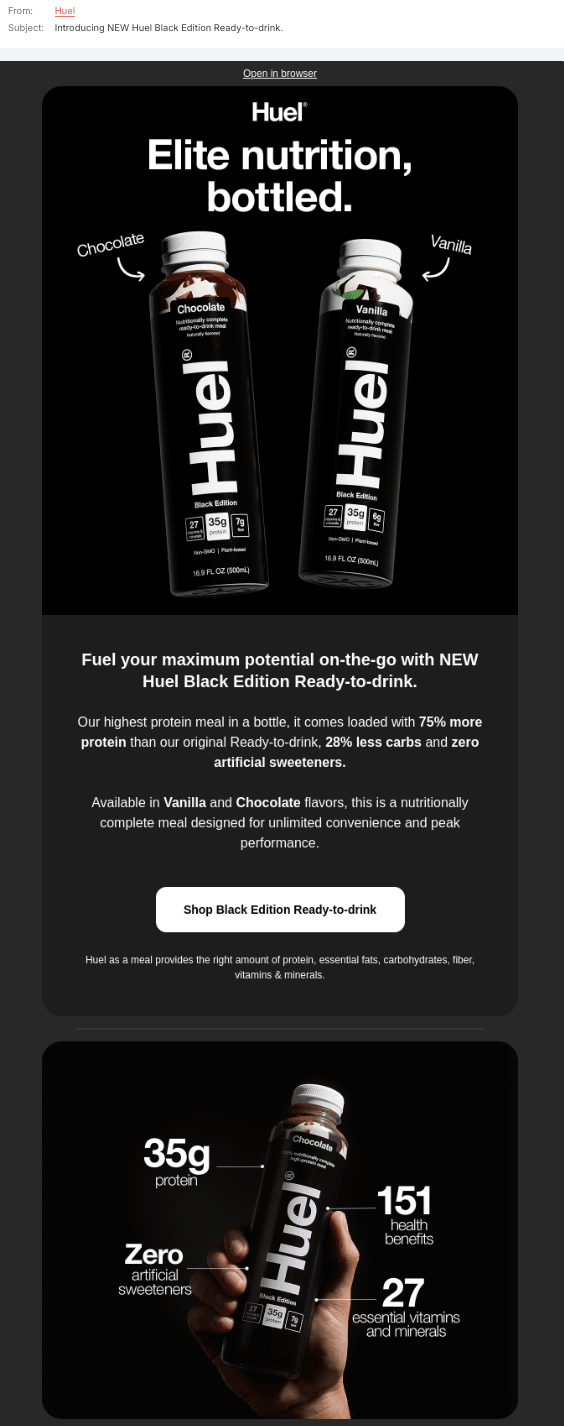
While it’s not the same product, you can see how the plant-based food and supplement brand handles product launch announcements. The email clearly lays out what makes the new release different, why it matters, and why it’s worth the customer’s attention.
Source: Really Good Emails
As a final tip, Janes suggests weaving product launches into your existing flows—such as welcome or post-purchase emails—to extend visibility. You can also feature the product in recommendation blocks across your other campaigns to keep it consistently in front of your audience.
3. Limited-Time / Urgency Emails
For many shoppers, good deals are already tempting. Add a limited window, and the decision becomes much easier.
Research shows that a time-sensitive approach shapes how customers perceive value and urgency, making them more likely to act quickly while the opportunity is still available.
Combine urgency with key visual and copy elements—such as countdown timers, bold banners, action-driven language, and reminder-style messaging—to make your promotional emails work.
Discounts tend to dominate this type of promotional email, so I’m sure you’ve seen plenty of them already. To mix things up, here are a few examples of urgency-driven emails that don’t rely on them.
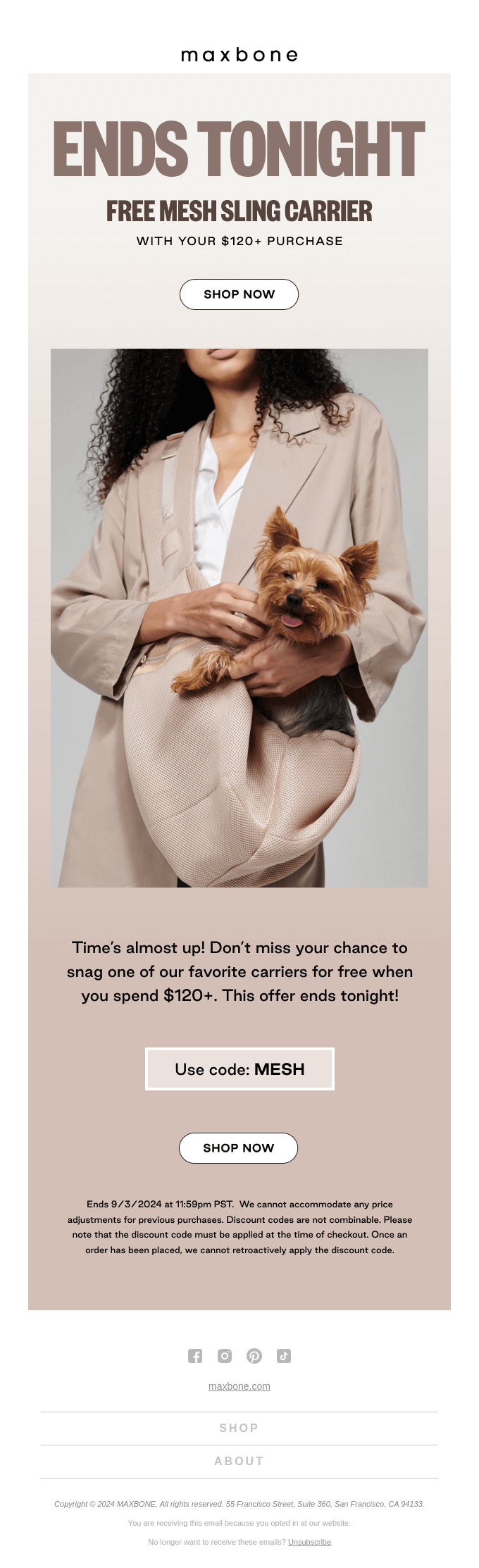
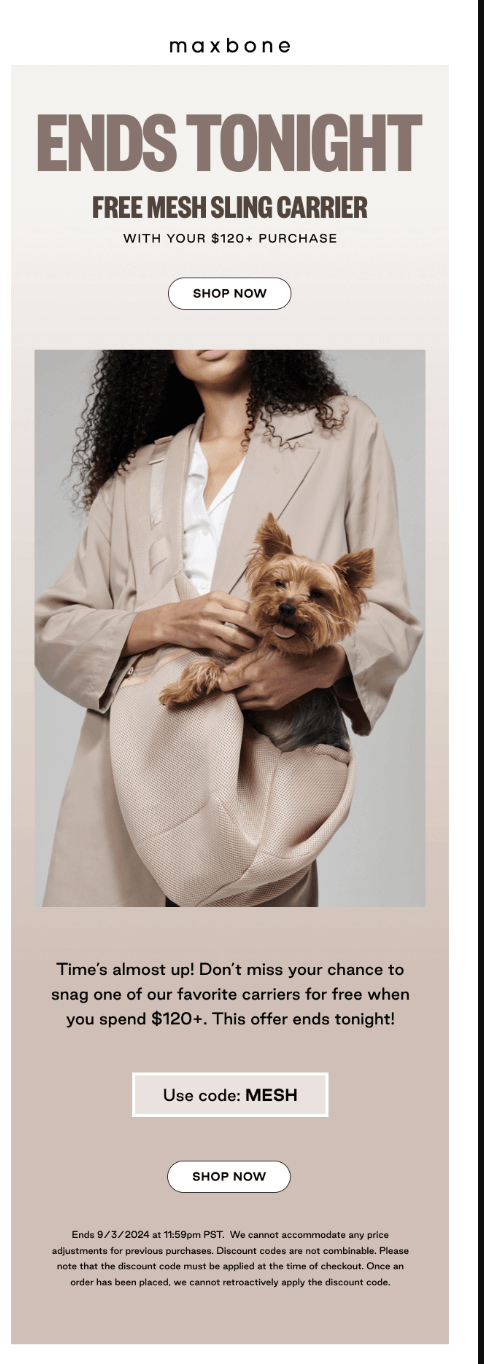
Here’s how Maxbone encourages higher-order value by offering a freebie:
Source: Really Good Emails
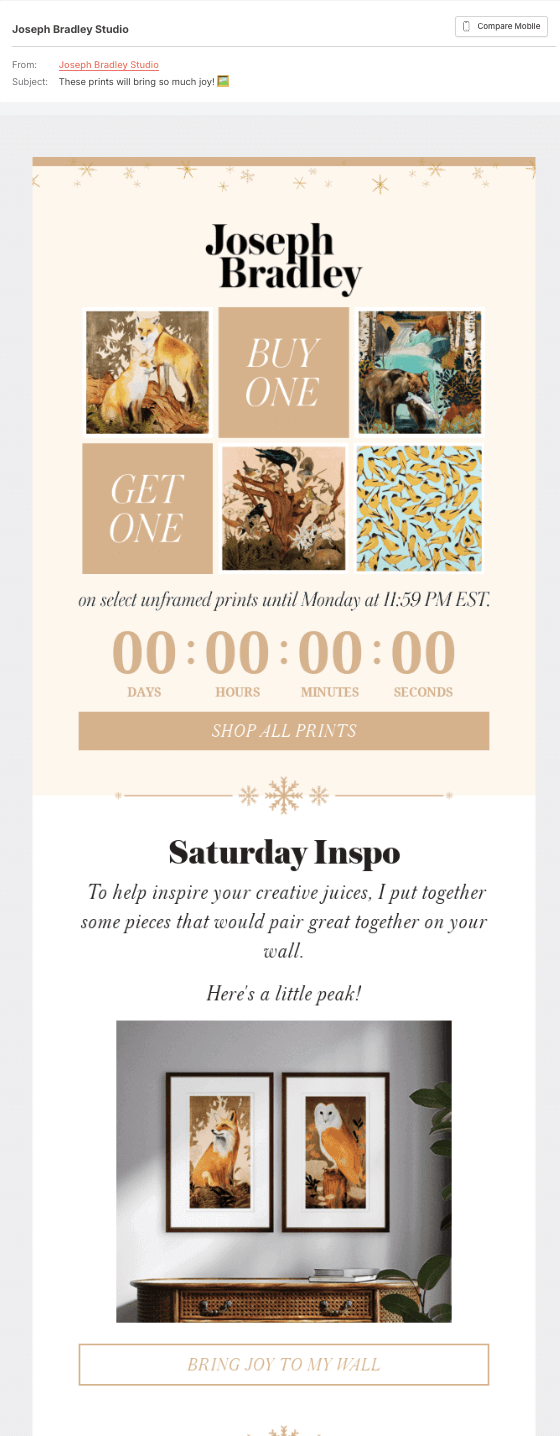
And here’s how Joseph Bradley adds a compelling twist with a Buy One, Get One offer for his recommended painting pairings:
Source: Really Good Emails
4. Seasonal / Holiday Promotions
Tying offers to events or seasons is an age-old tradition in marketing. But in email marketing, it takes on a life of its own. They give you a perfect excuse to reach out without sounding pushy. (“Hey, it’s summer… you might need this” just works.)
Big shopping events like Black Friday and the holiday season consistently deliver the highest ROI. In 2025, Black Friday alone set a new online spending record with $11.8 billion in sales.
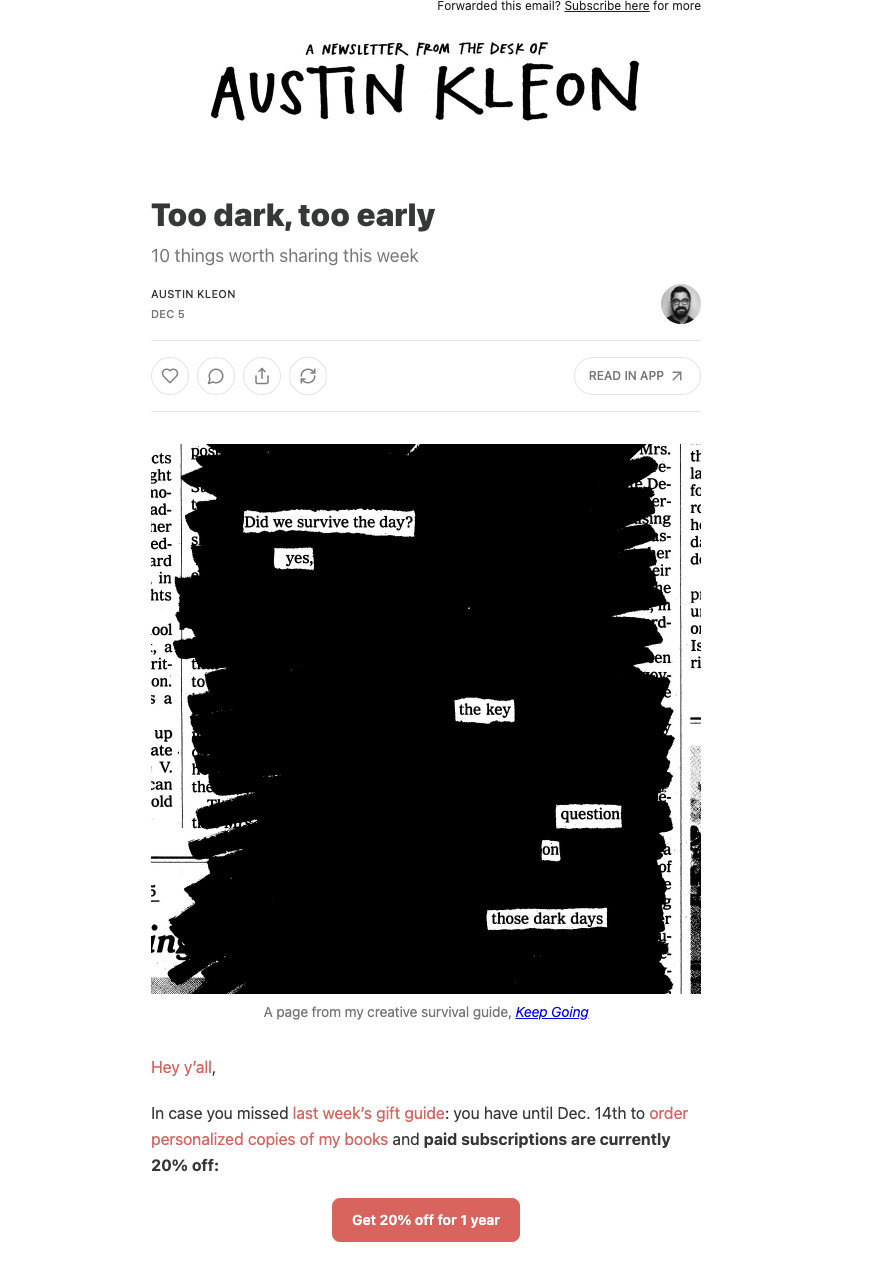
Hard to skip deals when they’re so good. Here’s author Austin Kleon promoting his paid newsletter (at 20% off) and book (with his signature!) around the holidays in his free newsletter:
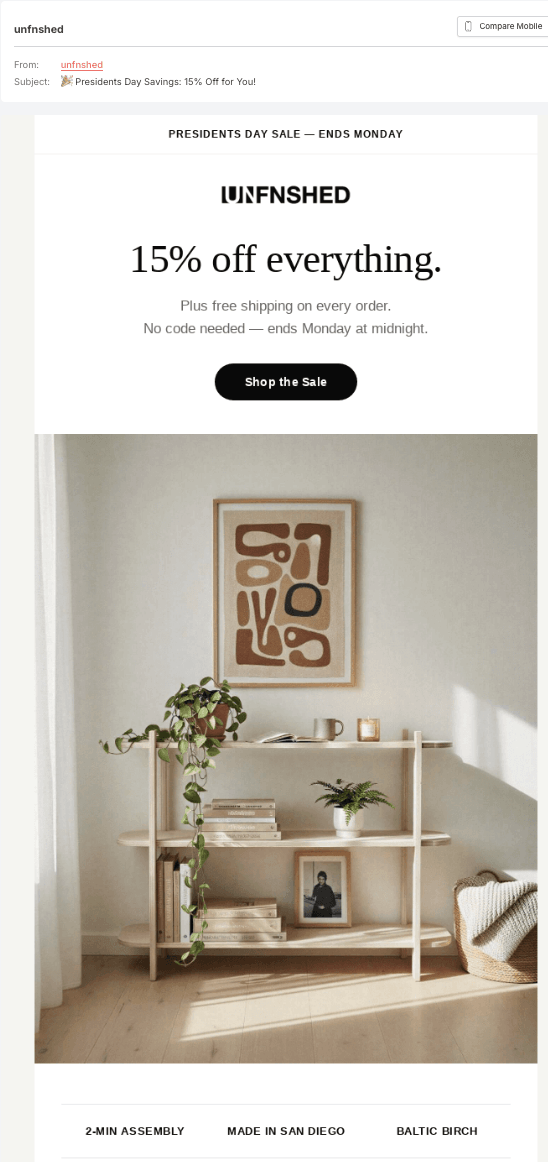
Of course, you don’t have to limit yourself to the big holidays and seasonal sales. Some brands, like unfnshed, get creative and lean into smaller moments like Presidents' Day, and still see great results:
Source: Really Good Emails
Find occasions that fit your brand and look beyond your local calendar to international holidays your audience celebrates. Here’s a strong example from preloved luxury handbag retailer The Purse Affair: they created a Lunar New Year edit featuring a beautifully curated selection of red bags, which perfectly suits the celebration.
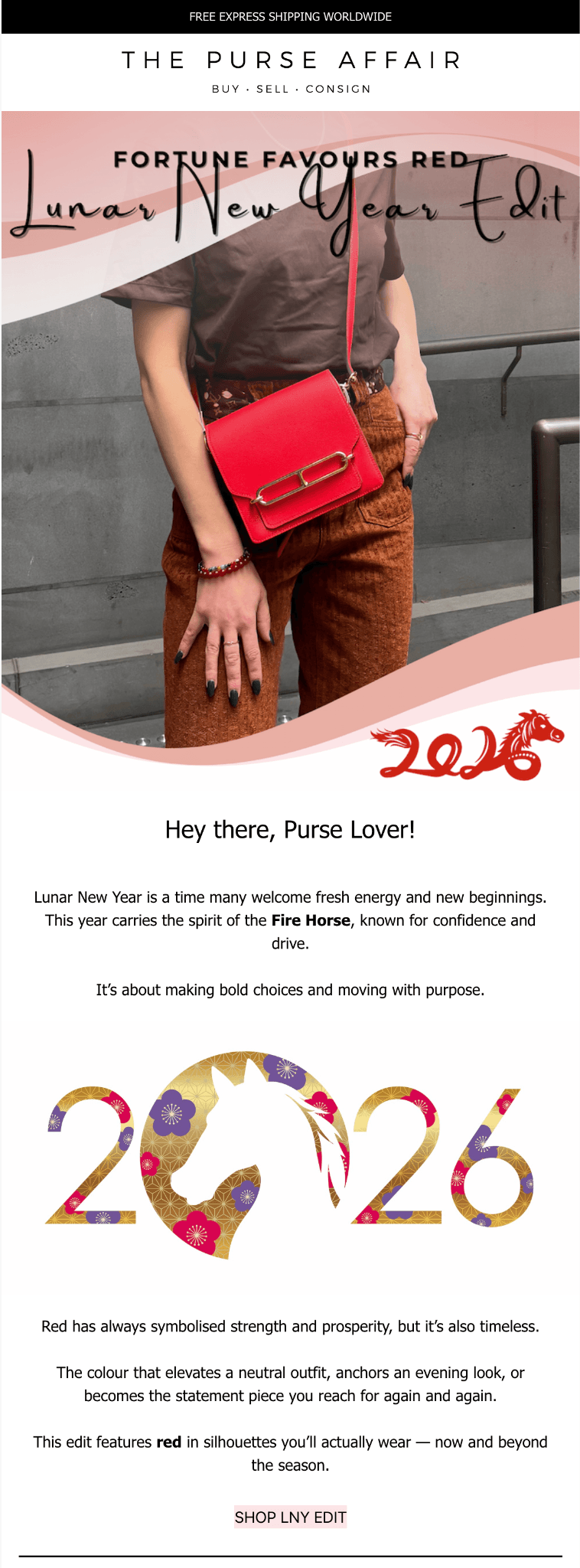
Tip: Here’s a handy tool to help you discover special events from around the world.
5. Re-engagement Emails
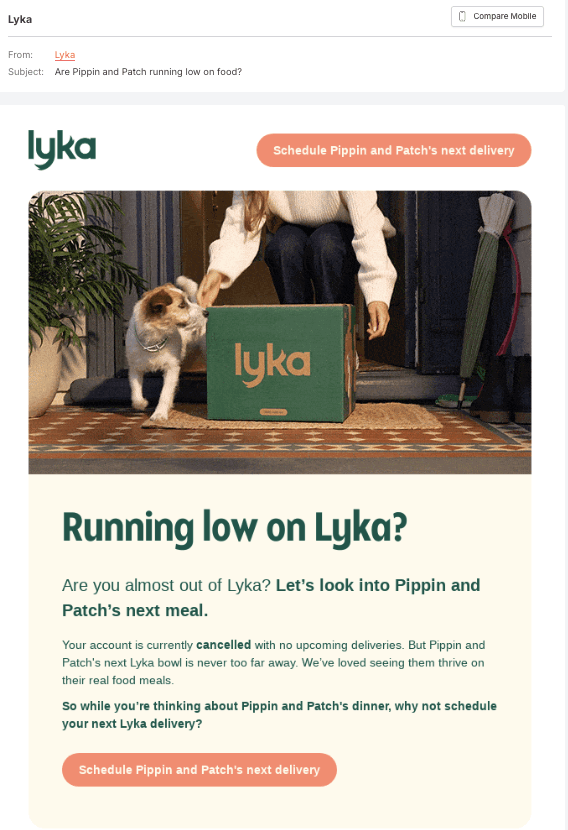
Data shows that for every active subscriber, there are 7 to 8 inactive subscribers who’ve drifted just far enough to forget your brand. Win them back with a promotional email.
Look at this strong example from the pet food brand Lyka. By using the dog’s name and lightly teasing the benefits of real food, they tap into an emotional connection that makes the message feel personal and hard to ignore.
Source: Really Good Emails
Note: Here are other great examples of re-engagement emails to pull your audience back into the fold.
6. Upsell / Cross-sell Emails
Both upselling and cross-selling are well-known revenue drivers, so creating promotional emails around these strategies is well worth your while.
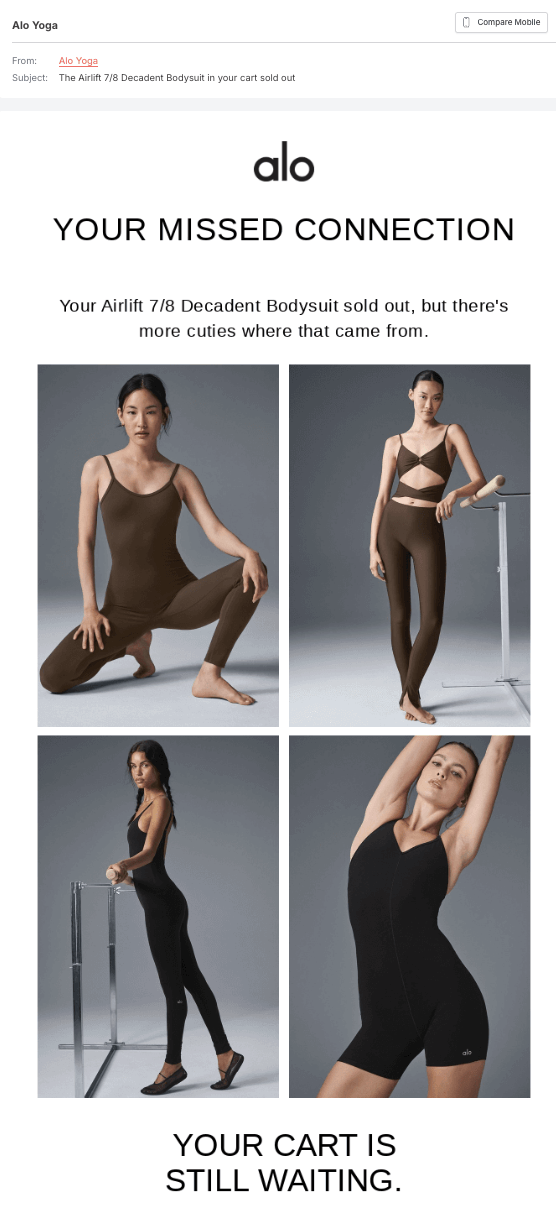
Upsell emails encourage customers to upgrade to a higher-value version of what they’re already considering. For example, this promotional upsell email from Alo Yoga turns a stock issue into an opportunity by introducing alternative options that keep the customer engaged:
Source: Really Good Emails
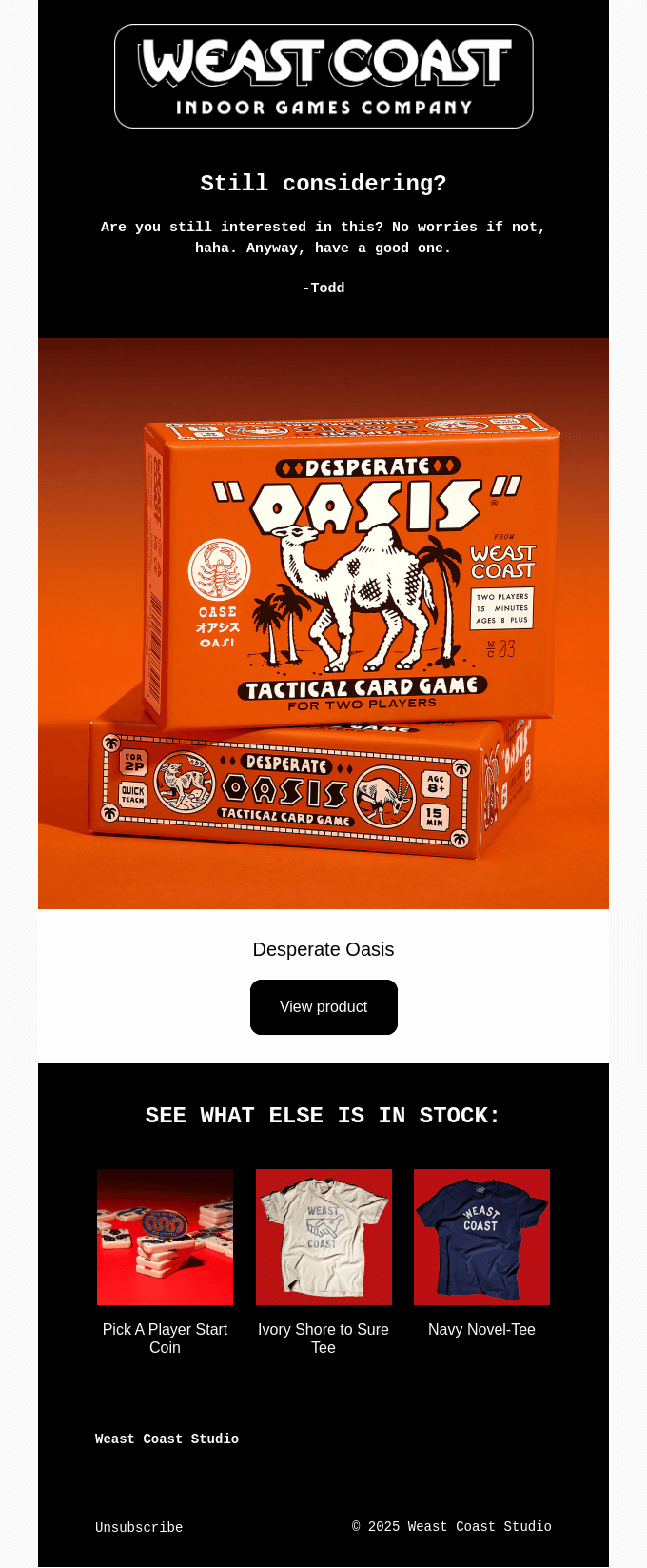
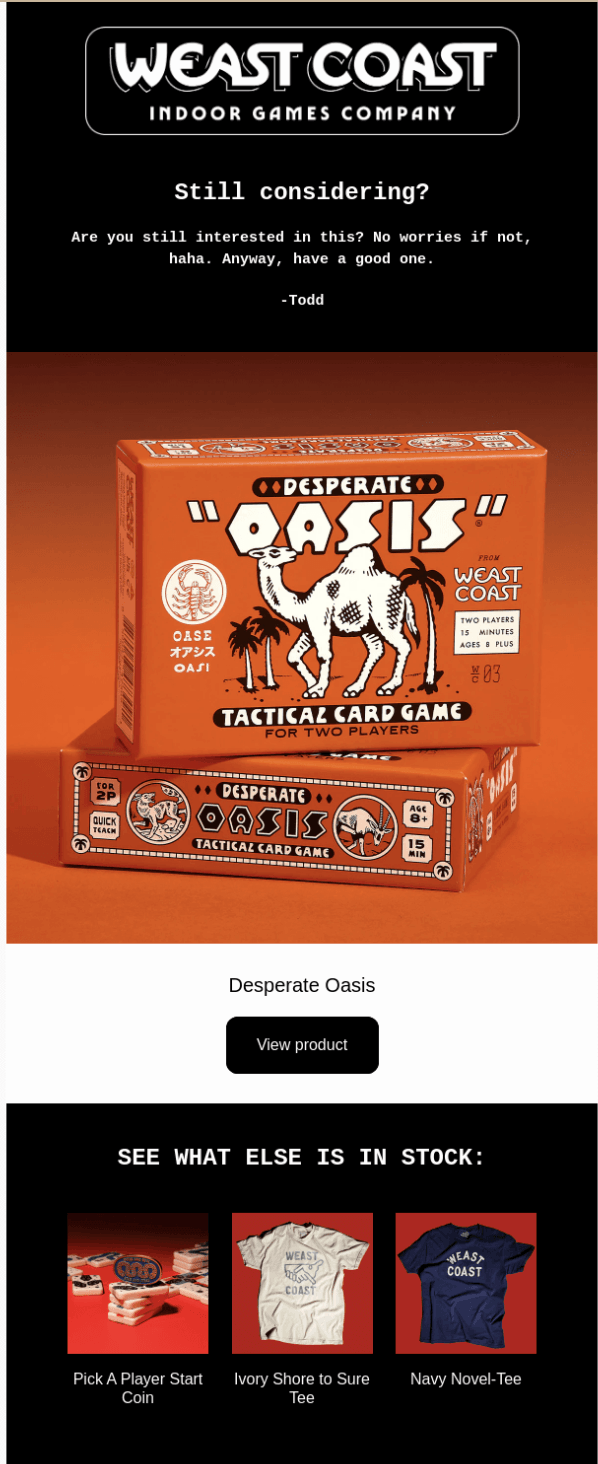
Cross-sell emails, on the other hand, suggest complementary products that naturally go along with their current choice. Weast Coast’s email here features three products that naturally complement the item the customer is already considering:
Source: Really Good Emails
Both upselling and cross-selling are high-impact strategies for making more effective abandoned cart emails. Just remember to personalize the products you showcase so they align with what your audience actually wants to see and present them as thoughtful recommendations.
7. Exclusive VIP deals
Your loyal customers deserve some recognition in the form of exclusive, members-only promotional emails. This gesture goes a long way in making them feel valued.
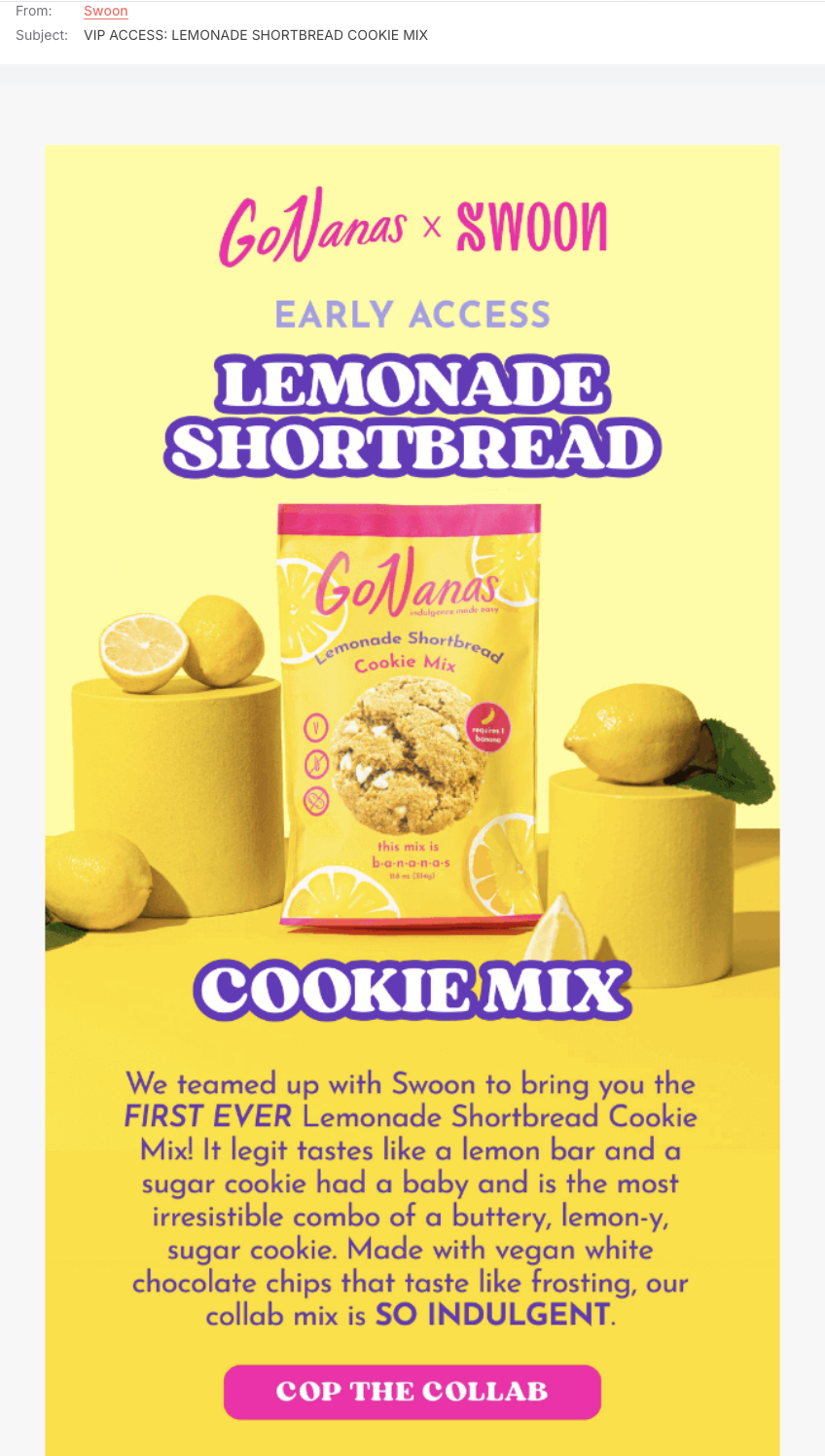
This example from the Swoon x GoNanas collaboration makes it clear that this launch is reserved for a select group. Only the VIPs get early access to this limited-edition product:
Source: Really Good Emails
8. Event Invites
Last but not least are event invites. SaaS companies, service-based businesses, creators, and educators can all benefit from this type of promotional email. Done right, they position your brand as a leader and give your audience a reason to engage beyond just buying.
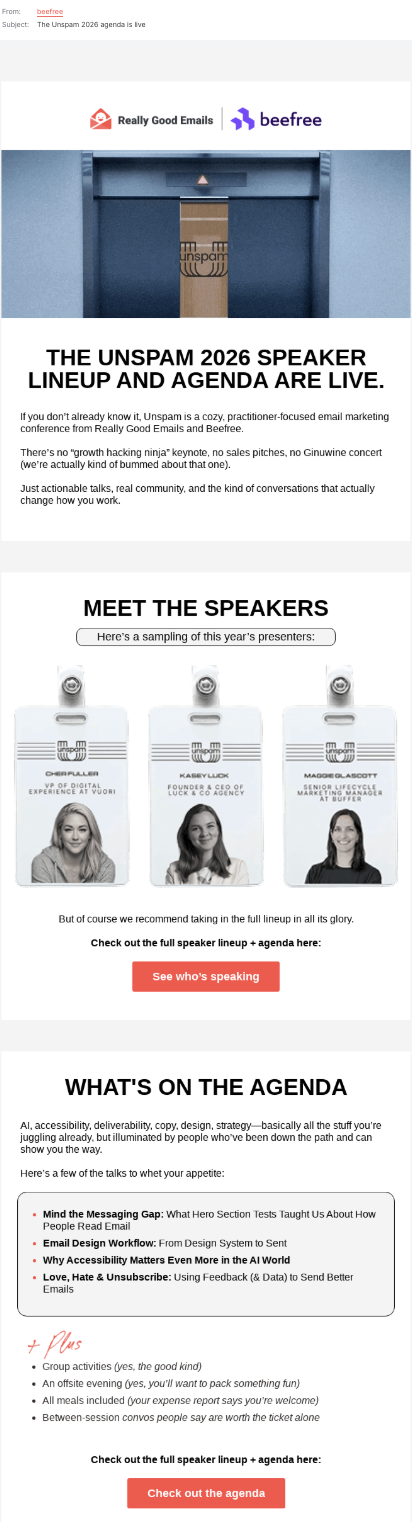
For instance, here’s Really Good Emails promoting their annual email marketing event, Unspam. They build anticipation by showcasing the speaker lineup and offering a preview of the agenda:
Source: Really Good Emails
Don’t send random promotional emails. Make it intentional and effective by using the right type of promotional email for the job.
The Right Tips + The Right Type = Better Promotional Emails
Effective promotional emails come down to two things: getting the fundamentals right and choosing the right type for the campaign. Together, these are what turn emails into consistent engagement, conversions, and long-term value.
Need more useful email marketing tips? We have plenty in our blog.
The authors
Learn more about us

Our Methodology
This article has been written and researched following our EmailTooltester methodology.
Our Methodology