


If you’re running an ecommerce store, comparing Sendlane and ActiveCampaign makes a lot of sense – at least at first. Both offer email marketing, automation, and SMS, and both are built to help you turn subscribers into repeat customers.
There are, however, some important differences. Sendlane is very much ecommerce-first. It focuses on email and SMS automation, solid deliverability, and hands-on support, making it easier to get revenue-driving campaigns up and running quickly.
ActiveCampaign, on the other hand, is more flexible. Alongside email marketing, you get more advanced automation, powerful segmentation, and the possibility to add on a CRM, which means you can create more customized customer journeys across both marketing and sales.
That’s handy if you run a more complex ecommerce business, like high-ticket products, subscriptions, or hybrid product and service offers, where customers need nurturing over time, and you want to connect marketing with a more structured sales process.
But there’s also a newer factor to consider. In early 2026, Sendlane was acquired by Privy. While that opens the door to a more complete ecommerce platform, it also raises a few reasonable questions around whether the Sendlane product will lose some of its focus, and whether pricing will change.
The uncertainty alone is enough for many businesses to explore alternatives like ActiveCampaign before making a decision.
In this Sendlane vs ActiveCampaign comparison, we’ll look at how both platforms perform where it really matters for ecommerce, including automation, segmentation, CRM features, and overall value, so you can decide which one is the better fit for your store today.
Sendlane vs ActiveCampaign: The Main Differences
- Sendlane is more ecommerce-first, with dynamic product feeds, built-in reviews, strong SMS integration, and a simpler setup for revenue-focused store campaigns.
- ActiveCampaign is more powerful and flexible, with deeper automation, stronger email personalization, better reporting, more integrations, and CRM/sales features.
- Pricing works very differently: Sendlane charges mainly by email send volume with unlimited contacts, while ActiveCampaign charges by contact count and plan tier, making it cheaper to start but potentially pricier as your list grows.

Ease of Use
If your team isn’t using the tool properly, nothing else really matters. So let’s start with how easy these two platforms are to get up and running with.
Sendlane is clearly designed with ecommerce users in mind, and that shows in how quickly you can get started… once you actually get access. That’s because Sendlane doesn’t strongly push a free trial on its website. Instead, the main call-to-action is to request a demo, and you may need to dig a little to find the trial option. That adds a bit of friction compared to most email marketing tools.
That said, there’s a reason for it. Sendlane leans toward a more guided onboarding experience, with a stronger focus on support and helping you set things up properly from the start.
Once you’re inside the platform, things feel more straightforward.
The interface is relatively clean and focused, and you’re presented with a checklist to guide toward the features you’ll actually use, like campaigns, automations, and store integrations. Common ecommerce workflows, like abandoned cart emails or welcome sequences, are easy to find and quick to launch.
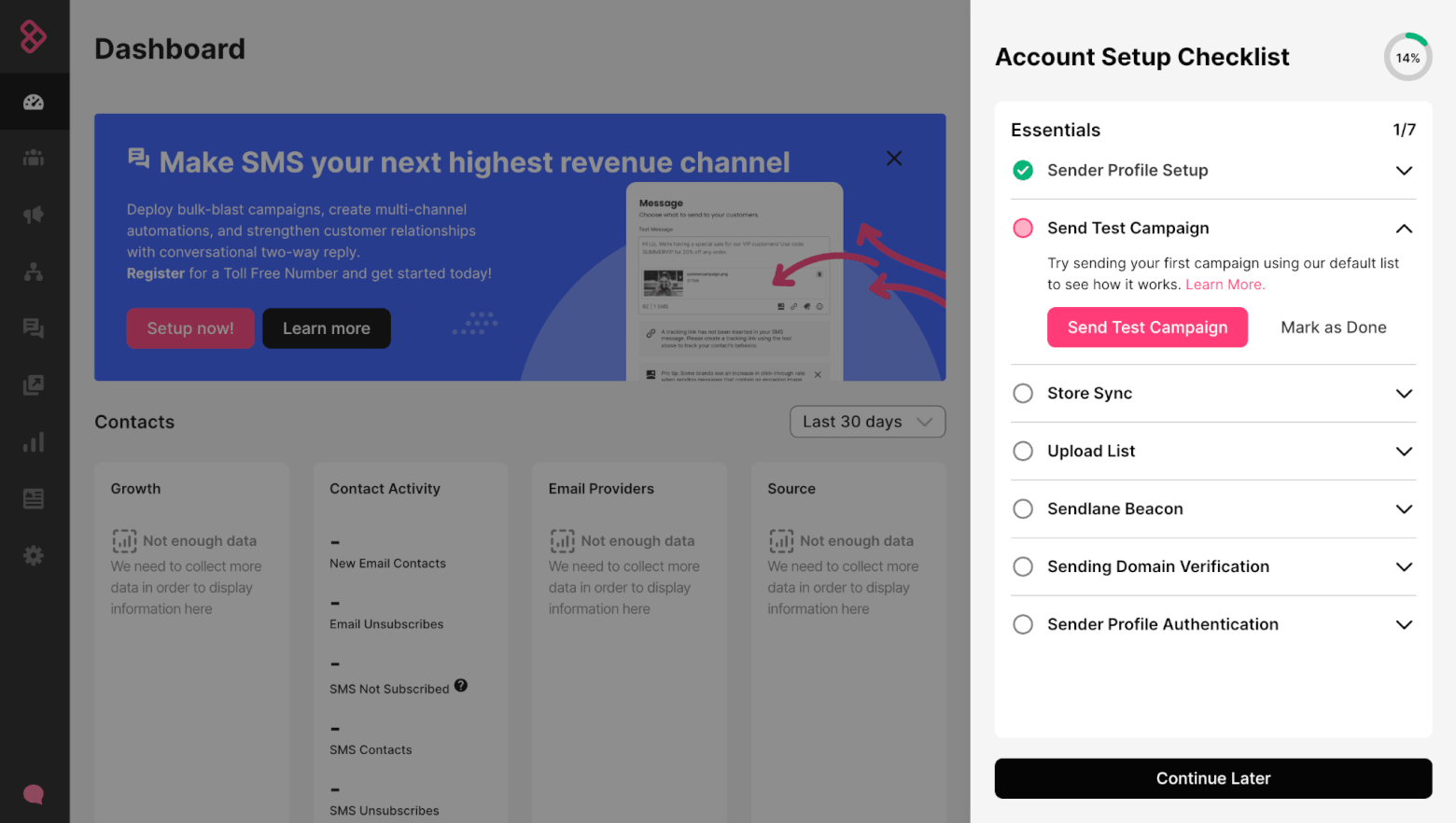
It doesn’t try to overwhelm you with options. Instead, it relies more on pre-built structures and a guided setup, which makes it easier to go from “just signed up” to “campaigns live”.
It’s not the most modern-looking interface, and some areas can feel a bit clunky, but overall, it’s approachable and gets the job done without too much friction.
ActiveCampaign takes a more traditional, self-serve approach. You can sign up and start using the platform straight away, which makes it easier to explore and test without needing to talk to sales first.
Once you log in, though, there’s more going on. You’ll see contacts, campaigns, automations, deals, reports… and it can feel like a lot at first.
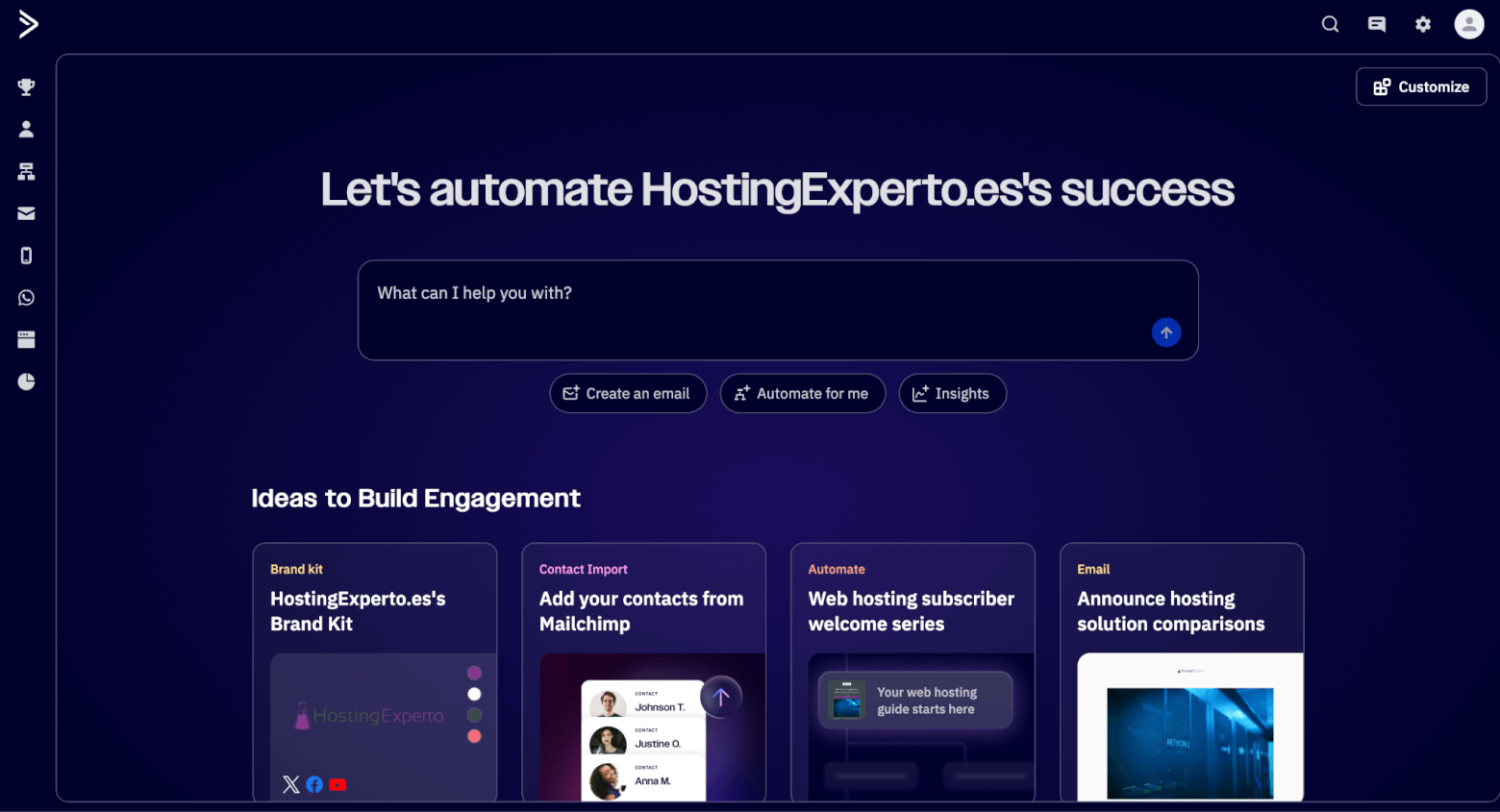
The automation builder is one of the most powerful out there, but it also comes with a learning curve. It takes a bit more time to understand how everything fits together, especially if you want to build more advanced workflows.
On the plus side, ActiveCampaign provides onboarding checklists, templates, and helpful prompts to guide you through the setup. And once you get familiar with the interface, the extra flexibility starts to pay off.
Winner: If your goal is to get up and running quickly, Sendlane has the edge (once you’re inside the platform). It’s simpler, more focused, and easier to pick up, especially for ecommerce teams. That said, ActiveCampaign makes it easier to get started in the first place, thanks to its fully self-serve signup.
Sendlane – 1, ActiveCampaign – 0
Email Marketing
Email is still the core of most ecommerce strategies, so this round is about how well each platform handles campaign creation, personalization, and day-to-day email marketing tasks.
Sendlane covers the essentials well, especially for ecommerce use cases.
The drag-and-drop editor is easy to use, and you can quickly build campaigns using product blocks, images, and pre-designed layouts. It’s geared toward getting emails out the door fast, which is helpful if you’re running frequent promotions or lifecycle campaigns.
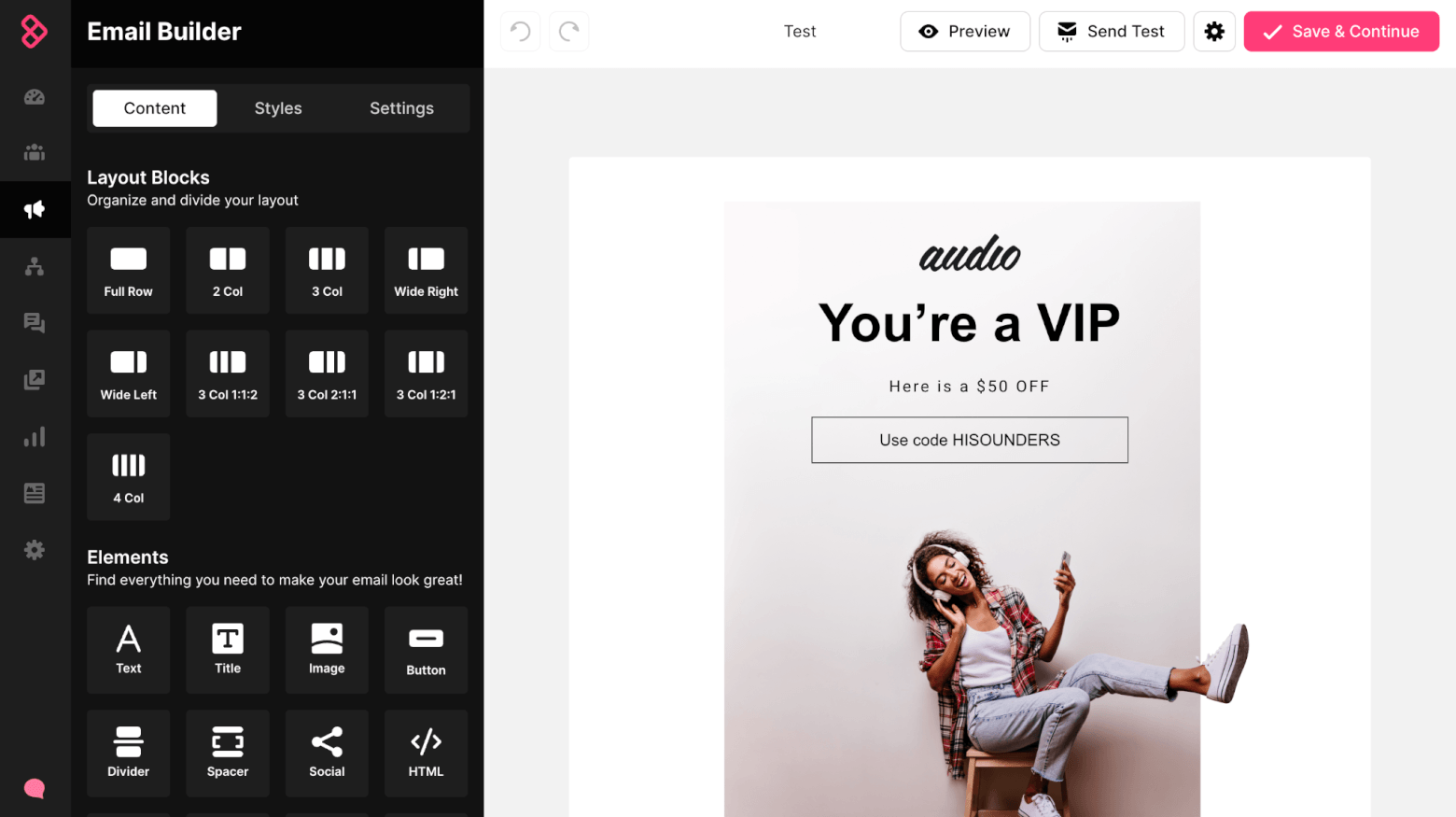
You also get:
- Basic personalization using customer data
- Segmentation based on behavior and purchase history
- Dynamic product content pulled into emails
For most ecommerce campaigns, like newsletters, promotions, product launch, or abandoned cart emails, it does the job without much friction.
Where it starts to feel a bit limited is in advanced email customization. For starters, you only get a handful of templates, meaning you’ll most likely need to code your own:
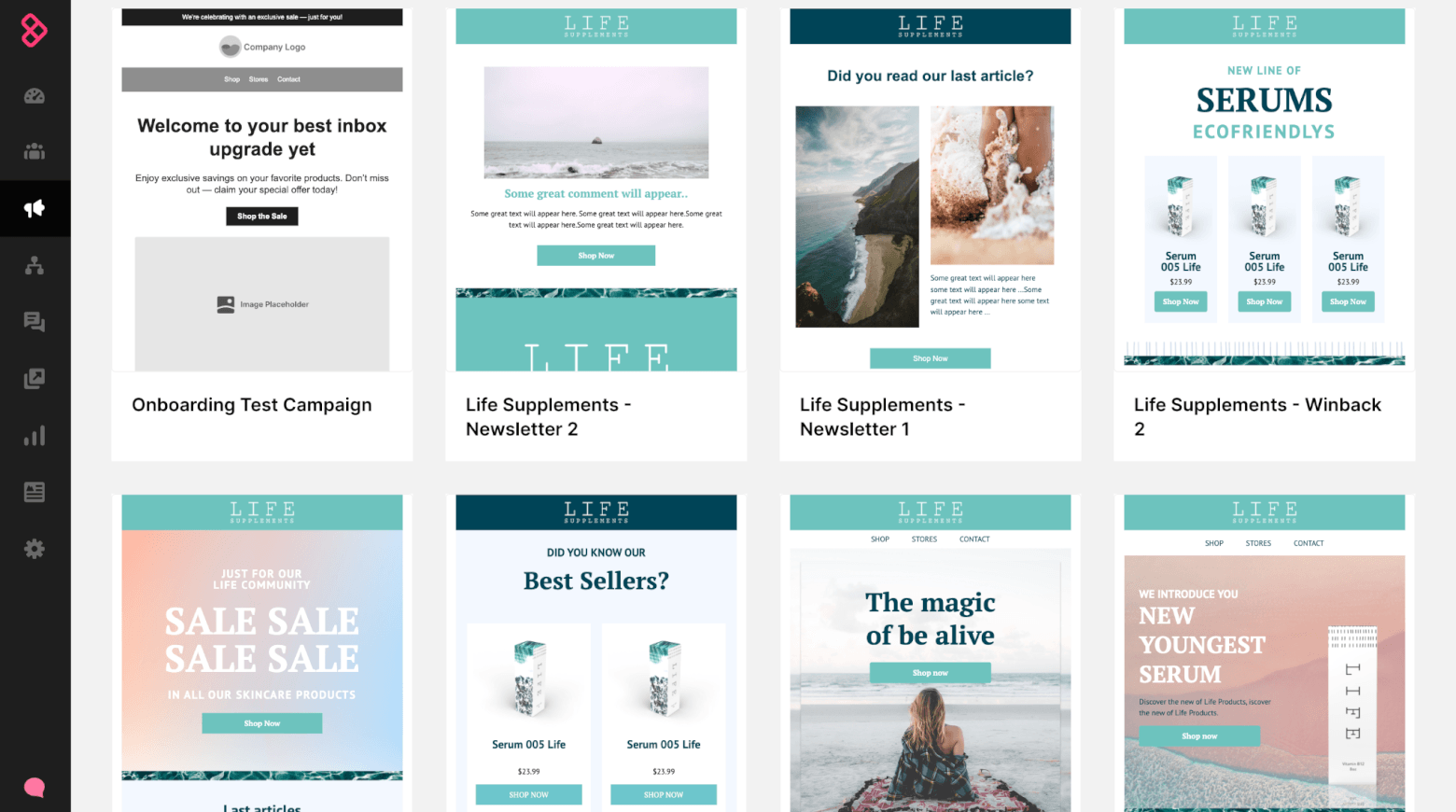
And while the ability to dynamically show email content is possible, you can only do so based on contact attributes/custom fields, which requires a small bit of coding to set up.
ActiveCampaign, on the other hand, is one of the strongest platforms when it comes to email marketing flexibility. It offers over 250 templates to start with, meaning you can get a great-looking campaign up and running very quickly.
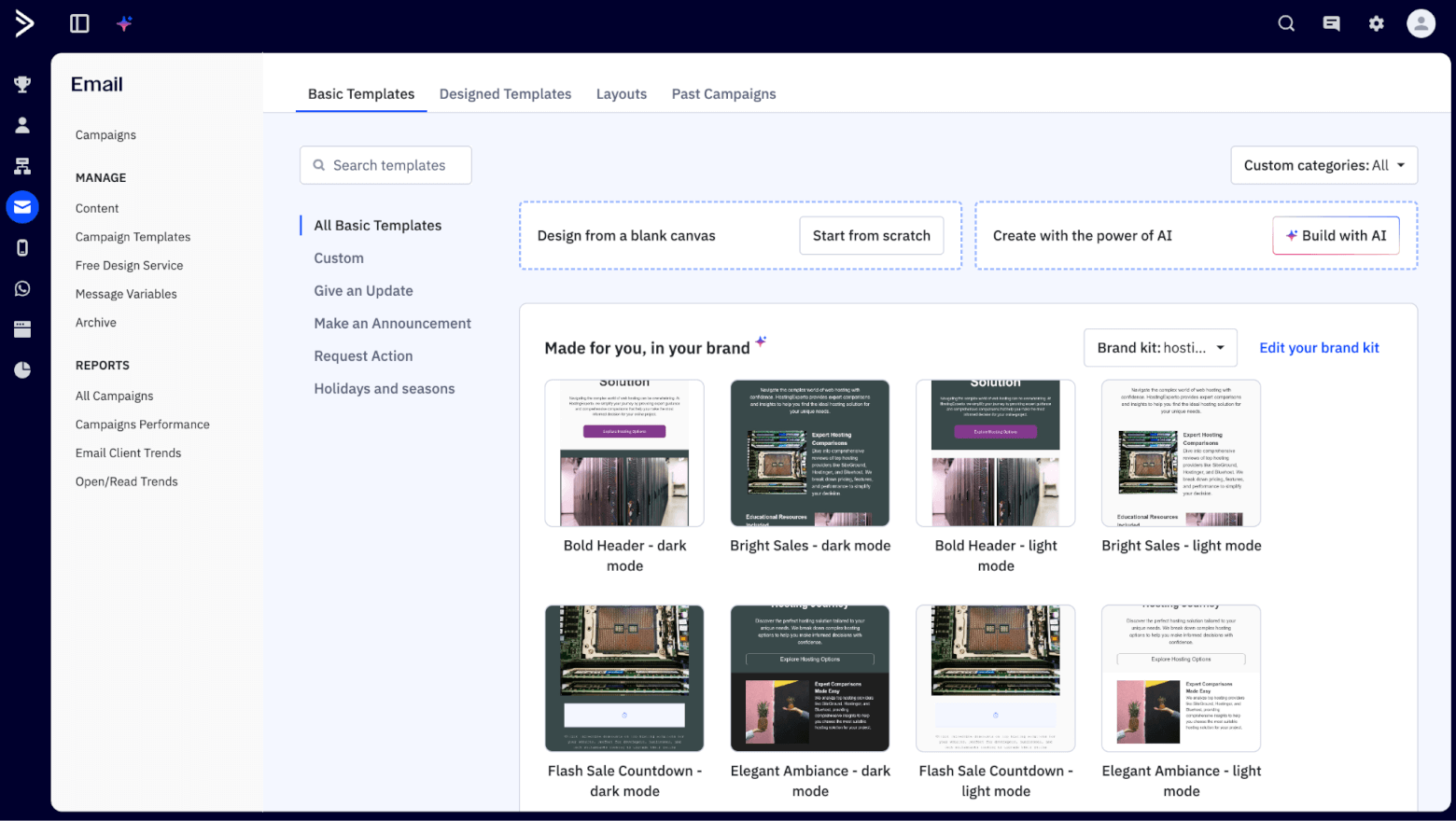
Its email editor is solid, but the real strength lies in what you can do around your emails. You get:
- Advanced segmentation with highly specific targeting conditions
- Conditional content blocks that change based on user data, behavior, or tags
- Personalization across multiple data points, not just basic fields
- Built-in tools like spam checking and inbox previews
For example, you could send a single campaign where:
- VIP customers see one offer
- First-time buyers see another
- And inactive subscribers get a re-engagement message
… all within the same email.
It’s also easier to set up conditional content blocks (using a segment builder rather than code), and to connect email campaigns with automations, so your messaging can adapt dynamically based on how people interact with your emails.
Winner: While Sendlane is perfectly capable for standard ecommerce campaigns, ActiveCampaign offers a much deeper and more flexible email marketing toolkit. If you want more control over personalization, segmentation, and how your campaigns adapt to different audiences, ActiveCampaign is the stronger choice.
Sendlane – 1, ActiveCampaign – 1
Landing Pages and Forms
Capturing leads is where everything starts. Whether it’s popups, embedded forms, or full landing pages, this round looks at how easy it is to turn visitors into subscribers, and how much control you have over the design and setup.
Sendlane covers the basics, but it’s not trying to be a full lead generation platform.
You get:
- Popups, inline forms, and banners for capturing emails and phone numbers (for SMS) on your site
- Basic customization options (fields, colors, text)
- Tagging and segmentation based on form submissions
- The ability to show forms based on conditions
This is enough for simple setups, especially if you just want to add a popup to your store or collect emails at checkout.
But the form builder is quite restrictive. For example, there are no designs to choose from, and you can only add text or date-based custom fields by default. You can use a workaround called an “option selector block” to include dropdowns or radio buttons, but it’s not as straightforward as ActiveCampaign’s custom field approach (as you’ll see in a minute).
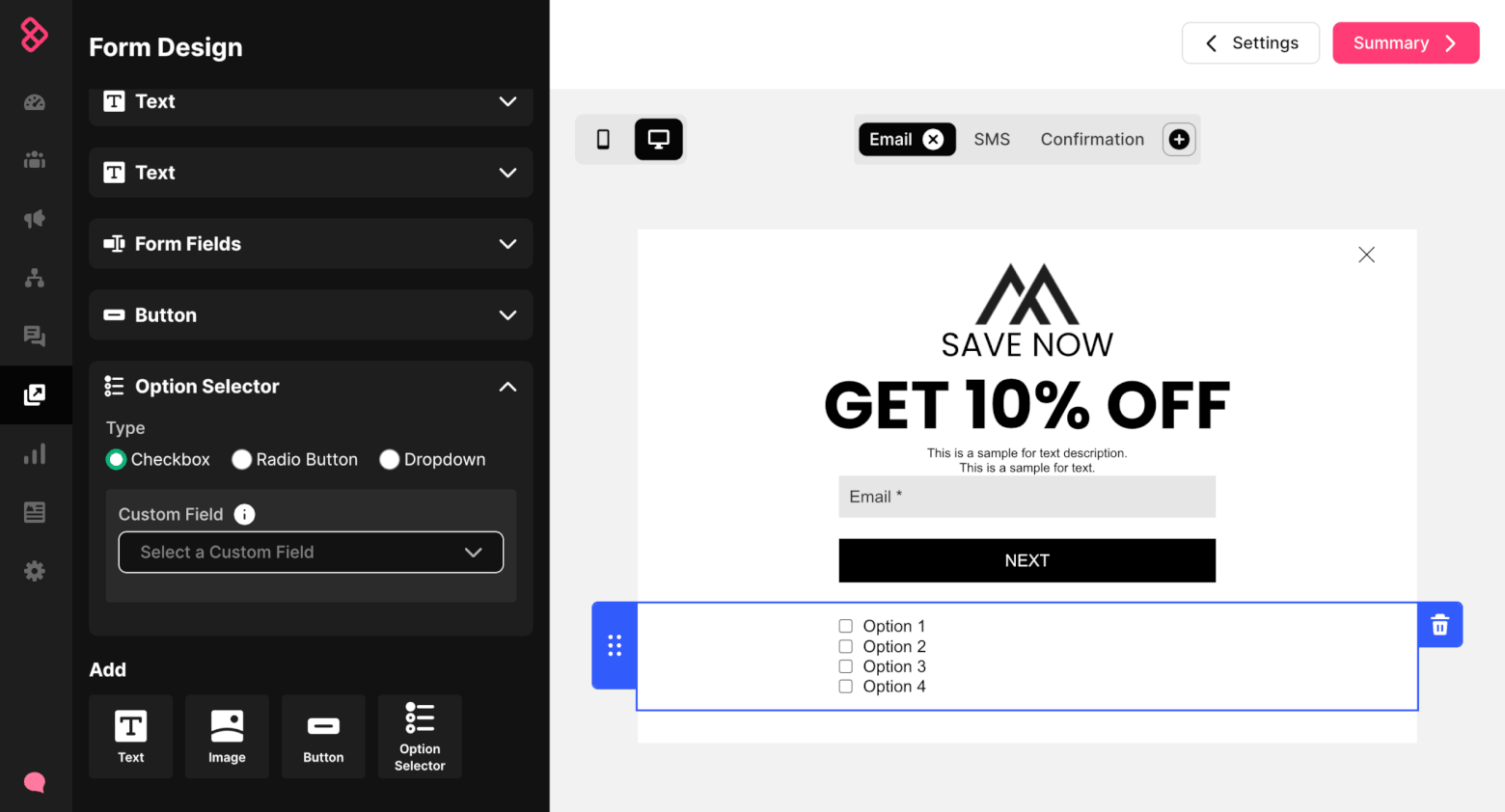
Importantly, there’s also no landing page builder. In practice, many users rely on external tools for this part of their stack. And with Privy now owning Sendlane, that gap becomes a bit more understandable. Privy itself is known for popups, forms, and onsite conversion tools, so it’s likely this part of the experience will be handled more on that side moving forward.
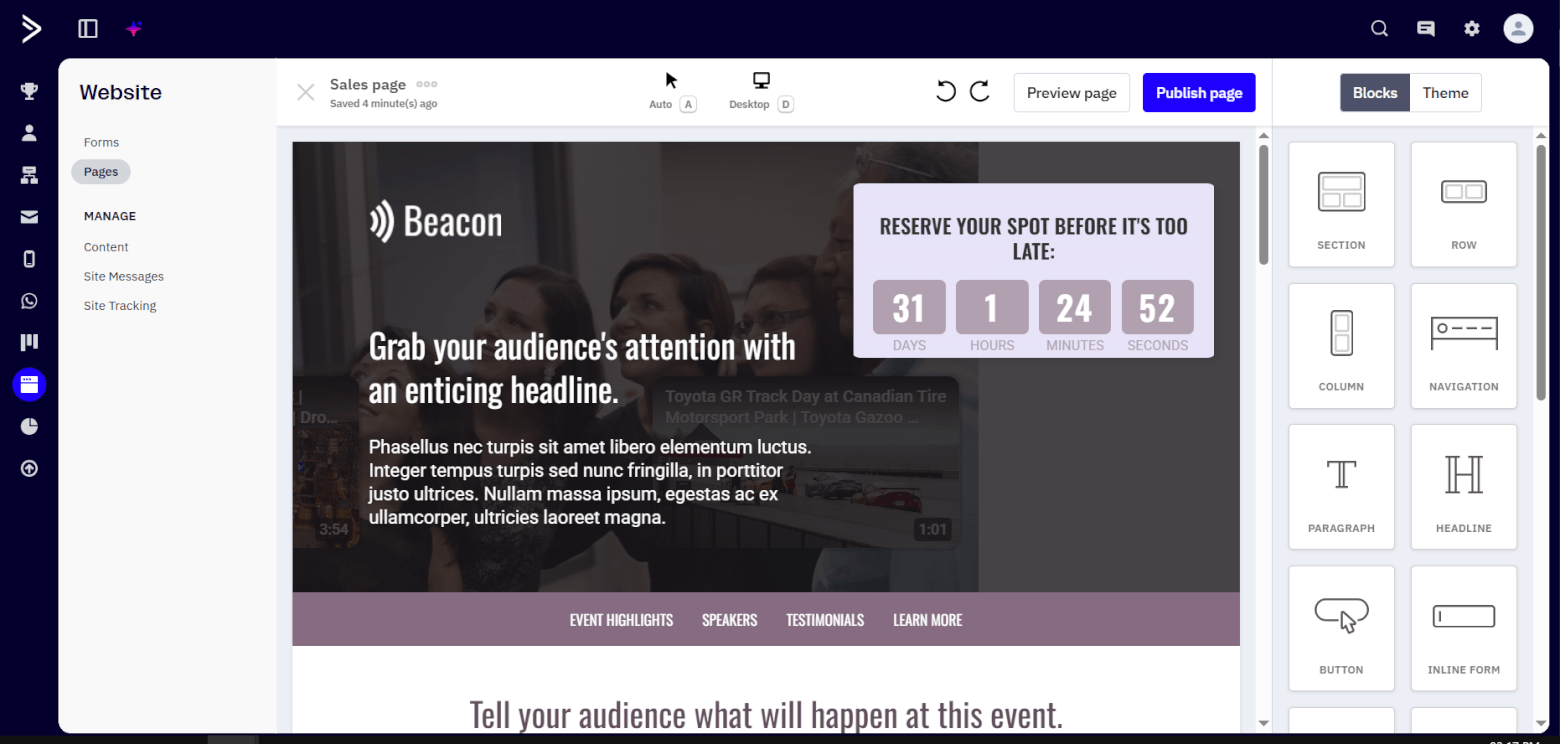
By comparison, ActiveCampaign offers a more complete setup. In addition to forms, it includes a built-in landing page builder that lets you create landing pages using templates or from scratch, customize layouts with a drag-and-drop editor, and connect everything to automations, tags, and contact lists.
The form builder itself is also more flexible than Sendlane’s, with multiple form types (inline, modal, floating bar), more control over fields and styling, and seamless integration with automations and CRM features. You can also create custom fields with drop downs, lists, radio buttons, check boxes, and even hidden fields, in a much more intuitive way than with Sendlane.
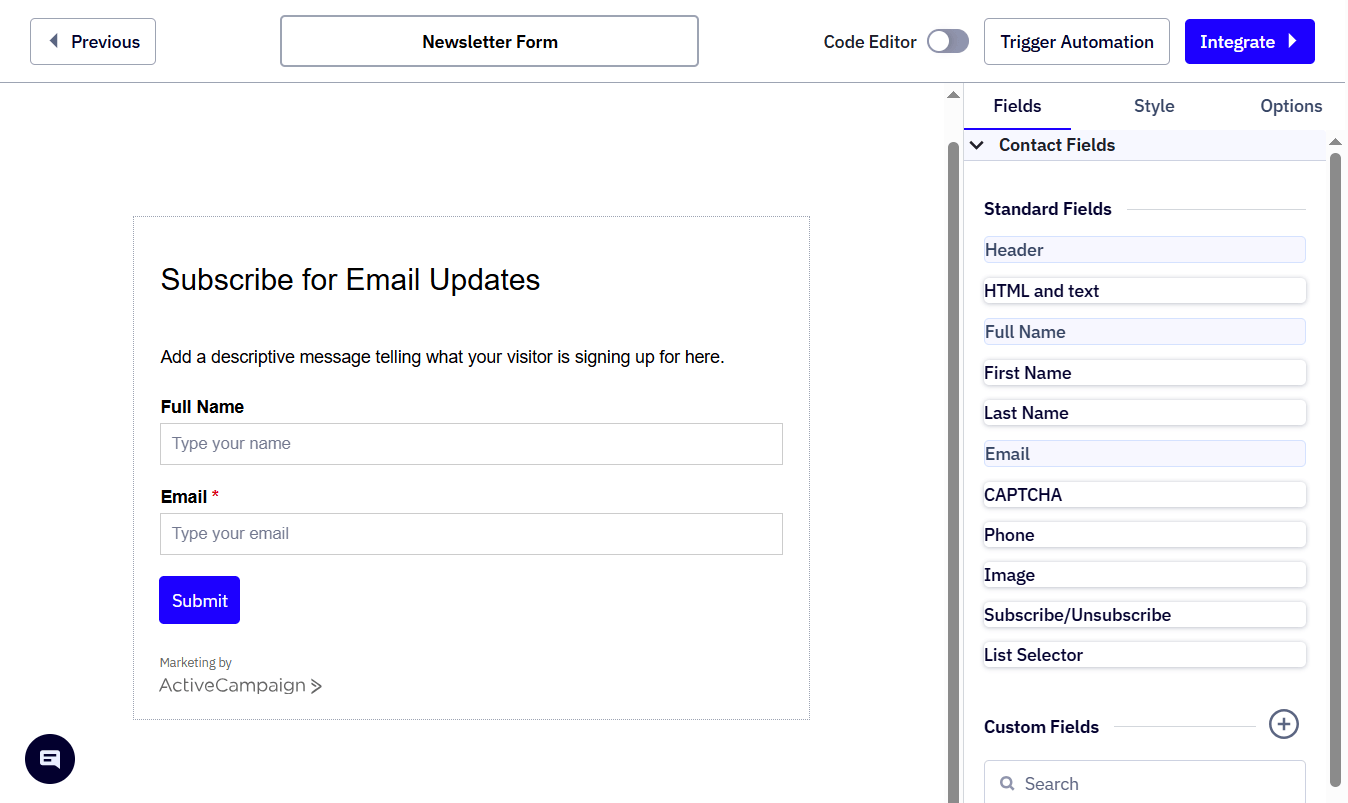
That said, it’s not as advanced as dedicated landing page tools. Design flexibility is somewhat limited, and you won’t get the same level of control as with platforms like Webflow or Unbounce.
Winner: ActiveCampaign, for providing a landing page builder, more flexible forms, and tighter integration with automations and CRM features. Sendlane handles basic lead capture, but without landing pages and with limited design flexibility, most users will outgrow it quickly or need additional tools.
Sendlane – 1, ActiveCampaign – 2
Marketing Automation
Automation is what turns your email platform from a sending tool into a revenue engine, so the key question is how flexible, powerful, and easy those workflows are to build.
Sendlane’s automation is designed to get ecommerce workflows up and running quickly, without much complexity.
You’re guided toward common use cases like welcome sequences, abandoned carts, and post-purchase follow-ups, and these are easy to set up thanks to pre-built templates and a fairly straightforward visual builder.
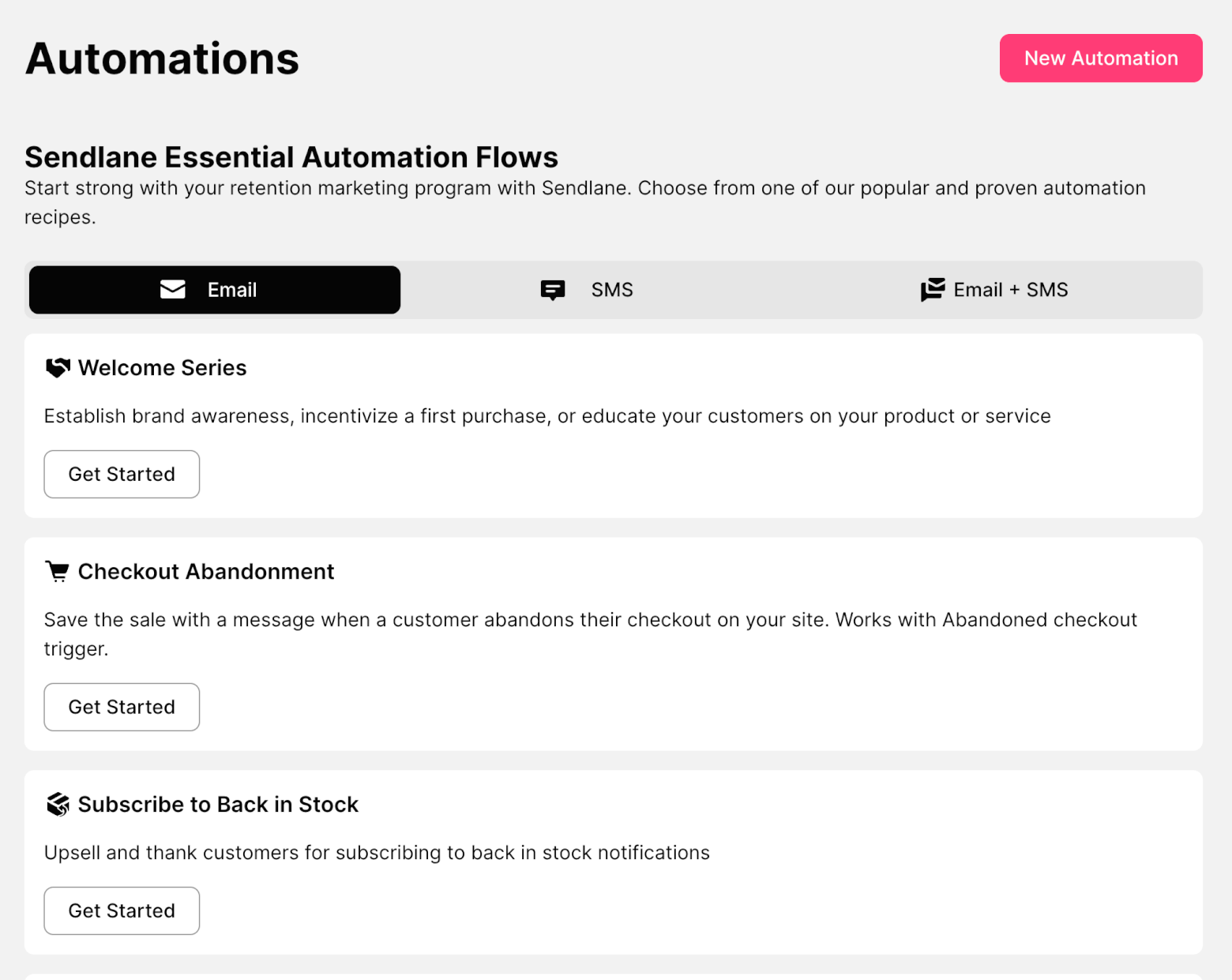
Triggers are closely tied to ecommerce behavior, so things like purchases, product views, and engagement events are front and center. It’s also possible to use their Beacon pixel to trigger automations from webpage views and other events. From there, you can build flows with emails, SMS messages, tags, and conditional splits.
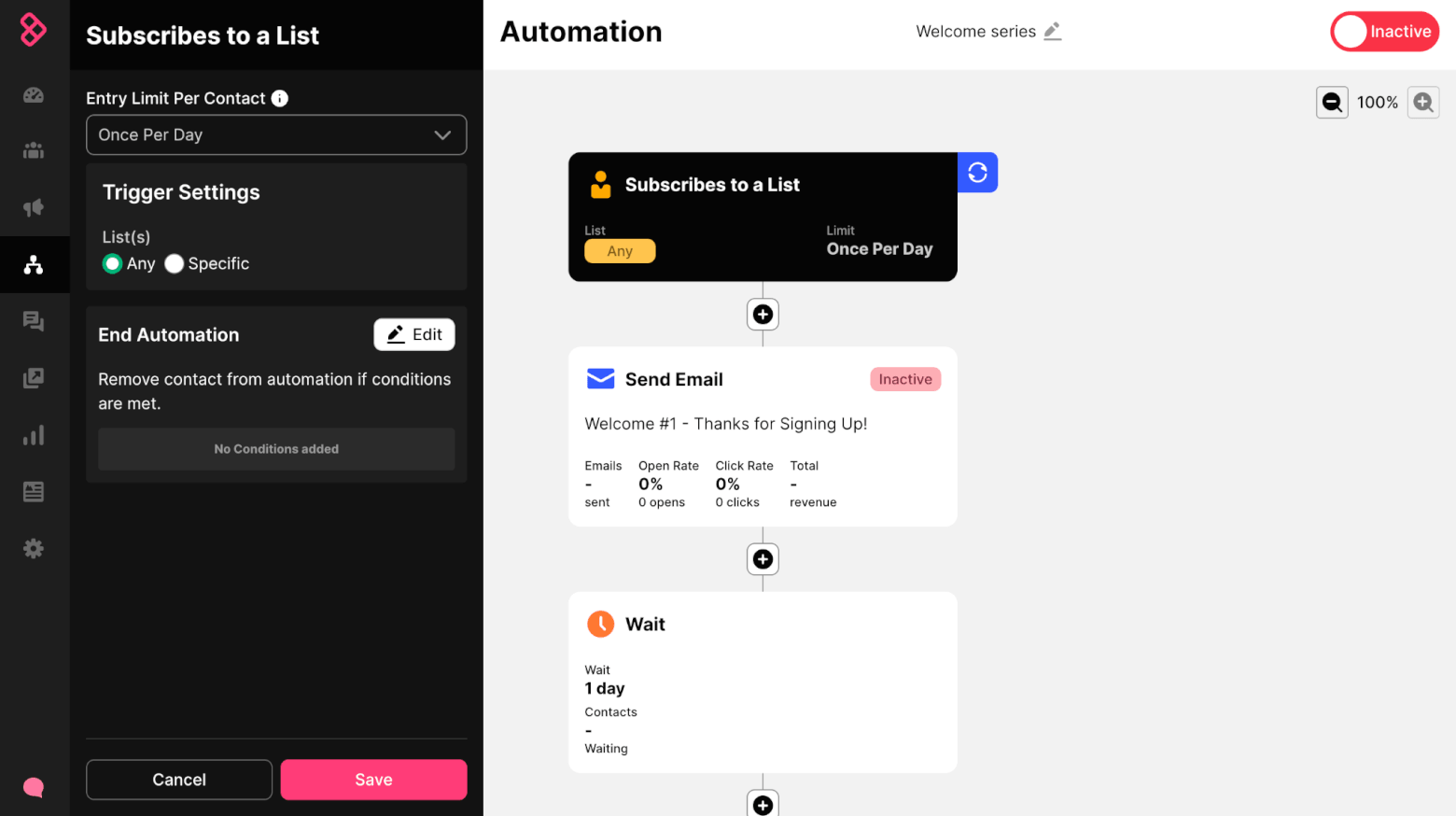
One of Sendlane’s strengths is how naturally SMS fits into these automations. It doesn’t feel like an add-on, but rather part of the same system, which makes it easy to combine channels in a single workflow.
The trade-off is that things can feel a bit limited once you move beyond standard ecommerce journeys. Direct integrations don’t play as big a role inside the automation builder, so triggering actions in other tools relies mainly on webhooks and Zapier connections. There’s also no real connection to CRM-style actions like deal management or task creation, since that’s not part of the product.
ActiveCampaign takes a more flexible and powerful approach, and it shows as soon as you start building automations. There are also hundreds of pre-built “recipes” to help you get started, which can be edited with its automation builder.
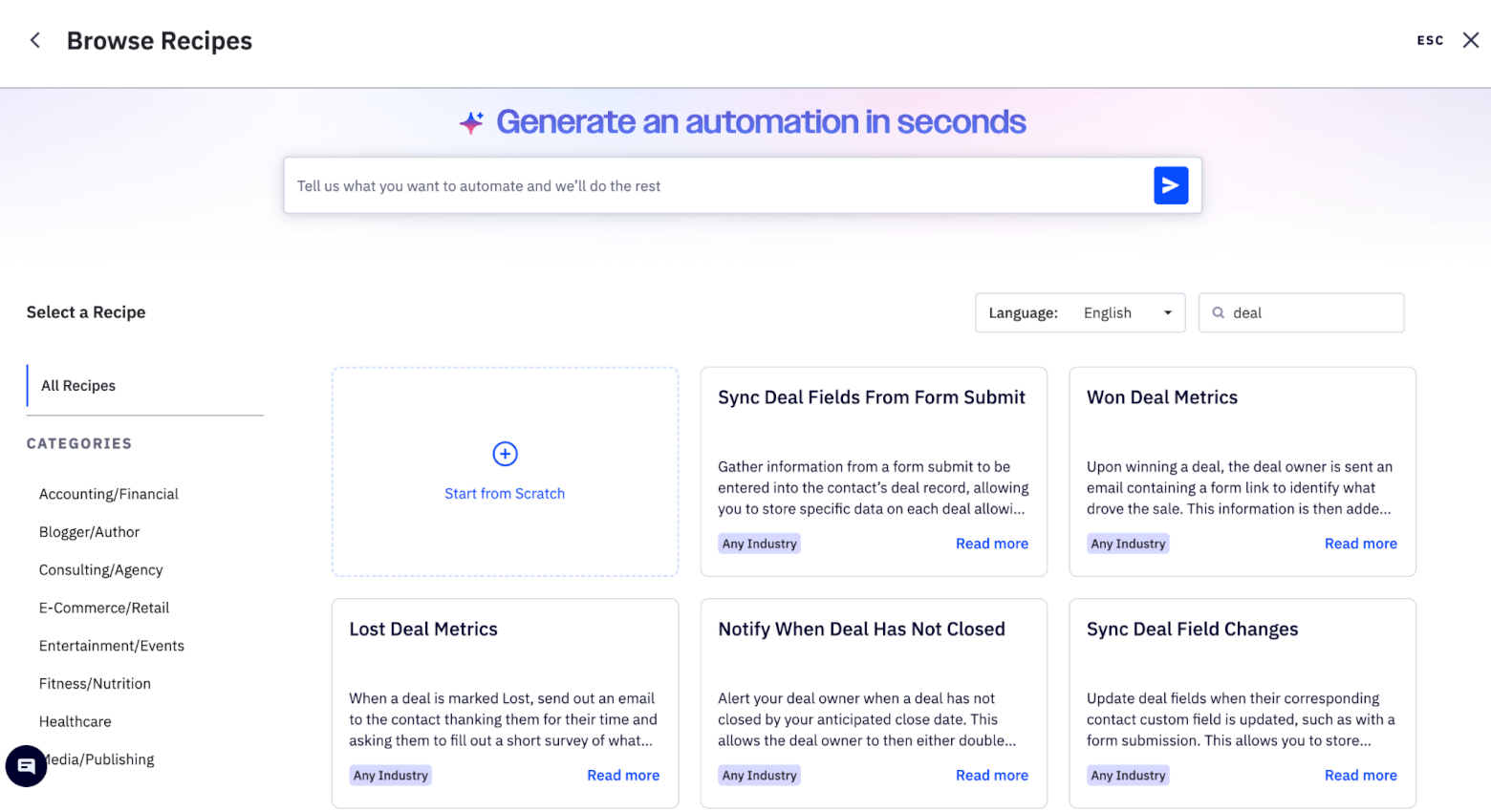
You can trigger workflows from a wide range of events – not just email activity or purchases, but also website behavior, changes in contact data, or even movements inside a sales pipeline. That opens the door to much more dynamic customer journeys, especially if you’re combining marketing and sales processes.
The automation builder itself gives you far more control. You can layer conditions, create multiple paths, and even run split tests within a workflow to optimize performance over time.
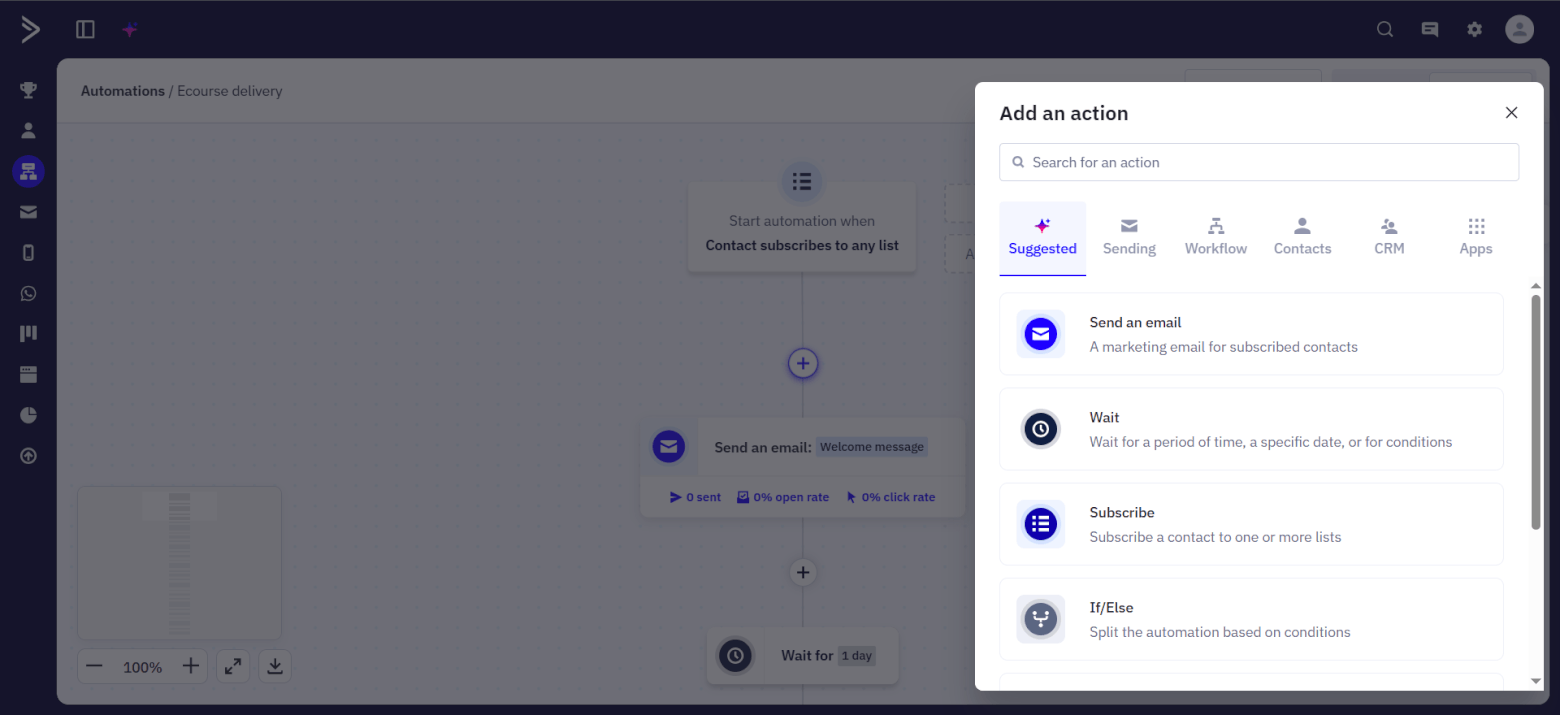
Another big advantage is how well automation connects with the rest of the platform. Because ActiveCampaign includes a built-in CRM, you can trigger actions like creating deals, assigning tasks, or notifying sales teams, all from within the same workflow. Integrations also play a bigger role, making it easier to connect your automations with other tools in your stack.
The downside is that it takes longer to get comfortable with everything. There’s more to learn, and setting up complex automations requires a bit more planning.
Winner: Sendlane makes automation accessible and fast, especially for common ecommerce scenarios. But ActiveCampaign goes much further in terms of flexibility, depth, and integration, supporting fully customized customer journeys that evolve over time.
Sendlane – 1, ActiveCampaign – 3
Ecommerce Features
Sendlane is built with ecommerce front and center, and that shows in how tightly its features are tied to store activity.
Once connected to platforms like Shopify or WooCommerce, you can:
- Trigger automations based on real purchase and browsing behavior (abandoned carts, product views, repeat purchases)
- Segment customers based on what they’ve bought, viewed, or how often they engage
- Build campaigns that directly reflect what’s happening in your store
One area where Sendlane stands out is product feeds. These can be dynamic, meaning you can automatically pull in relevant products into your emails based on customer behavior or predefined rules, making it much easier to personalize campaigns at scale.
You also get built-in product reviews, which is a nice bonus. You can automatically send review requests after a purchase, collect and manage reviews inside the platform, and pull review content dynamically into emails or display it on your site as social proof. That’s something most competitors rely on third-party integrations for.
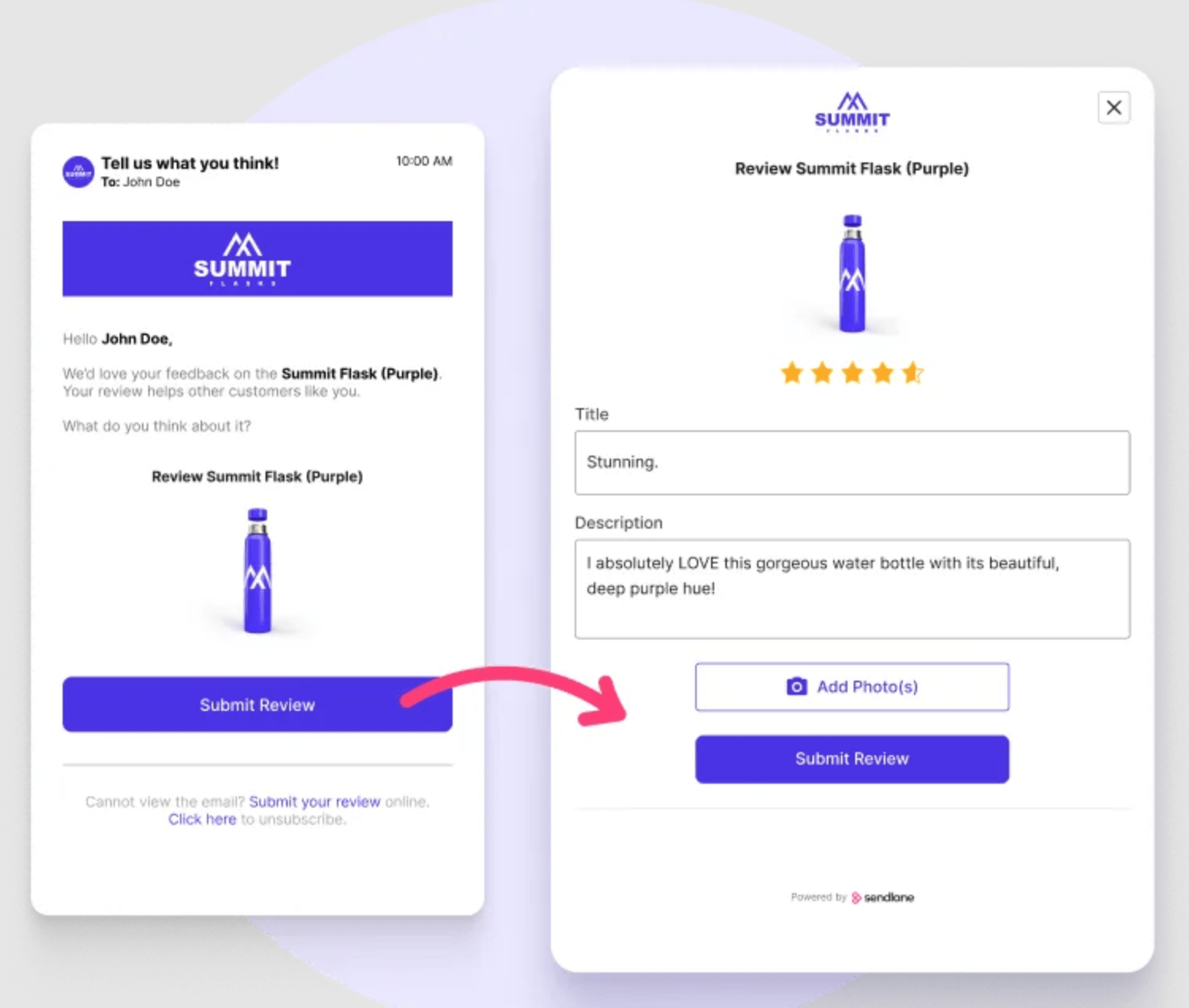
Sendlane also does a strong job with email and SMS working together. You can build flows that combine both channels, for example sending an abandoned cart email first, then following up with an SMS if there’s no conversion.
Where it’s a bit lighter is in:
- Advanced coupon management (you’ll typically rely on your ecommerce platform for this)
- Deeper attribution across multiple touchpoints
Still, for most ecommerce use cases, it covers the essentials well and keeps things relatively easy to manage.
ActiveCampaign can absolutely handle ecommerce, but it takes a more flexible, less “out-of-the-box” approach.
Once integrated with your store, you get:
- Purchase tracking and event-based triggers
- Site tracking, so you can react to browsing behavior, not just purchases
- Dynamic content blocks and product recommendations
It’s particularly strong when it comes to segmentation and personalization. For example, you can build highly specific audiences like:
- Customers who bought product A but not product B
- High-value customers who haven’t purchased in 60 days
- Visitors who viewed a product multiple times but didn’t check out
You also get better attribution and reporting, giving you more visibility into which campaigns and automations are actually driving revenue.
SMS is available too, but it’s less tightly integrated into the overall experience compared to Sendlane, and may require more setup depending on your use case.
The trade-off is setup time. ActiveCampaign gives you more control, but you’ll need to configure more of these ecommerce workflows yourself.
Winner: For ecommerce specifically, Sendlane has the edge, with dynamic product feeds, built-in reviews, and tighter email + SMS integration. ActiveCampaign is more flexible and offers deeper tracking and segmentation, but it requires more effort to get to the same point.
Sendlane – 2, ActiveCampaign – 3
CRM and Sales Features
This is where the gap between these two platforms becomes very clear.
If your business relies purely on marketing, you might not care much about CRM features. But if you’re managing leads, tracking deals, or running any kind of sales process alongside your marketing, this round matters a lot.
Sendlane is not built as a CRM, and it doesn’t try to be one.
You do get solid contact management, tagging, and segmentation, which is enough for most ecommerce marketing use cases. You can track customer behavior, build segments, and trigger campaigns based on actions.
But when it comes to actual sales features, there are some clear gaps:
- No deal pipelines
- No opportunity or deal tracking
- No task or activity management for sales teams
- No lead scoring tied to a sales process
In fact, most comparison data simply doesn’t list CRM features for Sendlane at all, because they’re not part of the product.
That’s not necessarily a problem if you’re running a straightforward ecommerce store with no sales team. But if you need to manage leads or sales conversations, you’ll need to rely on a separate CRM.
ActiveCampaign, on the other hand, offers a CRM add-on that’s tightly integrated with its marketing tools.
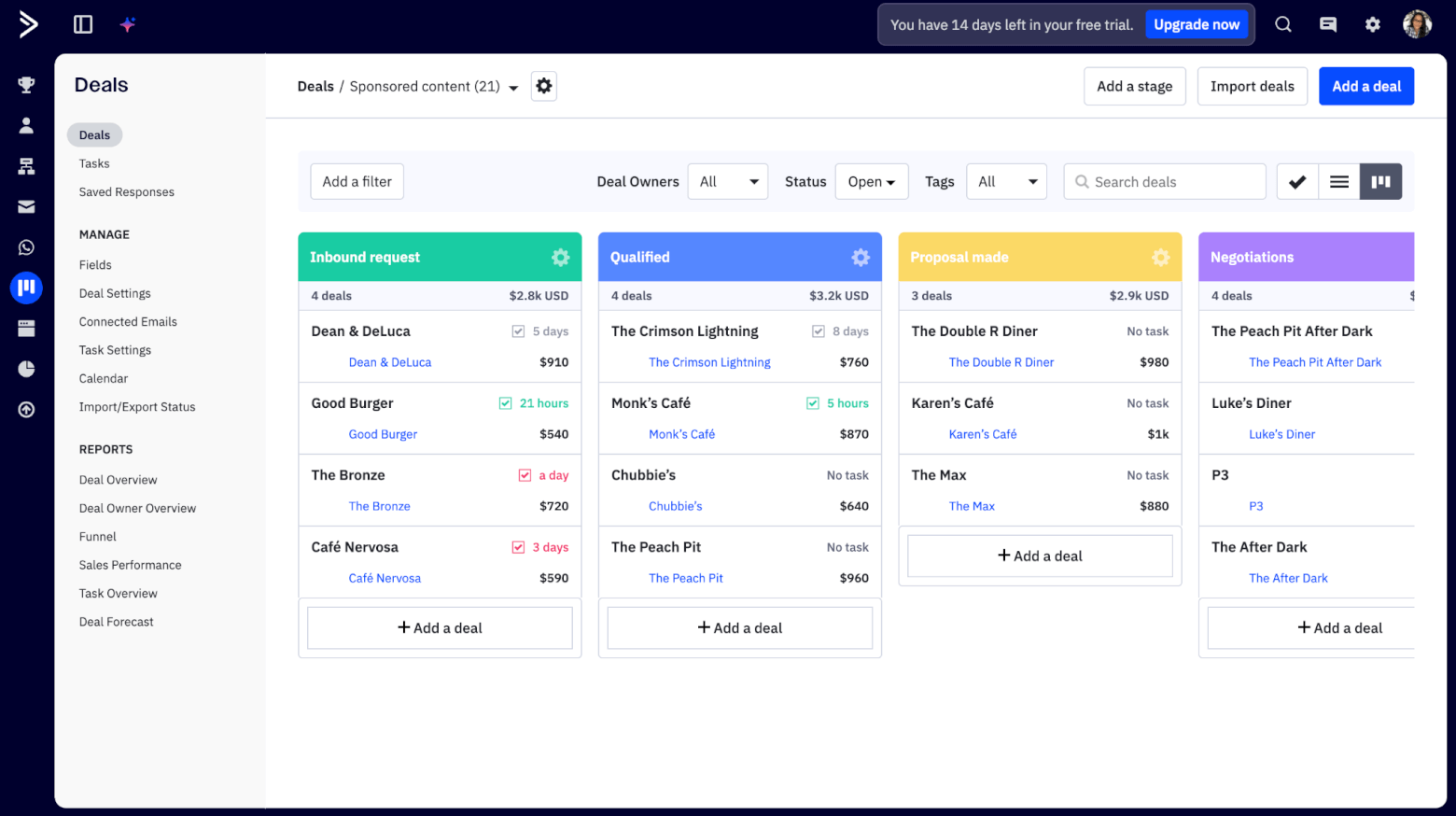
You get:
- Deal pipelines to track opportunities across stages
- Task and activity management for follow-ups
- Lead scoring to prioritize your best prospects
- The ability to trigger sales actions directly from automations
For example, you can:
- Automatically create a deal when someone fills out a form
- Assign it to a sales rep
- Trigger follow-up tasks or reminders
- Move deals through stages based on user behavior
These CRM features are well established and widely used, with strong support for pipeline and activity management.
It’s not as advanced as a dedicated enterprise CRM, but for most small to mid-sized businesses, it’s more than enough to manage both marketing and sales in one place.
Winner: This one isn’t even close! If you need any kind of sales process alongside your marketing, ActiveCampaign is the clear winner.
Sendlane – 2, ActiveCampaign – 4
Integrations
The more your store grows, the more you rely on connecting your email platform to ecommerce tools, CRMs, support systems, and analytics. So let’s take a look at how versatile both Sendlane and ActiveCampaign are.
Sendlane offers a workable integration setup, but it’s important to understand how it’s structured.
On the surface, you’ll find a range of integrations, mostly focused on ecommerce and marketing tools:
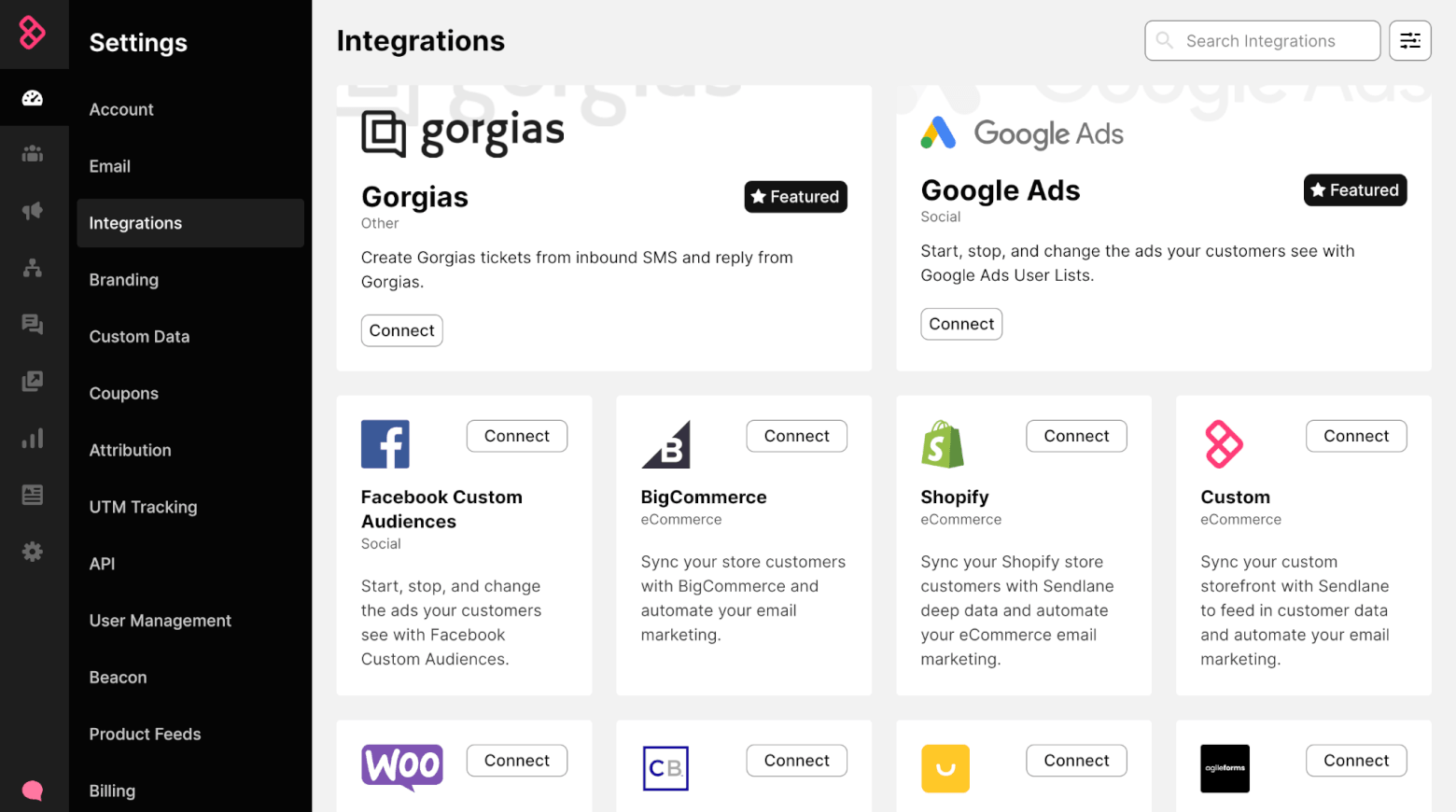
However, many of these are third-party integrations, meaning Sendlane doesn’t directly control them. In practice, this often means you’ll need to connect tools using API keys, and sometimes rely on custom integrations to unlock full functionality like event tracking.
In other words, integrations are available, but they’re not always deeply native. If a platform isn’t natively supported, you can still connect it via API and effectively turn it into a “deep data” integration, but that requires more technical setup.
Zapier is also commonly used to extend Sendlane’s capabilities, which helps connect it to thousands of additional apps. But again, that adds cost and complexity, and doesn’t always provide the same level of data depth as a native integration.
ActiveCampaign takes a more native-first approach to integrations.
It offers a larger number of direct integrations (well over 1000), including strong ecommerce connections like WooCommerce, BigCommerce and Shopify. These are designed to sync customer data, purchase behavior, and events directly into the platform without requiring custom setup.
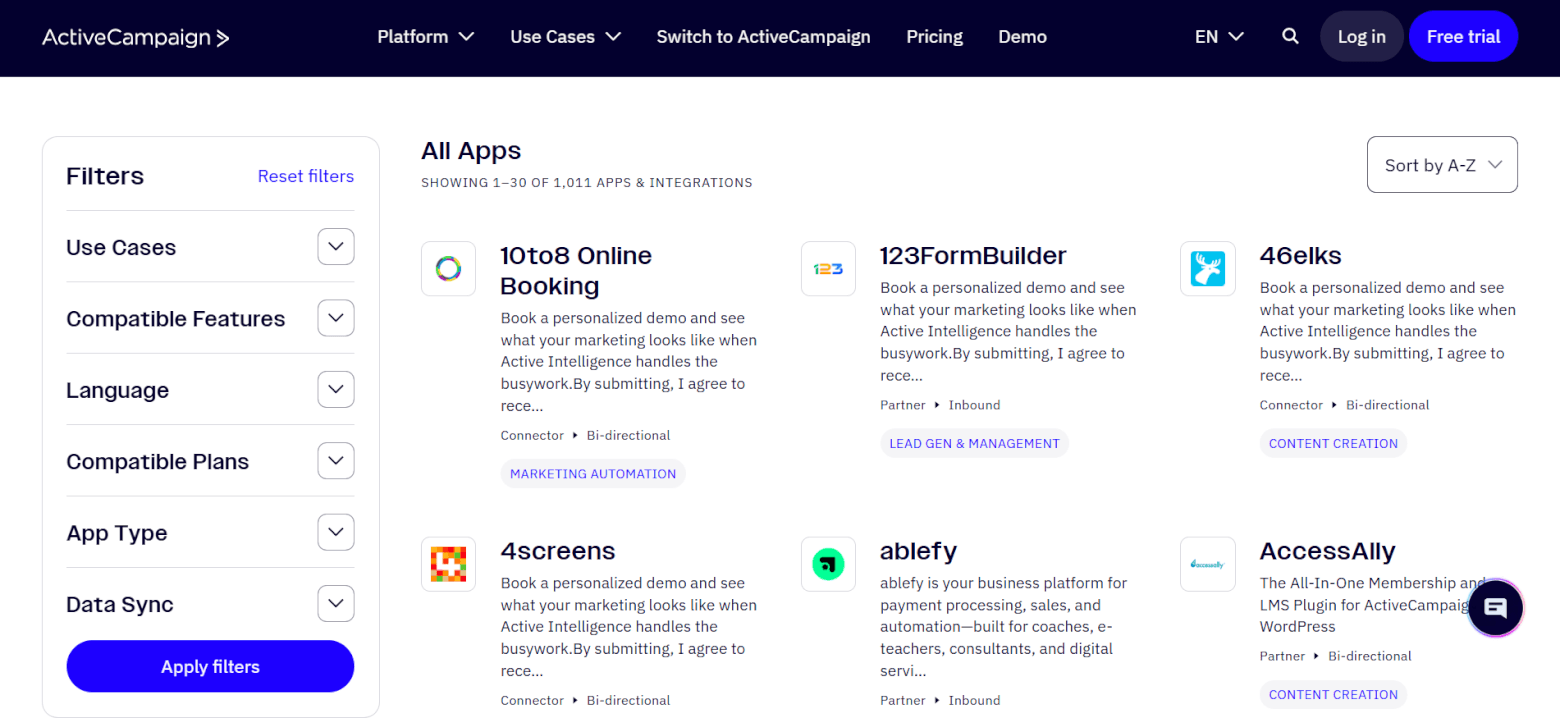
These allow you to trigger automations, segment audiences, and personalize campaigns based on real customer behavior. It also feeds into revenue tracking, so you can see exactly which emails and automations are driving sales.
Zapier is also available, just like with Sendlane, but it plays more of a supporting role rather than being essential.
It also supports APIs and webhooks for more advanced setups, but most users won’t need to rely on them for standard ecommerce use cases.
Winner: Both platforms can connect to a wide range of tools, especially with Zapier in the mix. But ActiveCampaign offers more native integrations and deeper data syncing out of the box, making it the more straightforward and scalable choice for most businesses.
Sendlane – 2, ActiveCampaign – 5
Reporting
To compare Sendlane and ActiveCampaign’s reporting features, we’ll look at:
- The types of reports available
- How quickly data updates
- How easy it is to customize insights, and
- How well the platform handles revenue attribution.
Sendlane’s reporting is centered around its Report Center, which groups together campaign, automation, and ecommerce performance data in a structured and easy-to-navigate way.
You get the core metrics you’d expect, including opens, clicks, unsubscribes, and revenue generated, along with higher-level views like customer behavior and lifetime value. The reports are designed to give quick, practical answers, especially for ecommerce use cases.
Its attribution model is relatively simple but configurable. By default, it uses a last-click approach, meaning revenue is credited to the most recent email or SMS interaction before a purchase. You can adjust attribution windows for email and SMS, which is useful if your buying cycle is longer or you want to align with other tools.
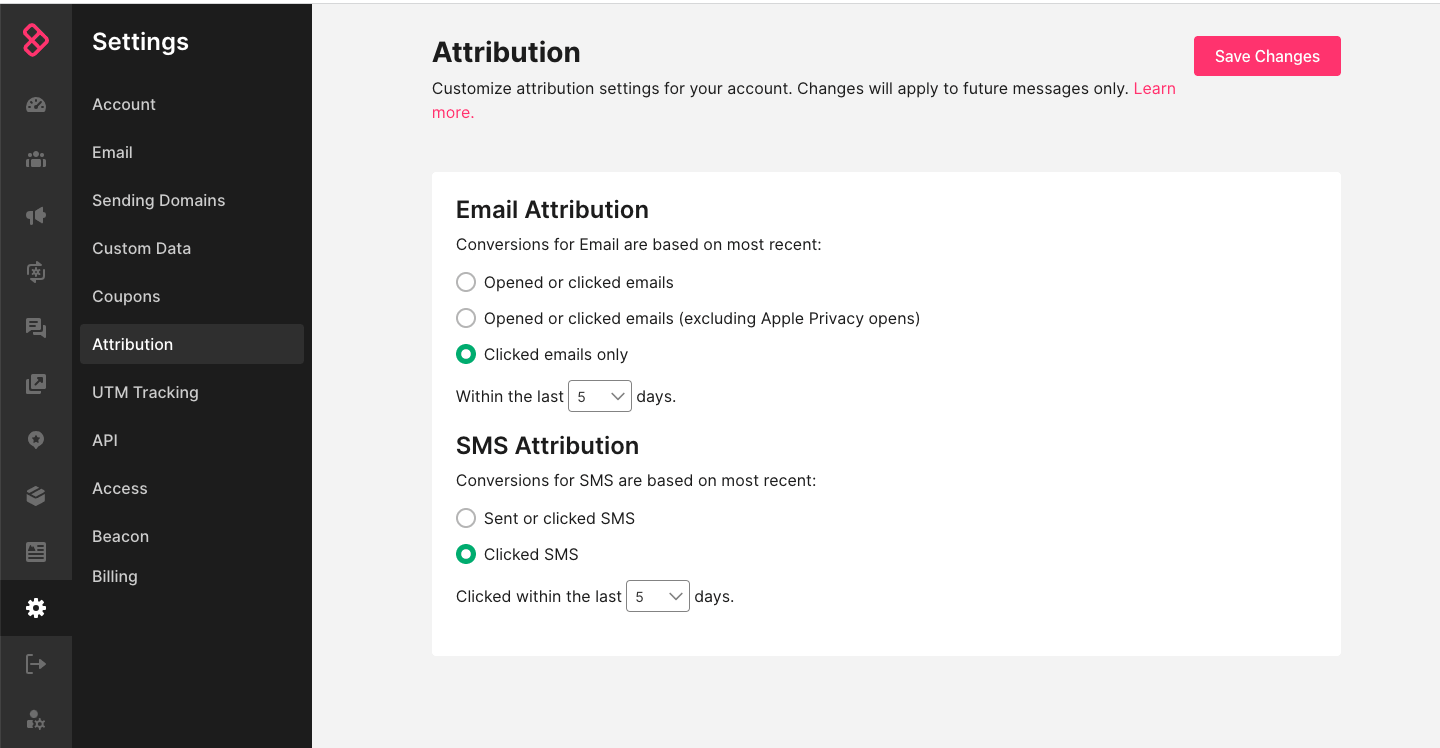
However, there are limitations. Attribution is still primarily last-touch, and while you can change the time window, you can’t change the model itself. Earlier touchpoints in the journey aren’t really accounted for, and there’s no built-in multi-touch attribution.
Customization is also fairly limited. You’re mostly working with predefined dashboards rather than building your own reports.
ActiveCampaign offers a broader and more flexible reporting setup, especially if you’re using both marketing and sales features.
You get reports across campaigns, automations, and CRM activity, along with ecommerce reporting powered by its Deep Data integrations. This lets you track not just engagement, but also revenue generated by specific campaigns and workflows.
When it comes to attribution, ActiveCampaign introduces a more behavior-driven view of the customer journey through its Conversion Attribution report. This report tracks the different touchpoints a contact interacts with before converting and helps you understand the path that led to a sale. You can also adjust attribution windows from short periods up to 365 days.
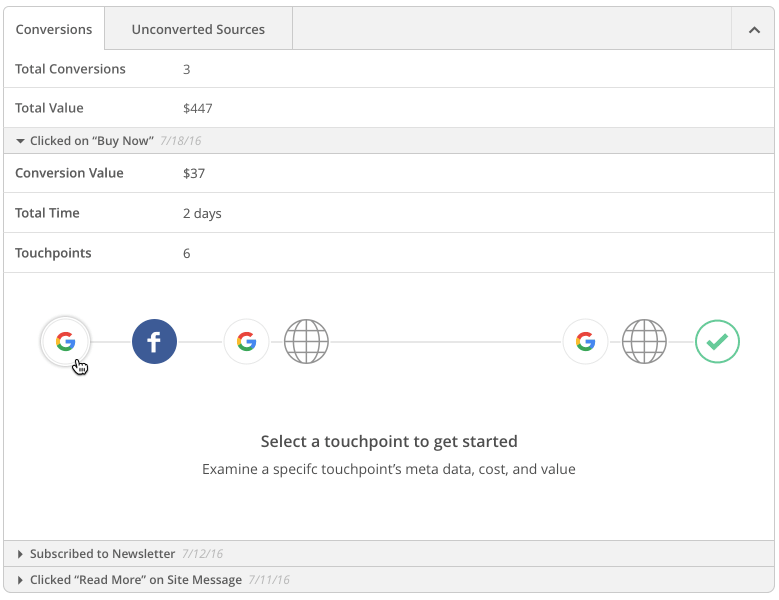
That said, it still uses a last-touch attribution model, meaning the final interaction before conversion gets the credit.
ActiveCampaign also offers custom reporting and dashboards, allowing you to combine data across campaigns, automations, and sales pipelines. However, these require a rather pricey add-on.
The main downside is that reporting can feel a bit fragmented across different sections, and it takes more time to piece everything together.
Winner: Sendlane keeps reporting simple and practical, but ActiveCampaign offers deeper insights, more flexibility, and a more complete view of how different touchpoints contribute to conversions.
Sendlane – 2, ActiveCampaign – 6
Pricing
Onto our final round – pricing. Here you’ll see one of the clearest differences between Sendlane and ActiveCampaign, because they charge in very different ways.
Sendlane charges based on email send volume, not list size. That means you can store unlimited contacts, which is a big advantage if you have a large database but only email parts of it regularly.
The trade-off is the starting price, which starts at around $100/month for the Professional plan (Sendlane’s lowest tier). This is much higher than many email marketing tools, although an annual discount is available. You’re paying for a set number of email credits, and if you go over your allowance, you can choose to either move to the next plan level, or pay a small CPM overage.
The level of support depends on the plan you choose. Lower plans include standard support, while higher tiers add more hands-on options like assisted onboarding/migration, customer success, or deliverability support.
SMS is priced separately, so if you plan to use both email and text messaging heavily, you’ll need to factor that into the total cost.
Overall, Sendlane’s pricing can work well if you have a large list and send strategically. But if you’re just starting out, or send a lot of campaigns to your full list, the higher entry price and send-credit model can make it feel expensive quickly.
ActiveCampaign uses a more traditional pricing model based primarily on contact count and plan tier. That makes the entry price much lower than Sendlane’s, especially for smaller lists (starting at $19/month for 1,000 contacts). However, there is an email send limit of around 10x the size of your contact list. Like with Sendlane, there are annual discounts available.
The upside is that you can start smaller and only move up when you need more functionality. The downside is that ActiveCampaign can become expensive as your list grows, even if you don’t email every contact very often.
For a like-for-like comparison, let’s take a look at how much you’d be paying for both tools, based on the number of emails you’re sending each month:
| Email sends per month | Sendlane (Professional plan, monthly subscription) | ActiveCampaign (Plus plan, monthly subscription) |
|---|---|---|
| 50,000 | $100 | $179 |
| 75,000 | $150 | $209 |
| 100,000 | $200 | $239 |
| 200,000 | $300 | $409 |
| 500,000 | $600 | $759 |
With ActiveCampaign, it’s also important to look beyond the base plan. Some key features require add-ons (e.g. SMS, Custom Reporting, Transactional Email, and CRM). So if you want the CRM and reporting features that make ActiveCampaign especially powerful, your real monthly cost may be higher than the headline price.
Support also varies by tier. Lower plans include standard support and core onboarding resources, while higher plans unlock more advanced onboarding, migration help, and account-level support options.
Winner: In this final round, we’ve decided to call it a tie. ActiveCampaign’s starting prices are lower, and you can scale gradually based on contact count and feature needs. That makes it a lot more budget-friendly for smaller businesses starting out. However, you’re generally paying less per email send with Sendlane. If you have a large ecommerce database and prefer paying for sends rather than stored contacts, Sendlane may make more sense.
Final score: Sendlane – 3, ActiveCampaign – 7
Sendlane vs ActiveCampaign: Final Verdict
So, which one should you choose?
As the final score suggests, ActiveCampaign comes out ahead overall. It’s simply the more flexible and scalable platform, with stronger email marketing, automation, CRM features, integrations, and reporting. If you’re running a more complex ecommerce setup, or expect your needs to grow over time, it’s the safer long-term choice.
That said, Sendlane still has a clear place in the market. It’s easier to use once you’re inside, more focused on ecommerce out of the box, and offers some nice built-in features like dynamic product feeds, reviews, and tight email + SMS integration. If your priority is getting revenue-driving campaigns live quickly, without a steep learning curve, it’s a strong option.
The recent acquisition by Privy also adds an interesting layer. It could turn Sendlane into a more complete ecommerce growth platform, but until that direction becomes clearer, some uncertainty remains.
To sum up:
> Try out ActiveCampaign if you want flexibility, deeper automation, and long-term scalability
> Try out Sendlane if you want a simpler, ecommerce-first tool that works well out of the box
Either way, both platforms can drive serious results; it just depends on how complex your setup is and how much control you want over it.
The authors
Learn more about us

Our Methodology
This article has been written and researched following our EmailTooltester methodology.
Our Methodology